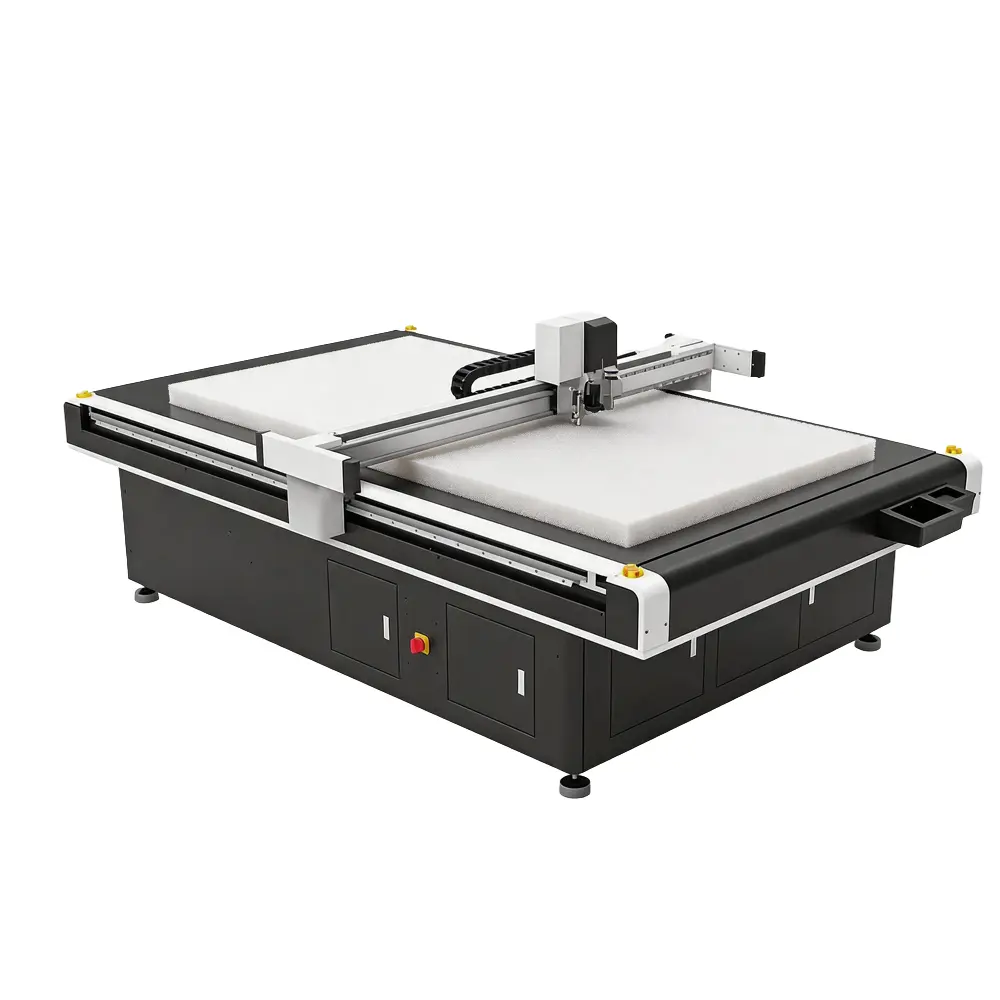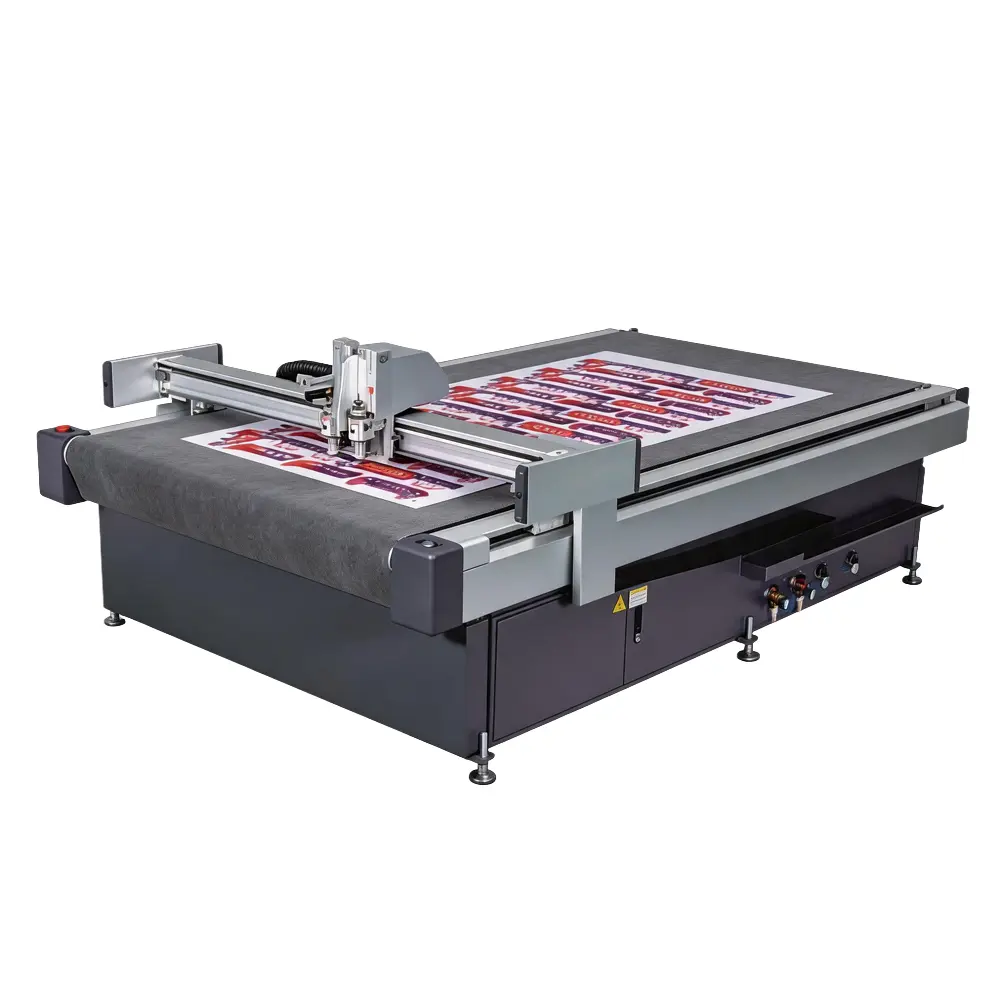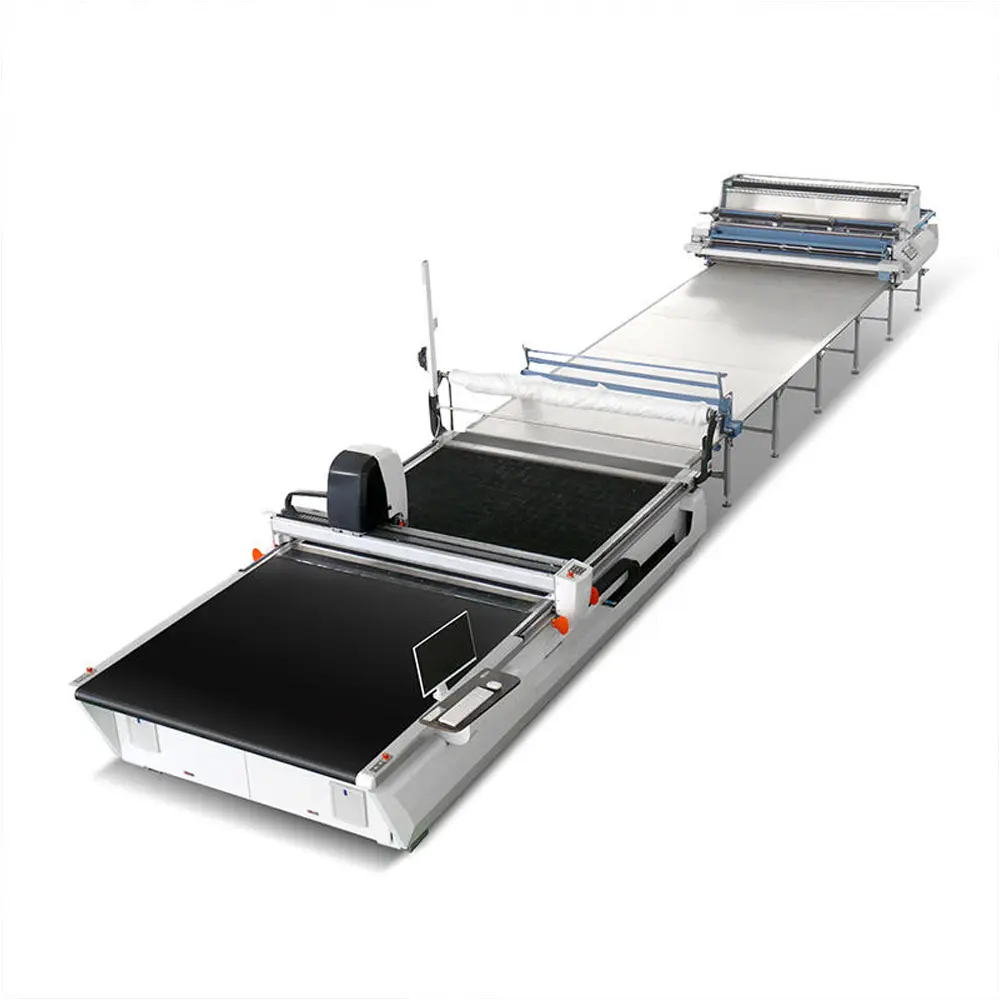
A: CNC leather cutting uses a computer-controlled oscillating knife (or drag knife) to cut patterns directly from digital files, while traditional die cutting relies on steel rule dies made for each specific style and size.
With REMEYA CNC cutting, you can:
Change designs instantly (no new die required)
Improve cutting precision (±0.1 mm)
Eliminate die costs and reduce lead times from weeks to minutes
Handle small batches and frequent style updates economically
This is especially valuable for custom furniture, automotive interior samples, and luxury goods production where design changes are common.
A: Yes. REMEYA leather cutting machines are designed to cut a wide range of materials, including:
Genuine leather (cowhide, sheepskin, goatskin, pigskin, exotic leathers)
Artificial leather (PU, PVC, semi-PU)
Microfiber leather
Laminated leather (with foam or fabric backing)
Bonded leather, recycled leather, and similar flexible materials
By adjusting cutting parameters (speed, force, blade depth) and selecting the right tool (oscillating knife for thick leather, drag knife for thin synthetic), the same machine can switch quickly between different leather types and thicknesses (from 0.5 mm to 8 mm or more). REMEYA provides cutting parameter presets for common leathers to help you get started quickly.
A: REMEYA’s optional vision system (camera‑based) captures the actual shape of each irregular hide and identifies visible defects such as:
Scars, tick marks, vein lines
Holes, cuts, or uneven edges
Brand marks, color variations (for high‑visibility panels)
The intelligent nesting software then automatically arranges patterns onto the hide image, avoiding defects and placing parts optimally. Benefits include:
Reduced offcuts – material savings of 10–25% compared to manual layout
Higher yield per hide – especially important for expensive genuine leather
Consistent quality – ensures that visible parts (seat panels, bag fronts) come from defect‑free zones
For shops cutting high‑value leather, the vision + nesting combination can pay for itself within months.
A: For most leather applications, oscillating knife cutting is strongly preferred over laser cutting for several reasons:
| Aspect | Oscillating Knife (REMEYA) | Laser Cutting |
|---|---|---|
| Edge quality | Clean, smooth, no discoloration | Burned, darkened, or hardened edges |
| Stitching impact | No interference | Hardened edges may break needles |
| Hand feel | Natural, soft | Crusty or melted feel on cut edge |
| Smoke/fumes | None | Significant smoke and odor (requires extraction) |
| Material compatibility | All leather types (including sensitive finished leather) | May damage delicate finishes or cause curling |
| Operating environment | Clean, safe | Requires ventilation/filtration |
Conclusion: For furniture, automotive, fashion, and footwear leather cutting, knife cutting produces superior results. Laser is occasionally used for very thin synthetic leather in high‑speed roll‑to‑roll applications, but REMEYA knife machines are the standard for quality‑focused leather workshops.
A: REMEYA provides comprehensive post‑installation support, including:
On‑site or remote training on machine operation, software (nesting, CAD/CAM), parameter setting, and daily maintenance
Detailed operation manuals (digital + printed)
Video tutorials covering tool change, calibration, vacuum table care, etc.
Ongoing technical support via phone, email, or remote desktop
Spare parts supply (blades, creasing wheels, cutting mats, filters) from regional warehouses
Online troubleshooting to minimize downtime
Our goal is to get your team producing quality parts independently within 2–3 days of installation. Refresher training and advanced workshops are also available.
A: Selecting the right REMEYA leather cutting machine depends on several factors. Our sales engineers will guide you through this analysis:
| Factor | What to consider |
|---|---|
| Material types & thickness | Genuine leather (requires oscillating knife) vs. synthetic (may use drag knife); typical thickness range |
| Production volume | Low‑volume custom shop (small table) vs. high‑volume production (large table, multi‑head) |
| Hide size | Standard hides (1.5–2.0 m²) vs. large cattle hides (up to 4–5 m²) → determines table dimensions |
| Defect management | Do you need vision system for automatic defect avoidance? |
| Workspace dimensions | Available floor space for machine, vacuum pump, and material handling area |
| Budget | Entry‑level vs. fully automated (camera nesting, conveyor feeding) |
| Future needs | Will you add more products (e.g., foam, fabric) later? Choose a versatile platform |
We also offer material testing: Send us your leather samples (with defect marks if needed), and we will cut them on a recommended machine, provide cutting photos/videos, and suggest optimal parameters. This ensures you buy the right machine with confidence.
(This is similar to Q5; we can enrich further.)
A: REMEYA provides a complete technical support package:
Pre‑sale: Application consulting, material testing, machine recommendation, quotation, and customization if needed.
Installation: On‑site machine setup, calibration, and integration with your existing workflow.
Training: For operators, supervisors, and maintenance staff. Covers:
Daily operation and safety
Software: CAD import, nesting, toolpath generation
Parameter adjustment for different leathers (speed, force, blade offset)
Maintenance: blade replacement, lubrication, vacuum table cleaning
Post‑sale: Lifetime remote support, optional service contracts, software updates, and fast spare parts delivery.
Our engineers speak multiple languages and are available during your working hours via remote access (TeamViewer, AnyDesk) or video call.
A: REMEYA leather cutting machines serve diverse industries where precision, efficiency, and flexibility are key:
| Industry | Applications |
|---|---|
| Automotive | Seat covers, headrests, armrests, door panel inserts, steering wheel covers, gear shift boots |
| Furniture | Sofa upholstery, recliner leather, decorative stitching panels, ottoman covers |
| Fashion & apparel | Leather jackets, skirts, pants, gloves, hats, belts |
| Handbags & accessories | Bags, wallets, phone cases, watch straps, key fobs |
| Footwear | Shoe uppers, insoles, heel covers, decorative overlays |
| Luggage | Suitcases, briefcases, travel bags, leather trim |
| Equestrian & pet products | Saddlery, bridles, dog collars, harnesses |
| Craft & hobby | Custom leather goods, laser‑cut‑alternative for small makers |
Any business that cuts leather in low to medium volumes or requires rapid design changes will benefit from switching from die cutting to REMEYA digital knife cutting.
A: REMEYA leather cutting machines have modest power requirements and low operating costs:
| Component | Power Requirement |
|---|---|
| Main machine (servo motors, controller) | 220V, single‑phase, 2–3 kW |
| Vacuum table pump | 380V, three‑phase (or 220V optional for small models), 7.5–9 kW |
If three‑phase power is not available, a phase converter can be used. We also offer smaller vacuum options for lightweight synthetic leather.
Typical operating costs:
Blades: Replace every few days to weeks (depending on material abrasiveness). Cost per blade is minimal ($5–15).
Cutting mat: Replace every 360–540 days (approx. $200–500 depending on size).
Electricity: Approximately $1–3 per hour of operation (varies by local rates).
No other consumables (no laser tube, no lenses, no gas).
Overall, REMEYA machines are designed for energy efficiency, with automatic vacuum zone switching to reduce power draw when cutting smaller sheets.
A: REMEYA machines require simple, routine maintenance to ensure optimal performance and longevity:
| Interval | Task |
|---|---|
| Daily | Remove leather debris from cutting bed; check blade sharpness (replace if dull); clean vacuum table filter |
| Weekly | Lubricate oscillating knife mechanism (if equipped); wipe linear rails and ball screws; inspect belt tension |
| Monthly | Calibrate tool height; check all electrical connections; replace sacrificial cutting mat if worn; clean dust extraction (if used) |
| Quarterly | Inspect vacuum pump oil level (for oil‑lubricated pumps); check motor alignments; update software if recommended |
| Annually | Professional inspection of servo drives, bearings, and vacuum system (can be done by REMEYA technician) |
Signs a blade needs replacement: Increased cutting noise, rough or fuzzy edges, leather dragging, or incomplete cuts. REMEYA provides a maintenance log sheet and video tutorials for all procedures.
If you are new to digital leather cutting, we strongly recommend:
Request a material test – send us your leather (including a hide with typical defects) and your pattern files. We will cut samples and provide a cutting report.
Ask for a live or recorded demo – see the machine in action, including vision nesting and oscillating knife cutting.
Compare ROI – calculate how many dies you currently buy per year and how much leather waste you have. REMEYA can help you estimate savings.

Before starting to use our service, please fill in the form, to tellus what CNC Knife Cutting Machine you want to import from China.