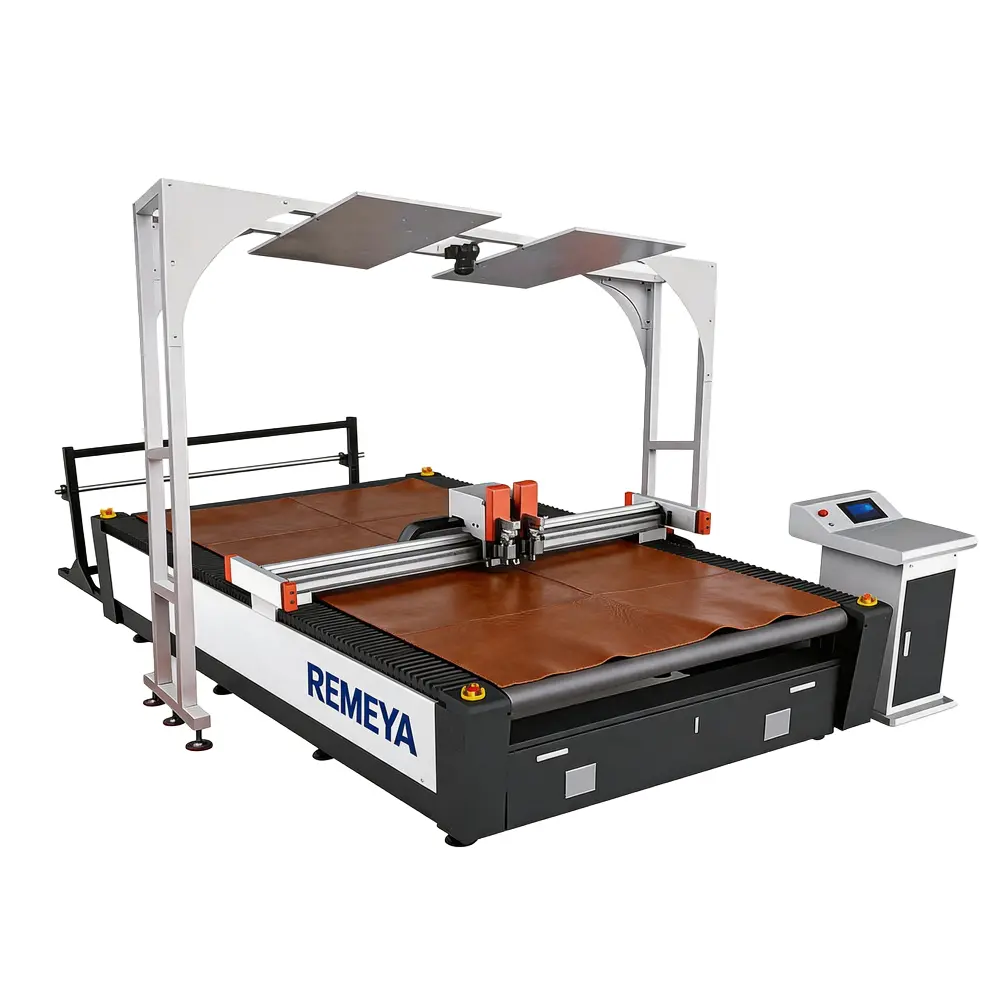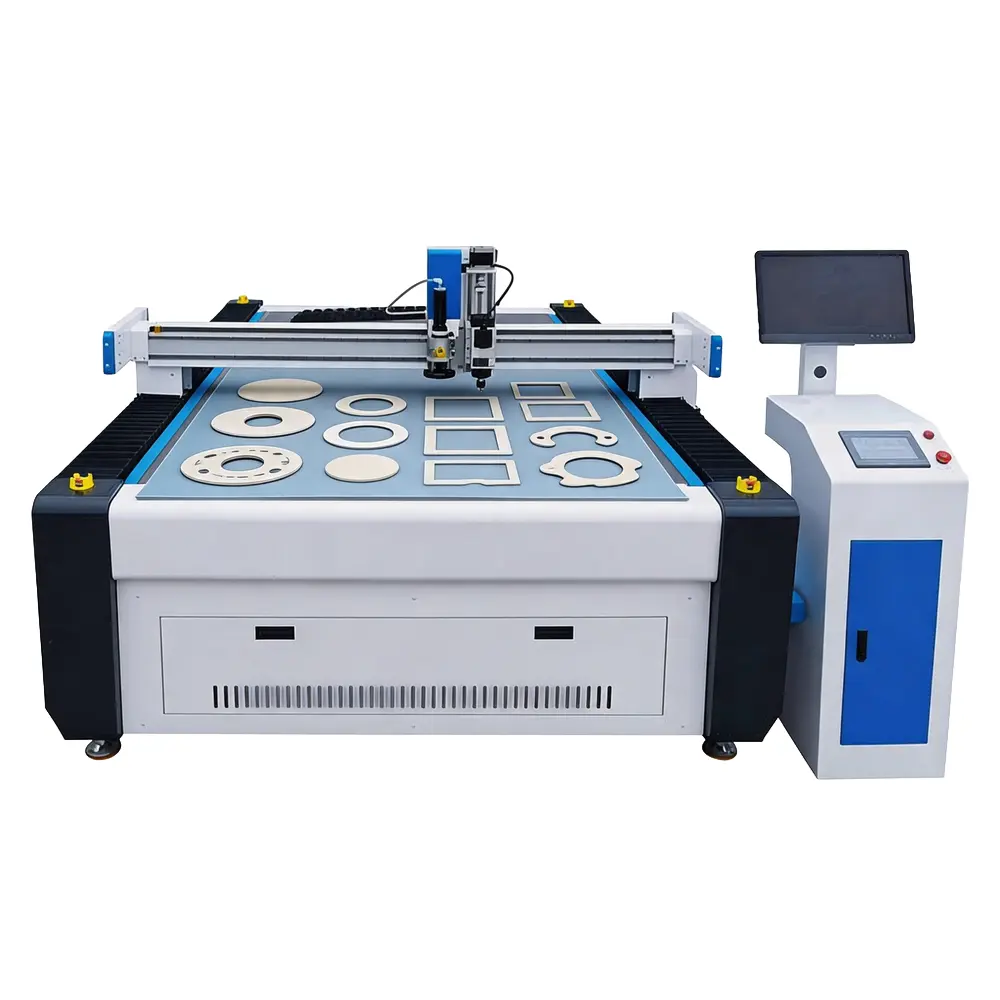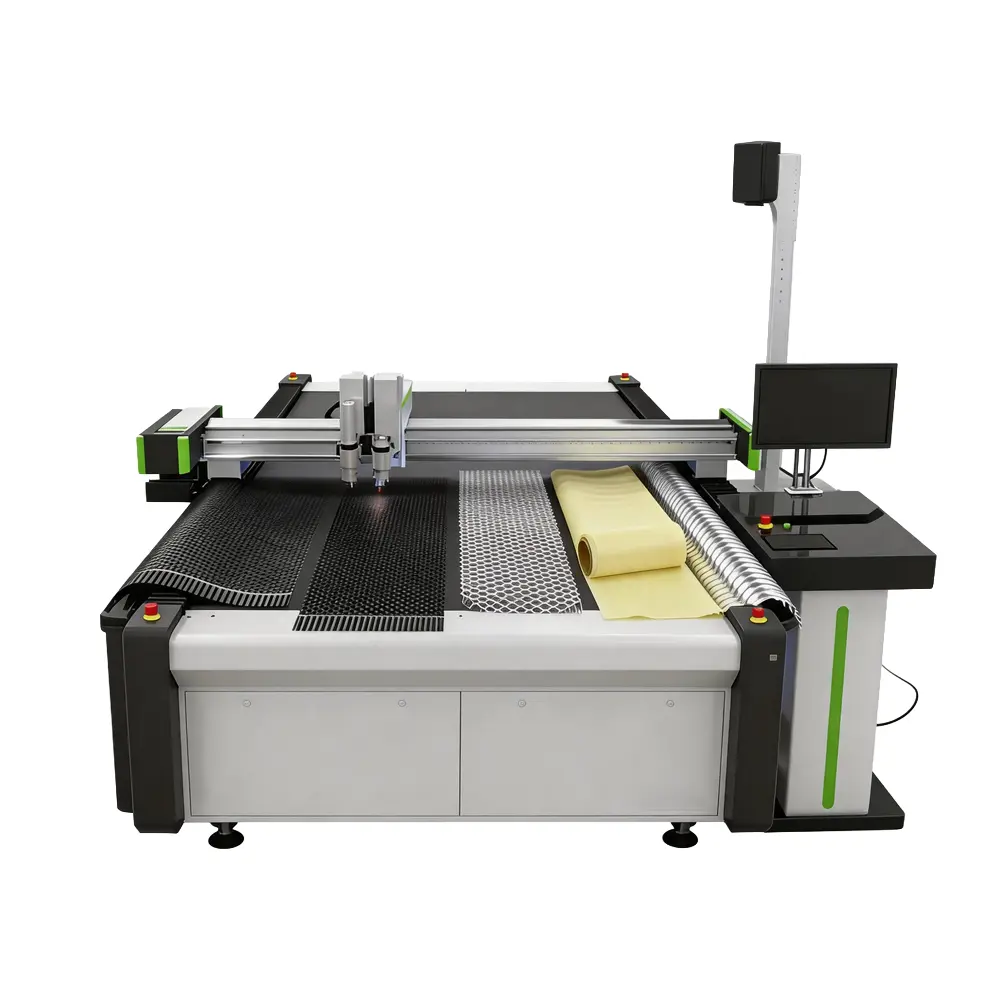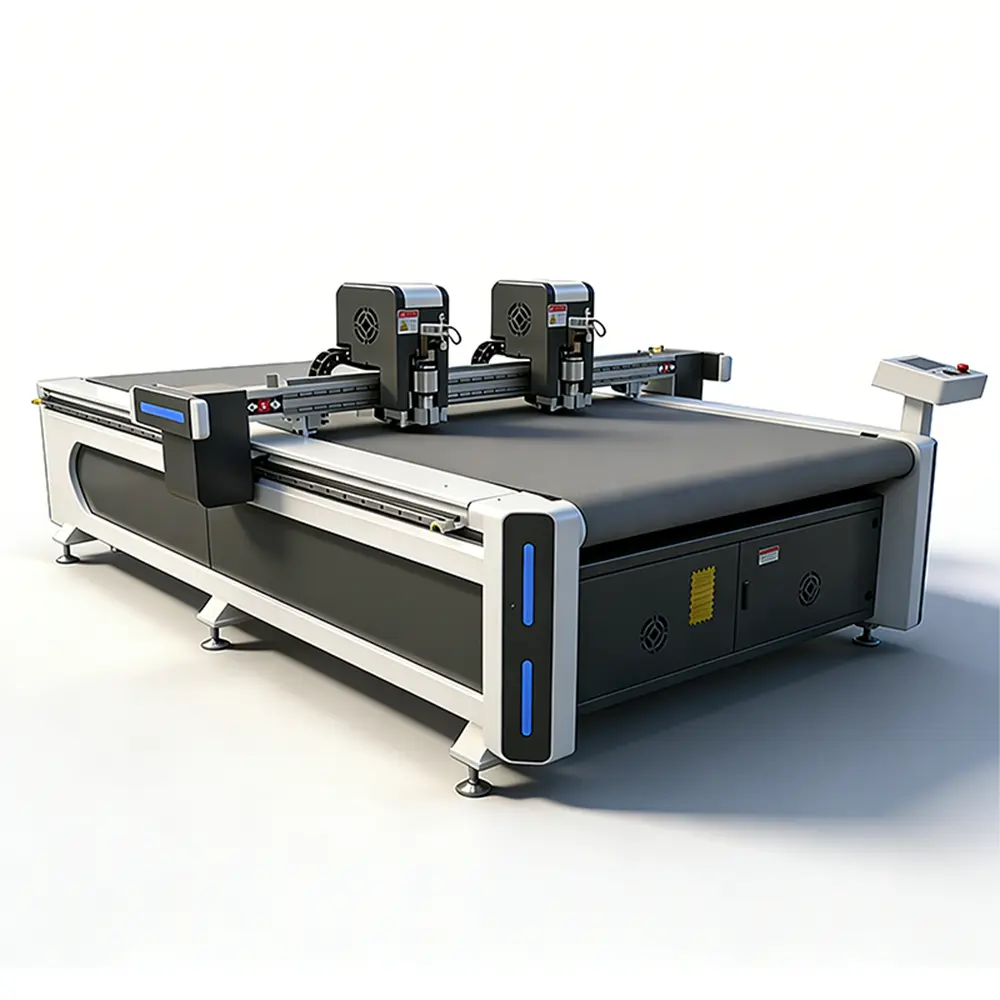
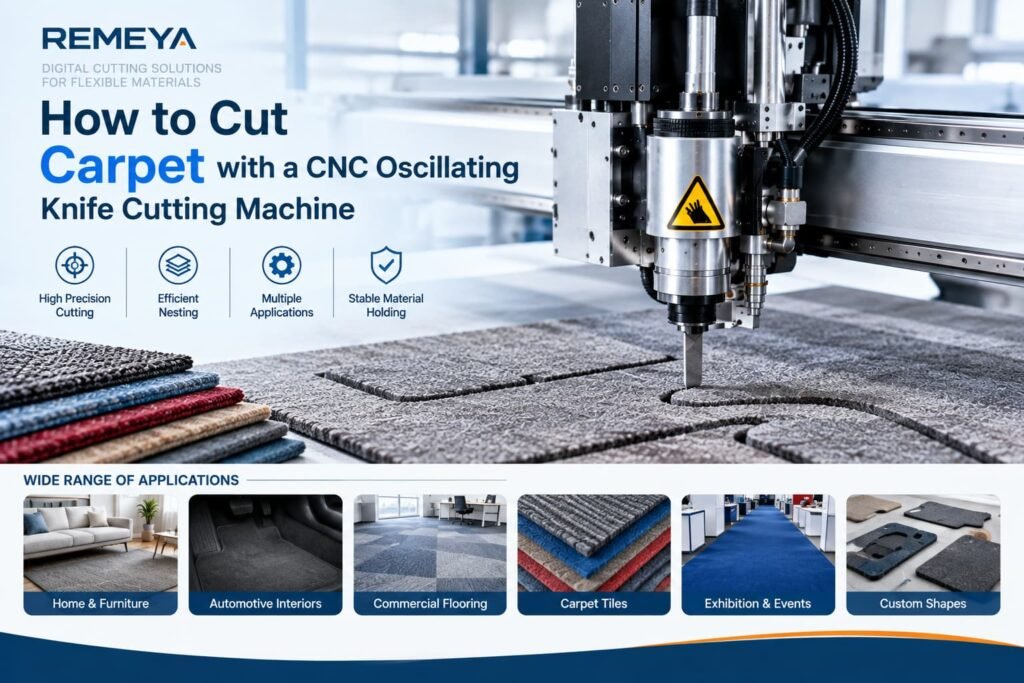
How to Cut Carpet with a CNC Oscillating Knife Cutting Machine
Carpet is a common flooring material, but cutting carpet accurately is not always as simple as it looks. Straight cuts can be relatively easy for a trained operator. The challenge becomes much greater when production involves irregular shapes, repeated patterns, custom dimensions, carpet tiles, vehicle flooring, exhibition flooring, or large numbers of different parts. Traditional carpet knives and manual cutting tools can work well for simple jobs. However, they rely heavily on operator skill and usually require more manual work when the number of shapes and orders increases. A CNC oscillating knife cutting machine provides a digital alternative. Instead of manually tracing and cutting each shape, manufacturers can import a digital drawing, arrange multiple parts on the material, and let the CNC knife follow the programmed cutting paths. This makes digital carpet cutting particularly useful for custom flooring, automotive interiors, modular carpet products, exhibitions, commercial spaces, and manufacturers handling multiple carpet designs. Why Is Carpet Difficult to Cut? Carpet is not one single type of material. Different carpet products may contain: The cutting behavior can therefore vary significantly. The operator may need to consider both the carpet surface and the backing material. Some of the main challenges include: A suitable
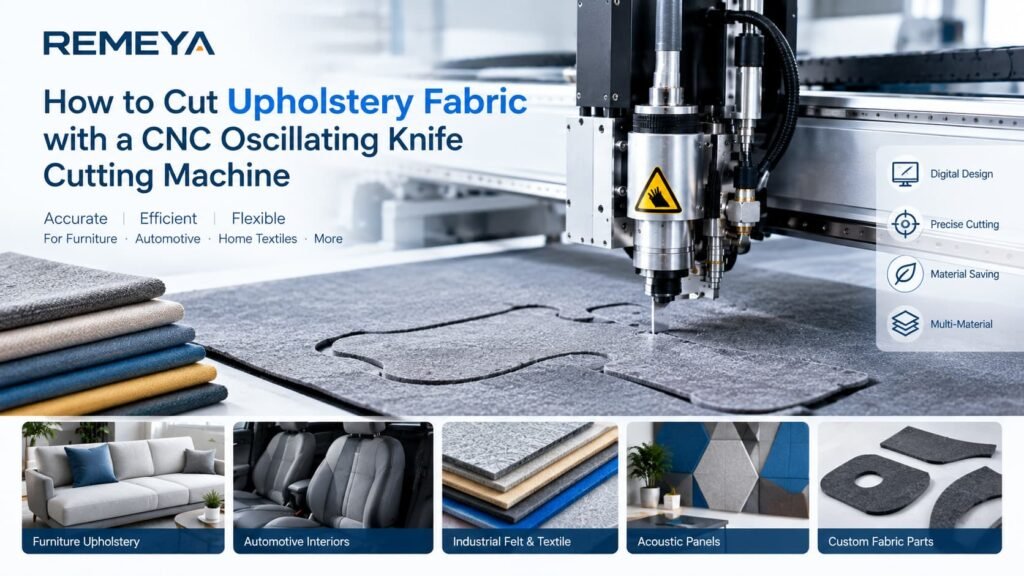
How to Cut Upholstery Fabric with a CNC Oscillating Knife Cutting Machine
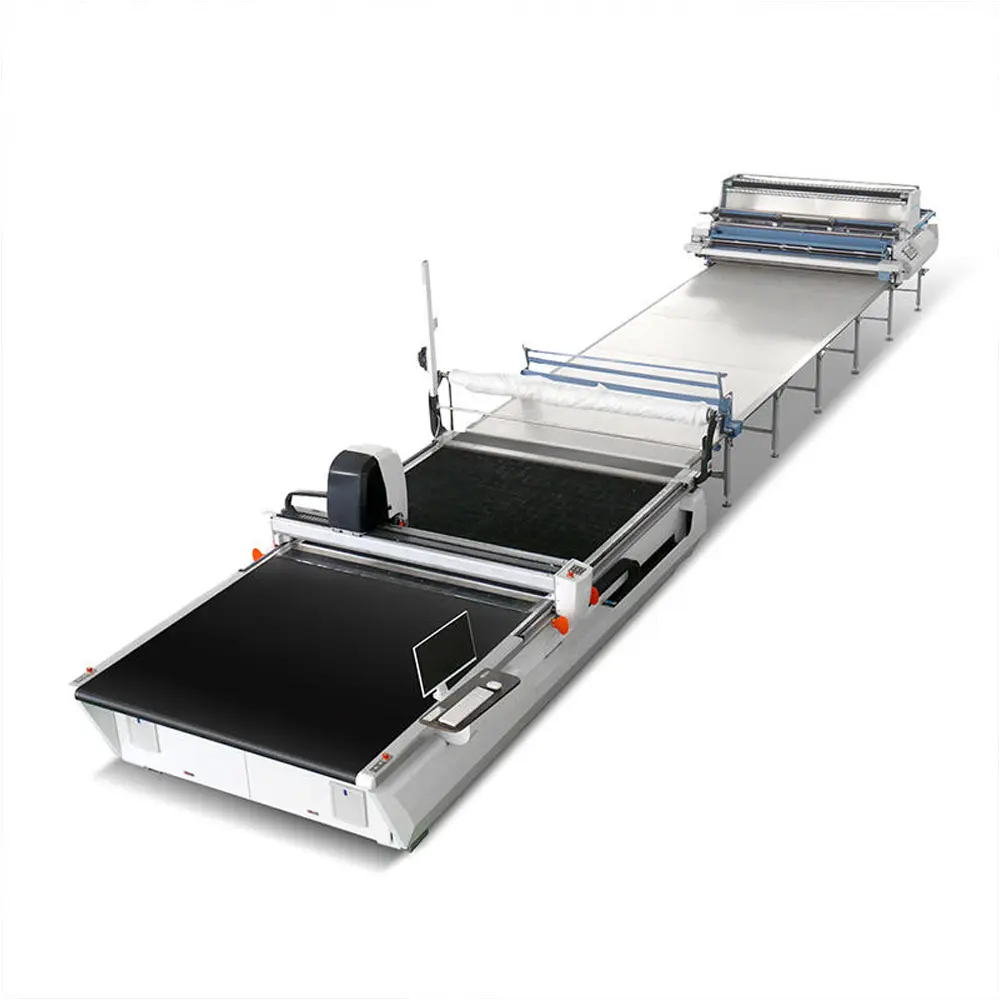
Upholstery fabric may look simple to cut, but producing consistent parts at scale is a very different challenge from cutting a single piece by hand. Furniture manufacturers, automotive suppliers, interior-product manufacturers, and upholstery workshops often need to cut the same pattern in different sizes while maintaining accurate dimensions and minimizing material waste. Traditional scissors, rotary cutters, and manual templates can work for low-volume production. However, as the number of patterns, product variations, and daily orders increases, manual cutting can become slow and difficult to control. A CNC oscillating knife cutting machine provides a digital alternative. Instead of using a physical template for every shape, the manufacturer can prepare a digital pattern, arrange multiple pieces through nesting software, and use the CNC system to guide the knife along the programmed cutting paths. This approach can be especially useful for custom upholstery, short production runs, prototypes, multiple SKUs, and manufacturers that need a flexible fabric-cutting workflow. Why Is Upholstery Fabric Difficult to Cut Accurately? Fabric is flexible. Unlike rigid sheet materials, it can move, stretch, fold, or shift during cutting. Different upholstery fabrics can also behave very differently depending on their construction. Common materials include: The main challenge is not simply getting
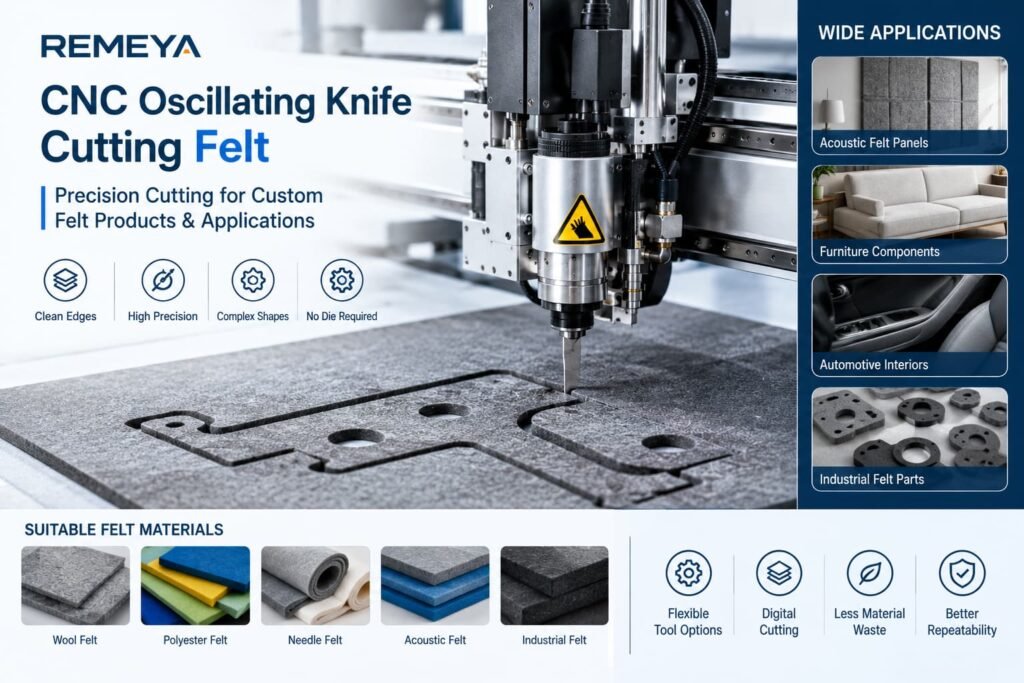
How to Cut Felt with a CNC Oscillating Knife Cutting Machine
Felt is a surprisingly versatile material. It is used for acoustic panels, furniture components, industrial pads, protective liners, automotive interiors, displays, packaging, insulation products, and many custom-made parts. The challenge is that felt does not behave exactly like ordinary fabric. Depending on the material structure, thickness, density, and fiber composition, felt can compress during cutting, move under the knife, leave rough edges, or produce dimensional variations when it is processed manually. For manufacturers producing different shapes, sizes, and designs, a CNC oscillating knife cutting machine can provide a much more repeatable way to process felt sheets and rolls. Instead of using a fixed metal die for every shape, the operator can load a digital drawing, position the material on the cutting table, and let the CNC knife follow the programmed toolpath. This makes CNC felt cutting particularly useful for custom orders, short production runs, prototypes, and products with many different designs. Why Is Felt Difficult to Cut? Felt looks simple, but its internal structure can make cutting more complicated than expected. Unlike woven fabric, many felt products are formed from compressed or bonded fibers. This means the material may behave differently depending on its density and construction. Several factors can
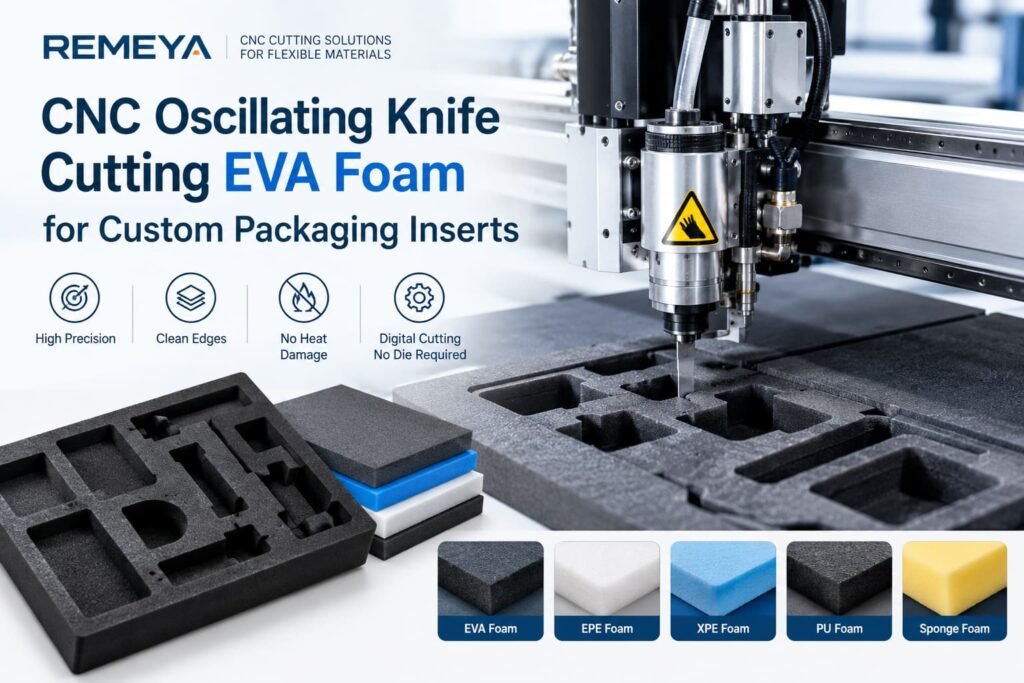
How to Cut EVA Foam with a CNC Oscillating Knife Cutting Machine
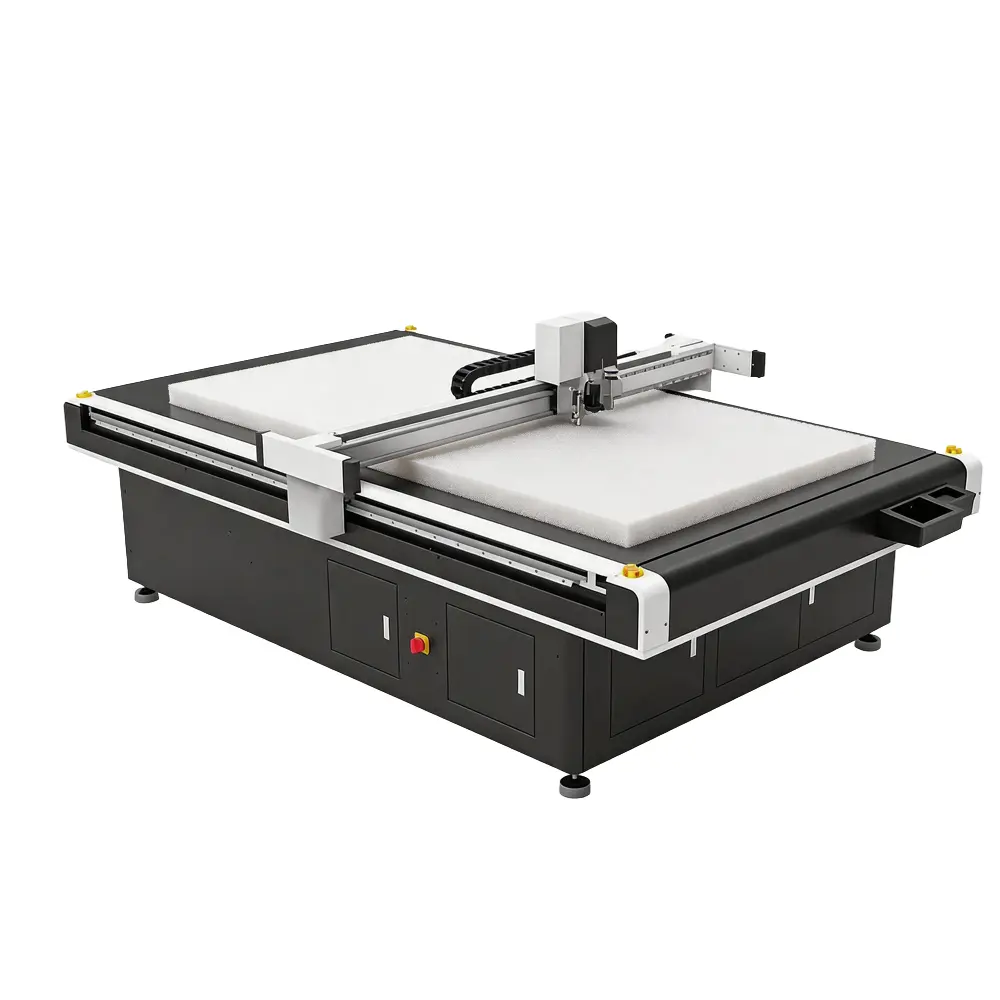
EVA foam is widely used for packaging inserts, footwear components, protective padding, automotive parts and custom industrial products. However, cutting EVA foam accurately is not as simple as cutting a rigid sheet. The material can compress, stretch, deform or produce uneven edges when the wrong cutting method is used. For manufacturers producing different shapes, small batches or custom foam parts, choosing the right cutting process is an important production decision. A CNC oscillating knife cutting machine provides a digital cutting solution for many EVA foam sheet applications. Instead of using heat, the machine uses a vibrating blade to follow a programmed cutting path. This article explains how to cut EVA foam, what affects cutting quality, and how to choose a suitable CNC foam cutting machine. What Is EVA Foam? EVA stands for ethylene-vinyl acetate. It is a lightweight, flexible foam material used in many manufacturing applications. Common EVA foam applications include: EVA foam is available in different densities, thicknesses, surface finishes and formulations. These differences can significantly affect how the material behaves during cutting. For this reason, a cutting method that works well for one EVA foam may not produce the same result on another. Why Is EVA Foam Difficult
Oscillating Knife vs Laser Cutting for Flexible Materials: Which Is Better?
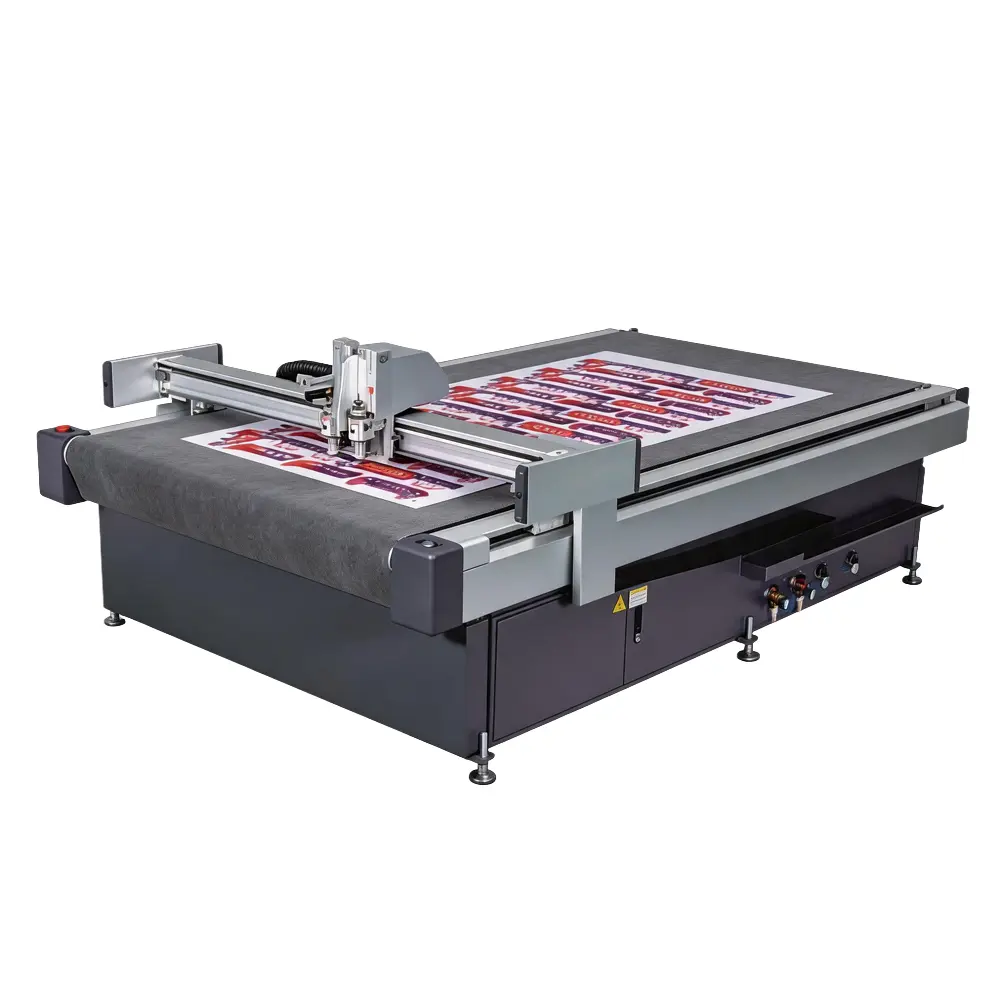
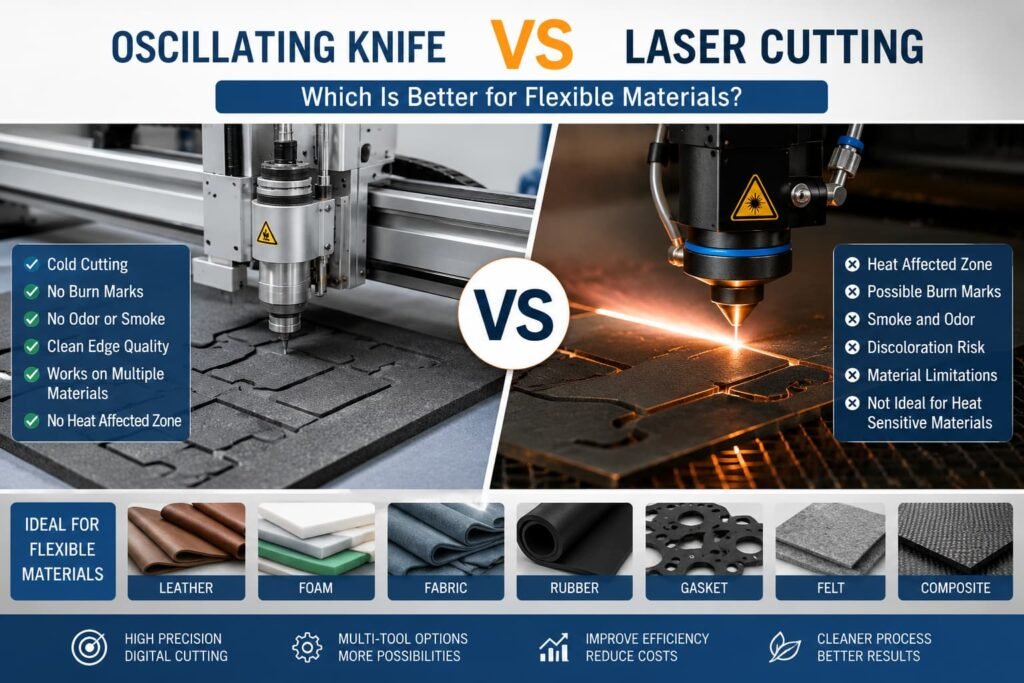
When manufacturers need to cut flexible and semi-rigid materials, two technologies are often compared: laser cutting and CNC oscillating knife cutting. Both can produce complex shapes directly from digital files, but they work in fundamentally different ways. A laser cuts by concentrating heat onto the material. An oscillating knife uses a mechanically vibrating blade to physically cut through the material. For materials such as leather, foam, fabric, rubber, gasket sheets, felt, honeycomb board and certain composite materials, this difference can have a major impact on edge quality, material behavior, production cost and the final application. So which technology is better? The answer depends on the material, thickness, required edge quality, production volume and application. This guide explains the key differences between oscillating knife cutting and laser cutting and helps manufacturers choose the right cutting technology for flexible materials. What Is an Oscillating Knife Cutting Machine? An oscillating knife cutting machine is a CNC digital cutting system that uses a rapidly moving blade to cut materials. Instead of applying heat, the blade moves up and down at high frequency while the CNC system controls the X and Y movement according to a digital cutting file. The result is a mechanical cold-cutting
Choosing a Digital Flatbed Cutter: 5 Truths That Save You from Regret
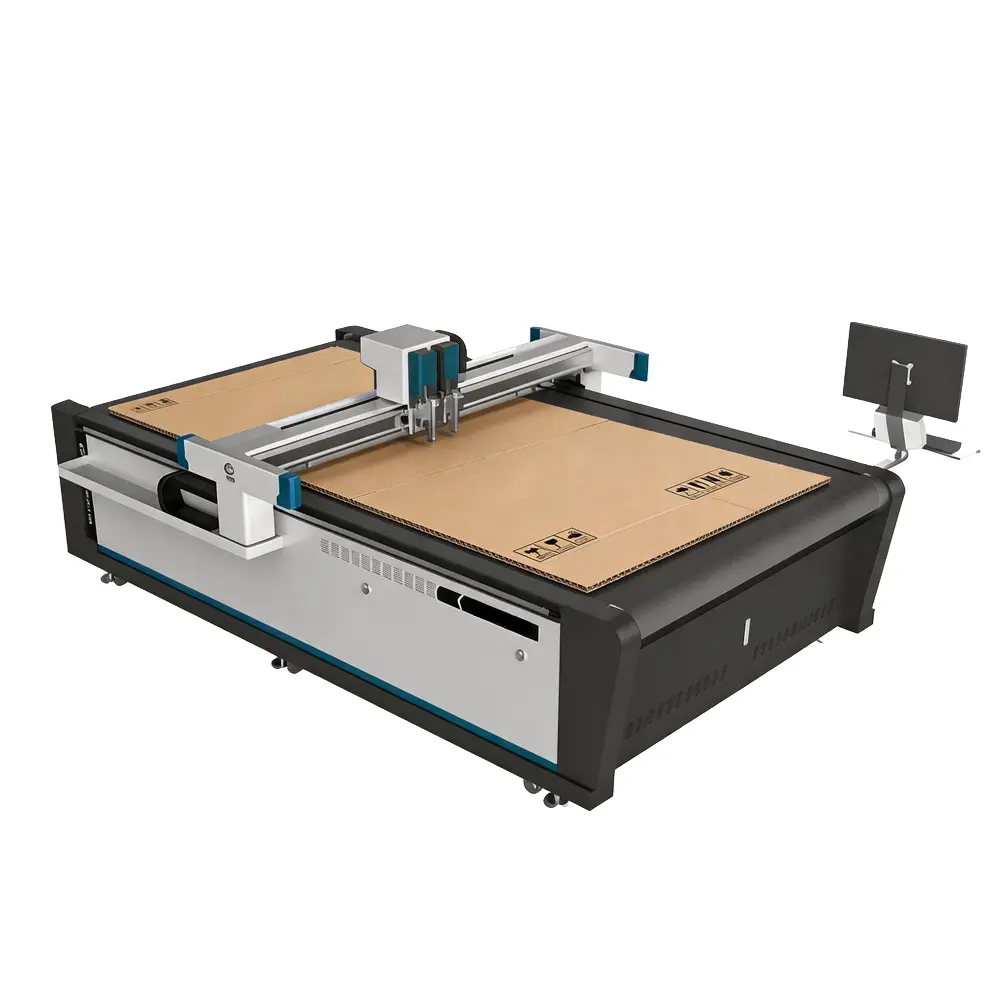
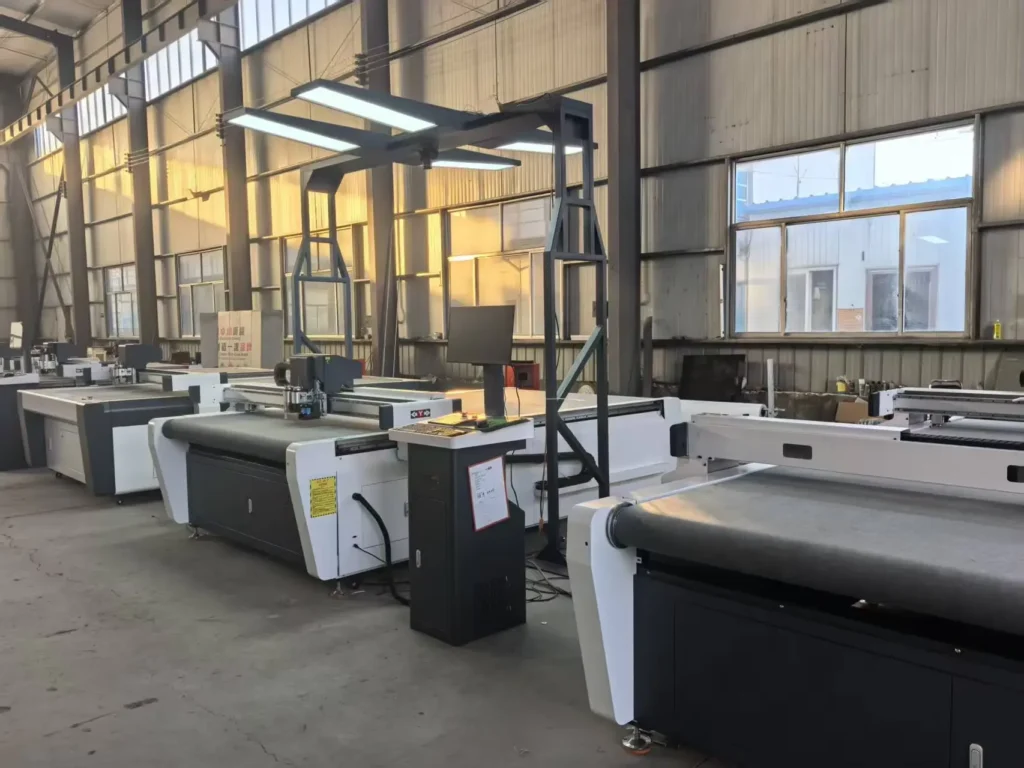
In a workshop that handles flexible materials, the real cost isn’t the machine’s price tag—it’s the six months of downtime, rework, and scrapped sheets that follow a bad purchase. Sales brochures boast “120 m/min speed,” “±0.05 mm accuracy,” and “cuts up to 120 mm thick.” But those numbers rarely translate to reliable production. I’ve seen too many factories buy a machine that looks great on paper but can’t produce a clean edge on 25 mm EVA foam. Selecting a cutter isn’t about buying a sports car; it’s about buying work boots—solid, durable, and made for your specific floor. Here are five hard-earned lessons to guide you. 1. Don’t Ask “What Can It Cut?” — Ask “How Does It Finish?” The first question most buyers ask is: “Can it cut foam?”The better question is: “Will my foam have a fuzzy or melted edge?” Materials are not one-size-fits-all. EPE foam is light and springy; EVA foam is dense and heat-sensitive. An oscillating knife that glides through EPE may burn or powder EVA if the amplitude and frequency aren’t tuned. Corrugated board has flutes—cutting across them versus along them changes resistance entirely. Crease quality matters just as much as cutting; a poor crease
How to Cut Carpet with a CNC Oscillating Knife Cutting Machine
Carpet is a common flooring material, but cutting carpet accurately is not always as simple as it looks. Straight cuts can be relatively easy for a trained operator. The challenge becomes much greater when production involves irregular shapes, repeated patterns, custom dimensions, carpet tiles, vehicle flooring, exhibition flooring, or large numbers of different parts. Traditional carpet knives and manual cutting tools can work well for simple jobs. However, they rely heavily on operator skill and usually require more manual work when the number of shapes and orders increases. A CNC oscillating knife cutting machine provides a digital alternative. Instead of manually tracing and cutting each shape, manufacturers can import a digital drawing, arrange multiple parts on the material, and let the CNC knife follow the programmed cutting paths. This makes digital carpet cutting particularly useful for custom flooring, automotive interiors, modular carpet products, exhibitions, commercial spaces, and manufacturers handling multiple carpet designs. Why Is Carpet Difficult to Cut? Carpet is not one single type of material. Different carpet products may contain: The cutting behavior can therefore vary significantly. The operator may need to consider both the carpet surface and the backing material. Some of the main challenges include: A suitable
How to Cut Upholstery Fabric with a CNC Oscillating Knife Cutting Machine
Upholstery fabric may look simple to cut, but producing consistent parts at scale is a very different challenge from cutting a single piece by hand. Furniture manufacturers, automotive suppliers, interior-product manufacturers, and upholstery workshops often need to cut the same pattern in different sizes while maintaining accurate dimensions and minimizing material waste. Traditional scissors, rotary cutters, and manual templates can work for low-volume production. However, as the number of patterns, product variations, and daily orders increases, manual cutting can become slow and difficult to control. A CNC oscillating knife cutting machine provides a digital alternative. Instead of using a physical template for every shape, the manufacturer can prepare a digital pattern, arrange multiple pieces through nesting software, and use the CNC system to guide the knife along the programmed cutting paths. This approach can be especially useful for custom upholstery, short production runs, prototypes, multiple SKUs, and manufacturers that need a flexible fabric-cutting workflow. Why Is Upholstery Fabric Difficult to Cut Accurately? Fabric is flexible. Unlike rigid sheet materials, it can move, stretch, fold, or shift during cutting. Different upholstery fabrics can also behave very differently depending on their construction. Common materials include: The main challenge is not simply getting
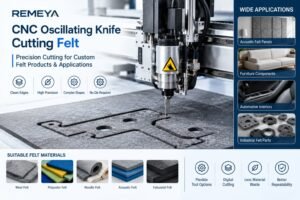
How to Cut Felt with a CNC Oscillating Knife Cutting Machine
Felt is a surprisingly versatile material. It is used for acoustic panels, furniture components, industrial pads, protective liners, automotive interiors, displays, packaging, insulation products, and many custom-made parts. The challenge is that felt does not behave exactly like ordinary fabric. Depending on the material structure, thickness, density, and fiber composition, felt can compress during cutting, move under the knife, leave rough edges, or produce dimensional variations when it is processed manually. For manufacturers producing different shapes, sizes, and designs, a CNC oscillating knife cutting machine can provide a much more repeatable way to process felt sheets and rolls. Instead of using a fixed metal die for every shape, the operator can load a digital drawing, position the material on the cutting table, and let the CNC knife follow the programmed toolpath. This makes CNC felt cutting particularly useful for custom orders, short production runs, prototypes, and products with many different designs. Why Is Felt Difficult to Cut? Felt looks simple, but its internal structure can make cutting more complicated than expected. Unlike woven fabric, many felt products are formed from compressed or bonded fibers. This means the material may behave differently depending on its density and construction. Several factors can
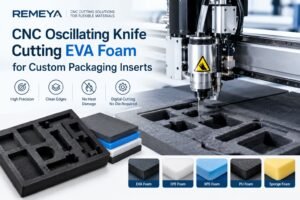
How to Cut EVA Foam with a CNC Oscillating Knife Cutting Machine
EVA foam is widely used for packaging inserts, footwear components, protective padding, automotive parts and custom industrial products. However, cutting EVA foam accurately is not as simple as cutting a rigid sheet. The material can compress, stretch, deform or produce uneven edges when the wrong cutting method is used. For manufacturers producing different shapes, small batches or custom foam parts, choosing the right cutting process is an important production decision. A CNC oscillating knife cutting machine provides a digital cutting solution for many EVA foam sheet applications. Instead of using heat, the machine uses a vibrating blade to follow a programmed cutting path. This article explains how to cut EVA foam, what affects cutting quality, and how to choose a suitable CNC foam cutting machine. What Is EVA Foam? EVA stands for ethylene-vinyl acetate. It is a lightweight, flexible foam material used in many manufacturing applications. Common EVA foam applications include: EVA foam is available in different densities, thicknesses, surface finishes and formulations. These differences can significantly affect how the material behaves during cutting. For this reason, a cutting method that works well for one EVA foam may not produce the same result on another. Why Is EVA Foam Difficult
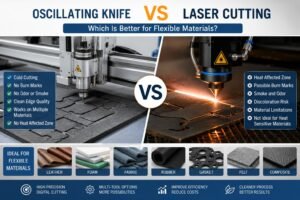
Oscillating Knife vs Laser Cutting for Flexible Materials: Which Is Better?
When manufacturers need to cut flexible and semi-rigid materials, two technologies are often compared: laser cutting and CNC oscillating knife cutting. Both can produce complex shapes directly from digital files, but they work in fundamentally different ways. A laser cuts by concentrating heat onto the material. An oscillating knife uses a mechanically vibrating blade to physically cut through the material. For materials such as leather, foam, fabric, rubber, gasket sheets, felt, honeycomb board and certain composite materials, this difference can have a major impact on edge quality, material behavior, production cost and the final application. So which technology is better? The answer depends on the material, thickness, required edge quality, production volume and application. This guide explains the key differences between oscillating knife cutting and laser cutting and helps manufacturers choose the right cutting technology for flexible materials. What Is an Oscillating Knife Cutting Machine? An oscillating knife cutting machine is a CNC digital cutting system that uses a rapidly moving blade to cut materials. Instead of applying heat, the blade moves up and down at high frequency while the CNC system controls the X and Y movement according to a digital cutting file. The result is a mechanical cold-cutting
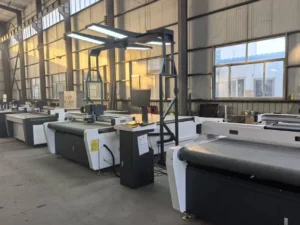
Choosing a Digital Flatbed Cutter: 5 Truths That Save You from Regret
In a workshop that handles flexible materials, the real cost isn’t the machine’s price tag—it’s the six months of downtime, rework, and scrapped sheets that follow a bad purchase. Sales brochures boast “120 m/min speed,” “±0.05 mm accuracy,” and “cuts up to 120 mm thick.” But those numbers rarely translate to reliable production. I’ve seen too many factories buy a machine that looks great on paper but can’t produce a clean edge on 25 mm EVA foam. Selecting a cutter isn’t about buying a sports car; it’s about buying work boots—solid, durable, and made for your specific floor. Here are five hard-earned lessons to guide you. 1. Don’t Ask “What Can It Cut?” — Ask “How Does It Finish?” The first question most buyers ask is: “Can it cut foam?”The better question is: “Will my foam have a fuzzy or melted edge?” Materials are not one-size-fits-all. EPE foam is light and springy; EVA foam is dense and heat-sensitive. An oscillating knife that glides through EPE may burn or powder EVA if the amplitude and frequency aren’t tuned. Corrugated board has flutes—cutting across them versus along them changes resistance entirely. Crease quality matters just as much as cutting; a poor crease