
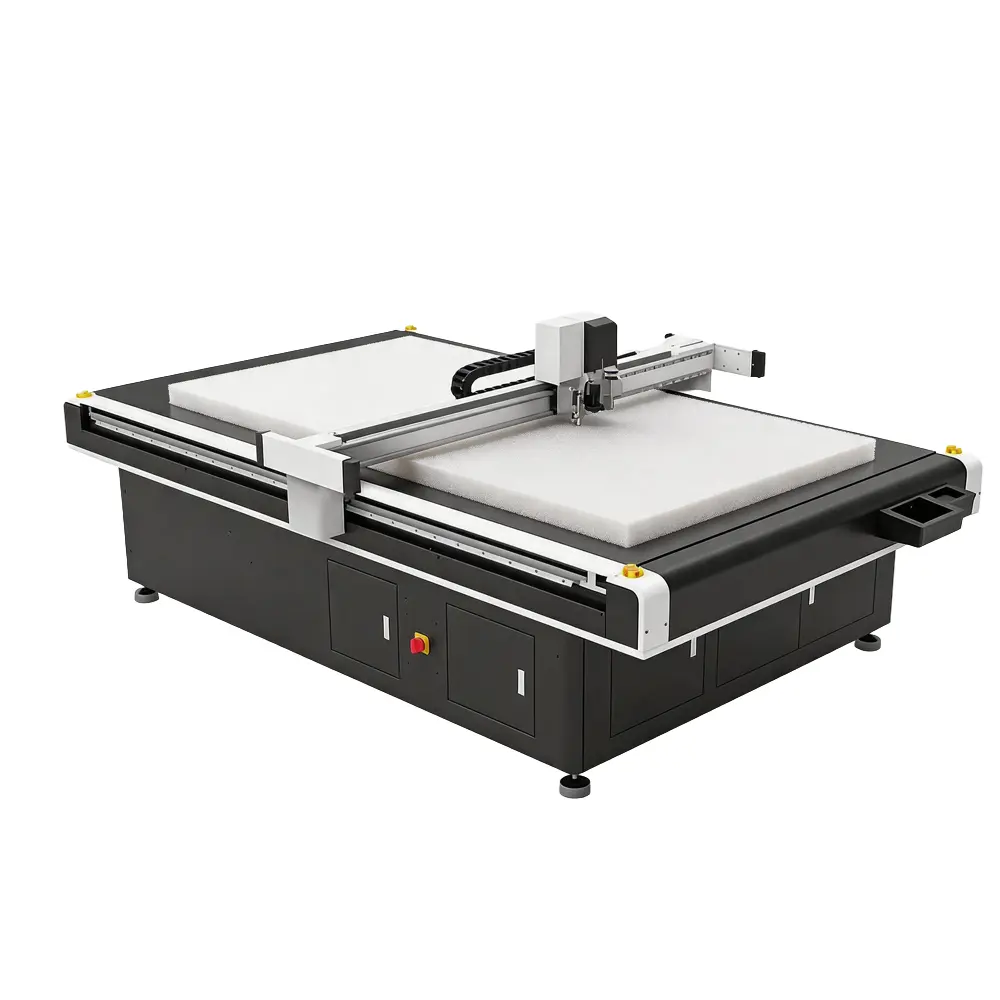
What problem does this CNC Vibrating Knife Foam Cutting machine solve for foam cutting?
Foam is tricky with traditional methods:
- Laser cutting – Foam melts. Edges turn yellow or brown, shrink, and produce a bad smell. Many customers reject laser‑cut foam for packaging or medical parts.
- Die cutting (steel rule dies) – A new die costs money and takes days. Change the design? Pay for another die. Only makes sense for millions of same‑shape parts.
- Manual cutting – Hard to cut curves, impossible for small holes. Slow, and workers get tired.
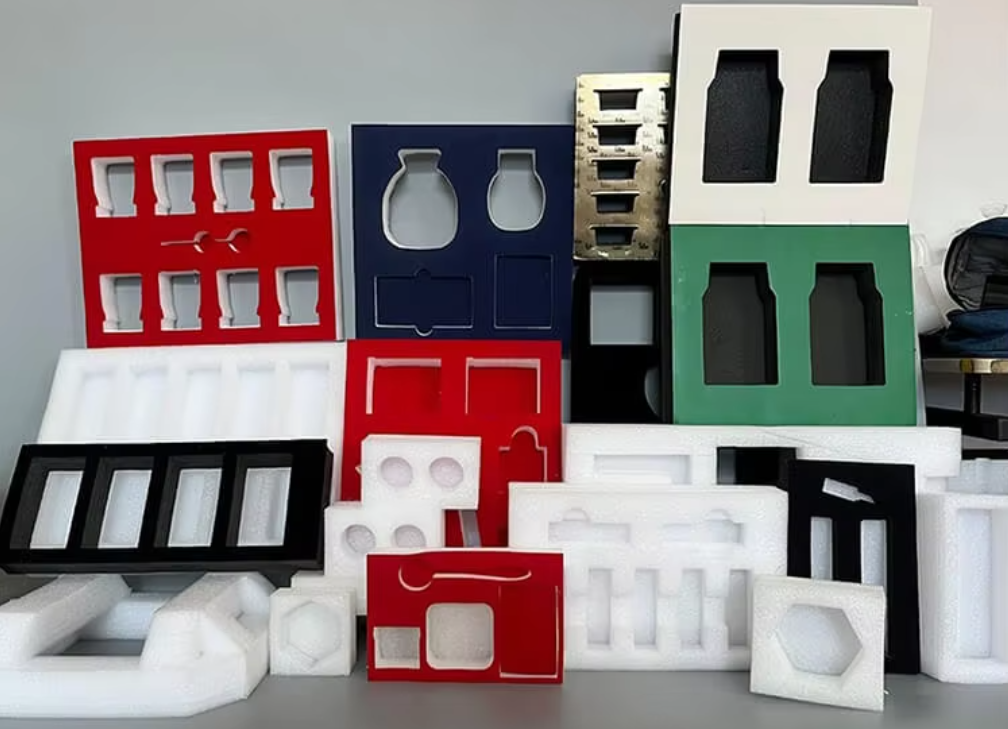
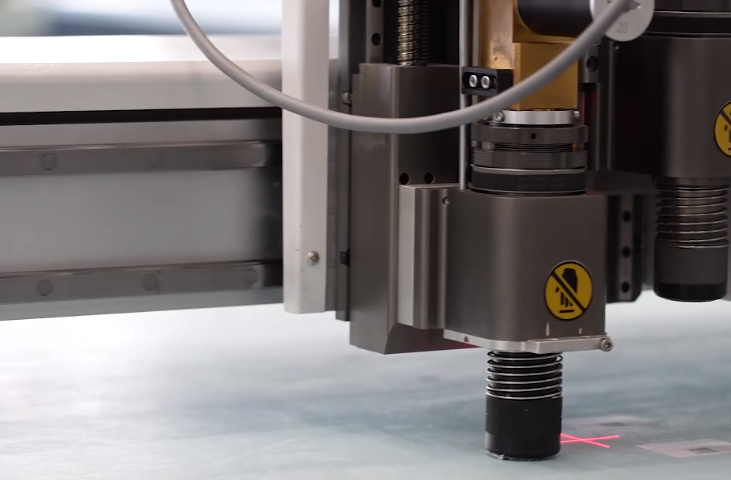
A vibrating knife cutter removes all these limits. The blade moves so fast it acts like a micro‑saw. No heat reaches the foam. What you see in your software is what the machine cuts – accurately, without melting.
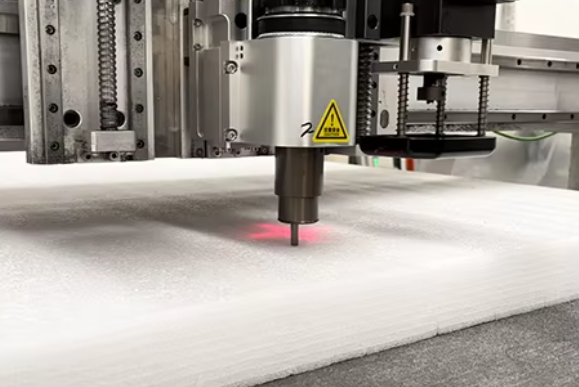
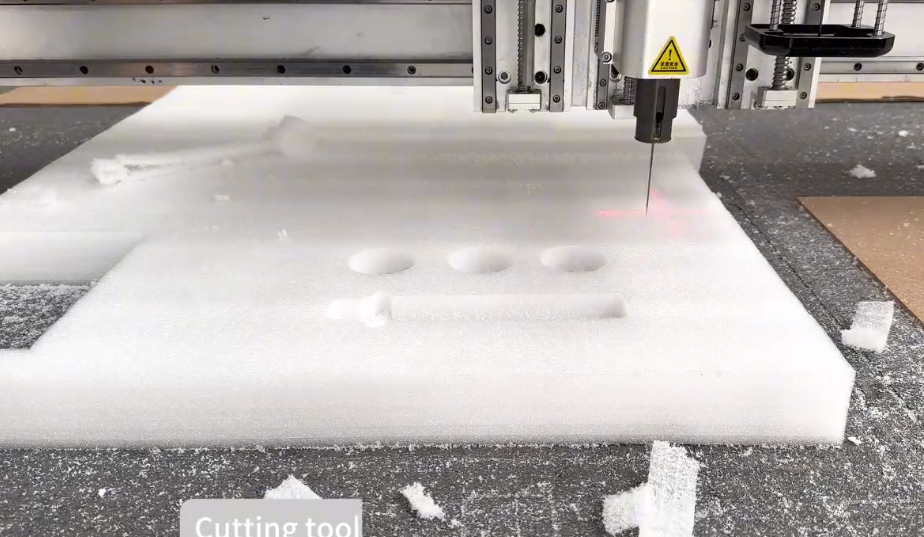
Key performance – speed, thickness, accuracy (real shop floor numbers)
Cutting accuracy – Positioning repeatability ≤ ±0.05 mm, final part accuracy within ±0.1 mm. A 10 mm circle will measure 10 mm – error is thinner than a human hair.
Cutting speed – Idle speed 1200‑1500 mm/s. Real cutting on EPE foam (20 mm thick): we run at 1000‑1200 mm/s. A typical phone case inner tray finishes in 15‑20 seconds.
Cutting thickness – For low‑density foams like EPE or soft PU: up to 100 mm in one pass. For denser EVA or EPS: typically 50‑60 mm. Thin sheets down to 0.5 mm? Yes, as long as the vacuum holds it flat.
Work table – Standard size 1600×2500 mm. Custom sizes available. The table has a zoned vacuum system – turn it on and the whole foam sheet sticks tight. No shifting during cutting.
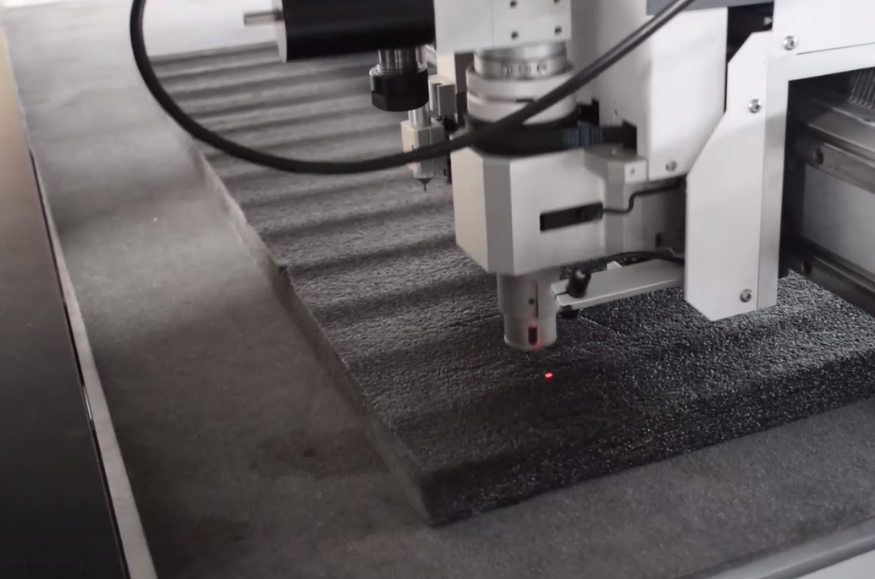
Vibrating knife vs. laser, die, hand – quick comparison
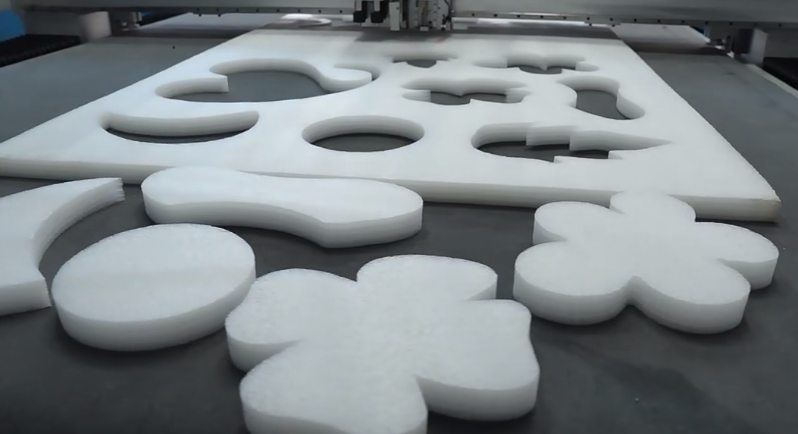
Vs. laser: Laser is fast and non‑contact, but foam hates heat. Even a “clean” laser will melt cell walls. For premium packaging or medical foam, melted edges = rejected parts. Vibrating knife keeps the foam original – white, clean, no rework.
Vs. die cutting: Dies are great for millions of parts. If you run 500‑5000 pieces per batch or change shapes every week, dies kill your profit. With CNC vibration knife, you buy the machine once. After that, every new shape costs zero tooling.
Vs. hand cutting: A skilled worker can cut straight lines. Curves and small holes? Inconsistent. One machine can replace 4‑6 hand cutters, with every piece identical.
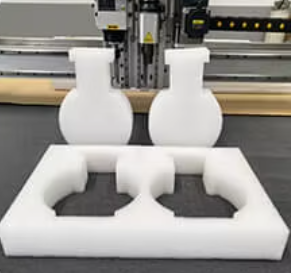
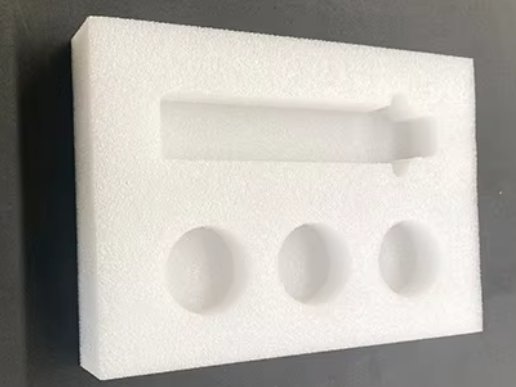
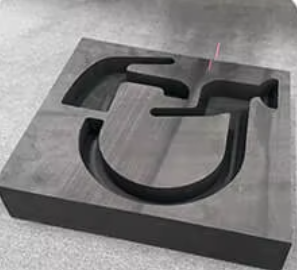
Foam materials we’ve actually tested (with real process tuning)
Not every vibrating knife works well on every foam. We tuned blade frequency, amplitude and knife geometry for these materials:
- EPE (polyethylene foam / pearl cotton) – Most common job. Clean cut, no powdery residue.
- PU polyurethane foam (soft foam) – Including high‑resilience, memory foam, acoustic foam. We adjust cutting speed to avoid hairy edges.
- EPS expanded polystyrene – Cuts without crumbling. No bead separation.
- XPS extruded polystyrene – Harder than EPS, still cuttable – used for building insulation.
- EVA foam – Both soft and hard types, from insole sheets to yoga mats.
- CR neoprene (chloroprene rubber foam) – Requires a pneumatic vibrating knife (optional). We have that option.
- Laminated / composite foam – Foam with adhesive, fabric or film layers – cuts through all layers in one pass.
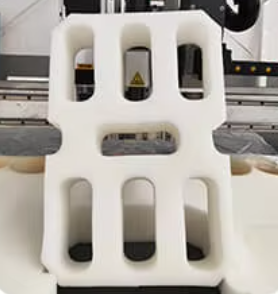
sponge
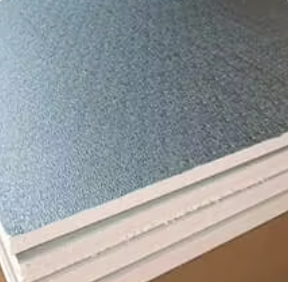
phenolic board
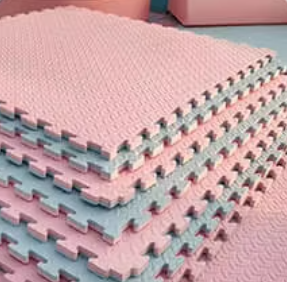
XPEfoam
Software and operation – what does a real operator do?
Many buyers worry about training. Here’s the real workflow:
- Draw your part or open a customer’s file (DXF, AI, PLT, SVG).
- Use our nesting software – it automatically arranges parts to save material.
- Place foam sheet on the table, turn on vacuum – sheet is locked.
- Load the file in machine control, pick cutting speed and blade depth (simple drop‑downs).
- Press Start. Machine runs. Remove finished parts.
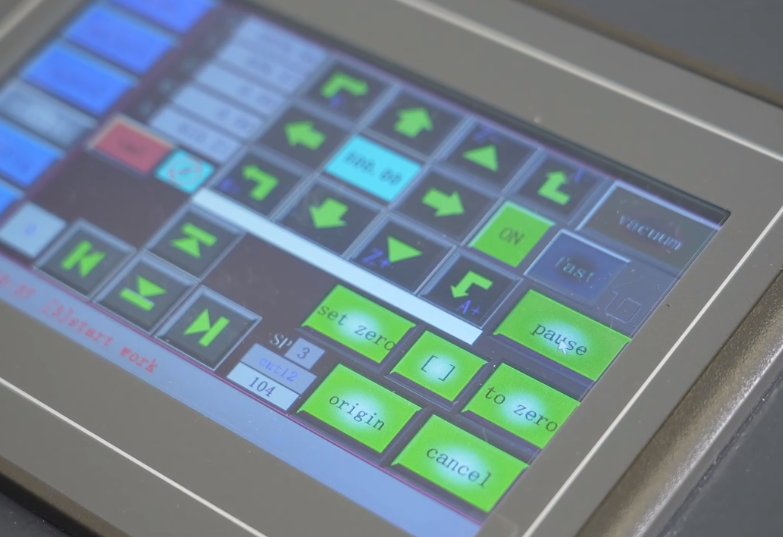
A typical operator learns in two days. The control interface is available in English / Chinese / Spanish.
Additional features you get on this machine
- Multi‑tool head – Same head accepts oscillating knife, creasing wheel (for folding lines), or a milling bit (for hard materials). Tool change takes 2‑3 minutes.
- Infrared safety curtain – If hands or objects block the IR beam, the machine stops immediately. Required for worker safety.
- Auto blade calibration – The machine senses material surface height. No manual focus.
- Collision protection – If blade hits unexpected resistance (embedded hard object, etc.), the head lifts up to prevent breakage.
Who uses this machine? Real industries we’ve sold to
Packaging companies – Custom foam inserts for electronics, medical devices, power tools, luxury goods. EPE and PU inner trays.
Automotive interior suppliers – Seat cushions, headrests, roof sound‑deadening foam, door panel insulation.
Medical & rehab – Wheelchair seating foam, surgical positioning pads, orthotic inlays, medical device packaging.
Sports & furniture – Yoga mat cut‑to‑shape, gym flooring, sofa back foam, custom padding.
HVAC and insulation – Pipe insulation sleeves, acoustic panels, cold storage insulation boards.
Technical specs – standard model (custom options available)
Cutting area: 1600 × 2500 mm (optional 2000×3000 or longer with conveyor).
Max cutting speed: 1400 mm/s (practical range 800‑1200 mm/s depending on foam).
Cutting accuracy: ≤ ±0.1 mm, repeatability ≤ ±0.05 mm.
Max cutting thickness: 100 mm for low‑density foams, ~60 mm for high‑density.
Knife type: High‑frequency oscillating knife (standard), pneumatic knife option.
Drive system: Panasonic servo motors, Hiwin linear guides, rack & pinion.
Hold‑down: Full vacuum table with zone valves (save power on small sheets).
Power: 220V or 380V, 50/60Hz, total ~5.5 kW (excluding vacuum pump).
Safety: IR light curtain, emergency stop, anti‑collision sensor.
File formats: DXF, AI, PLT, SVG – with auto‑nesting.
FAQ – what customers actually ask before buying
Q: Any burrs or fuzzy edges on foam?
A: No. The blade cuts each cell cleanly – it doesn’t tear. We supply foam‑specific blades. Edge is smooth.
Q: Can it cut self‑adhesive foam (e.g., EPE with double‑sided tape)?
A: Yes. The blade moves so fast that adhesive doesn’t stick. We also add a “lift‑and‑jump” path to avoid dragging.
Q: How many parts per hour?
A: Depends on part size and foam density. Example: phone case inner tray (EPE, 180×120×15mm) – about 220‑260 pieces/hour. Car seat foam block (PU, 500×400×40mm) – 40‑60 pieces/hour. Send us your drawing, we’ll time a test cut free.
Q: Is the machine loud?
A: Most noise comes from the vacuum pump (75‑80 dB). The blade itself is quiet. You can put pump inside a small insulated room or outside the workshop.
Q: Maintenance – heavy or light?
A: Light. Daily: blow dust off the table. Change blades every 200‑500 hours of cutting (blades cost around $12‑20 each). Grease linear rails weekly. That’s it. We provide remote video support.
Q: Can I send my foam for a test cut before purchase?
A: Yes. Free sample cutting service. Ship us a piece of your foam (or tell us the material and thickness – we can buy locally). We cut, photograph, video the process, and send back the cut sample. No charge.
Shipping, installation & support – what you get
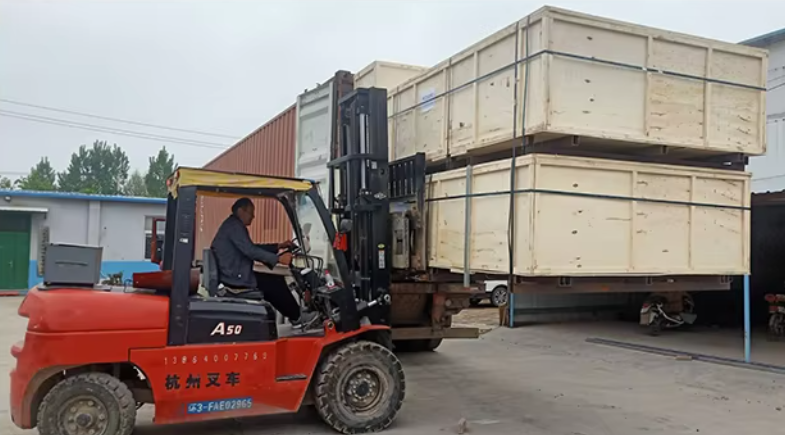
Every machine runs 24 hours continuous test before packing. Your shipment includes:
- Main cutting machine
- Vacuum pump and hoses
- Tool set: oscillating knife + 10 spare blades, creasing wheel
- Control software on USB drive
- English manual + quick start video
- Wired hand controller
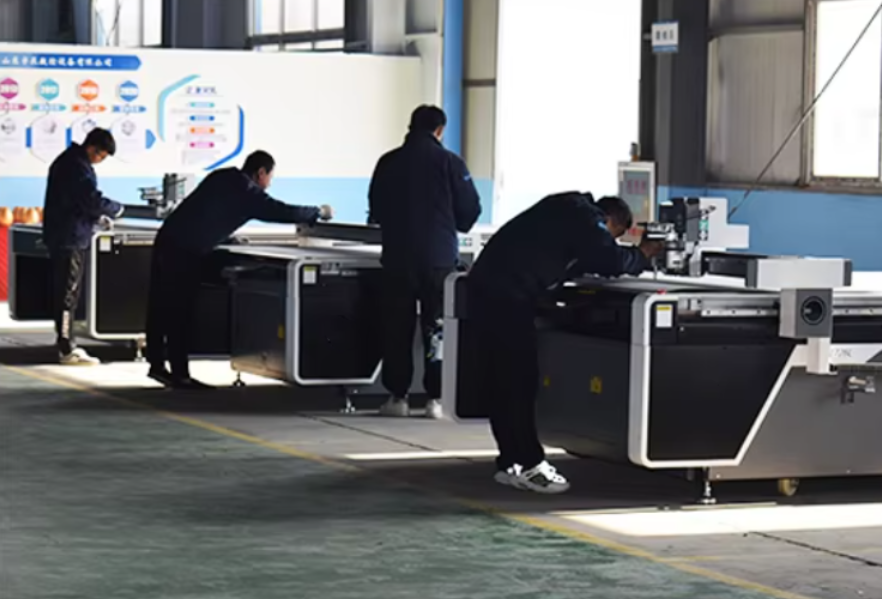
We arrange engineer for on‑site installation and training (or remote guided setup – your choice). The engineer stays until your operator makes the first good part.
After installation: lifetime remote support. Text, call, or TeamViewer. Day and night support line for urgent issues.
Want a quote or free sample cut? Just contact us – no need to figure out every spec first
The fastest way to move forward:
- Tell us which foam type and thickness you mainly cut
- Send a drawing or photo of the part you want to make
- We send you machine price + free sample cut result
Response time: within 2 working hours (Mon‑Fri).
→ Contact us for price and free foam test ←
* Specifications and appearance may vary by custom order. Contact us for exact configuration for your foam job.