
Digital Fabric Cutting Machine – Cut Textiles Without Dies or Manual Tracing
A fabric cutting machine changes textile production. No steel dies. No hand tracing. No paper patterns. You send a CAD file. The machine cuts. One pass does it – single ply, multiple layers, complex shapes. Samples, short runs, custom pieces. Fast. Low waste.
REMEYA’s digital flatbed fabric cutting machine handles woven, knit, non‑woven, fleece, felt, upholstery, foam‑backed textiles, leather‑like materials, carbon fiber, and fiberglass. Oscillating knife. Reciprocating knife. Drag knife. Punch and mark. Apparel sample rooms use it. Automotive trim shops use it. Aerospace composite shops use it. Upholstery producers use it.
Machine Configurations – Choose the Right Fabric Cutting Machine
REMEYA offers digital fabric cutting machines in various working areas and tool configurations for apparel sample rooms, upholstery shops, and composite material fabricators. Each model combines oscillating knife cutting, drag knife cutting, and punch marking to support die‑less fabric processing from single‑ply to multi‑ply stacks.
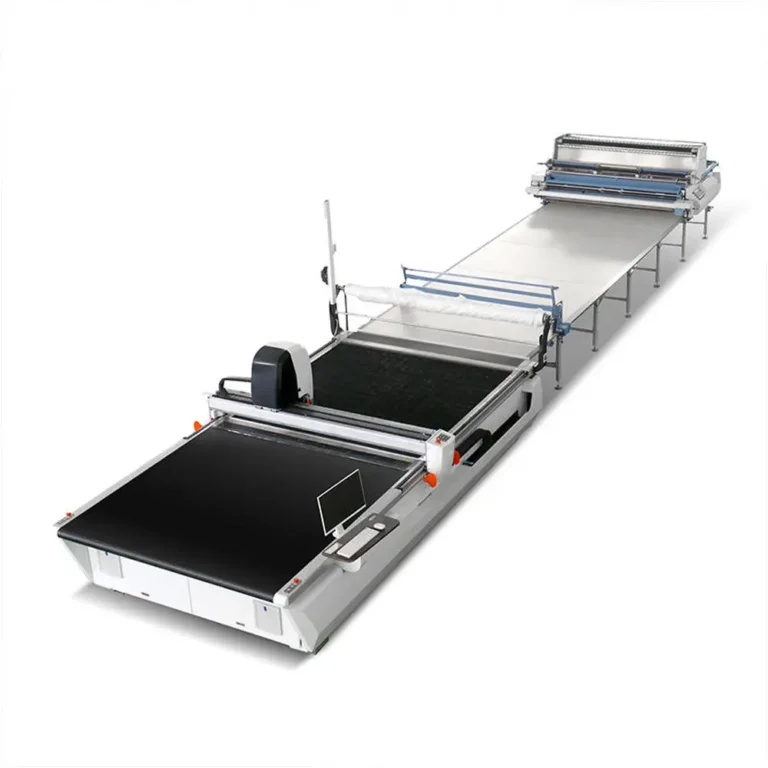
What a Fabric Cutting Machine Really Does
Old way: print pattern, pin to fabric, cut with scissors or straight knife. Slow. Inaccurate. Hard to repeat.
Die‑cutting: expensive steel rule. Weeks of waiting. Only makes sense for huge runs.
Digital fabric cutting machine? Different. Works like a big CNC plotter. Reads DXF, HPGL, AI, PDF. Moves a cutting head across a flat table. Vacuum holds fabric down. No die. No paper.
Change design? Edit file. Cut again. That’s it.
Who actually uses a fabric cutting machine?
Apparel sample rooms – cut first samples fast.
Short‑run garment makers – teamwear, made‑to‑measure, small collections.
Upholstery shops – chair covers, sofa panels, foam backing.
Automotive interior suppliers – seat covers, headliners, carpets.
Composite shops – carbon fiber, fiberglass, aramid.
Technical textile converters – geotextiles, filtration fabrics.
Why Buy a Fabric Cutting Machine?
No More Paper Patterns
Every sample starts with a pattern. Old method: print, cut paper, pin to fabric, cut fabric. Takes forever.
A fabric cutting machine reads the digital file. Direct to fabric. First sample in minutes. Tenth sample exactly like the first.
Real shop example: Uniform maker – 45 minutes to cut one sample jacket by hand. After buying a fabric cutting machine? Four minutes. Load file. Lay fabric. Press start. Walk away.
Short Runs Make Money Now
Steel‑rule dies cost 500–500–2000. Die only pays off at 5000+ pieces. Under that, you lose money or turn down orders.
A fabric cutting machine has no die cost. Run 50 pieces. Run 200. Run 1000. All profitable. Made‑to‑measure? No problem. One‑off custom trim set for a car? Cut it.
One Machine, Many Fabrics
You don’t need different machines for different fabrics. One fabric cutting machine handles:
Wovens – cotton, linen, polyester, wool, silk.
Knits – jersey, interlock, rib (with right underlay).
Non‑wovens – interfacing, felt, fleece.
Technical textiles – carbon fiber, fiberglass, Kevlar.
Foam‑backed fabrics – auto headliner, upholstery.
Synthetic leather, some real leather.
Save presets. “Woven cotton” – one tap. “Carbon prepreg” – another. Machine adjusts speed, blade, vacuum.
Precision That Beats Human Hands
Hand cutting tolerance? 1–3 mm on a good day. A fabric cutting machine repeats at ±0.2 mm. Cut after cut. Collar matching, stripe alignment, seam allowances – all consistent. Less rework. Less scrap.
AI Nesting Saves Fabric (10–25% Less Waste)
Manual layout wastes material. People leave gaps. The machine’s built‑in nesting software packs pieces tight. For apparel, 10–15% fabric savings. For odd shapes, up to 25%. Over a year, the fabric cutting machine pays for itself in material alone.
Vacuum Keeps Fabric Still
Lightweight fabric shifts. Knits curl. Stacks slide. Without good vacuum, you can’t cut accurately.
The table has sectional zones. Only the area under your fabric pulls air. Bristle or perforated rubber surface – air pulls down, fabric stays put.
Where People Use a REMEYA Fabric Cutting Machine
Apparel Sample Rooms
Designers spend hours cutting muslin and toiles. With a fabric cutting machine:
New toile in 5 minutes, not 30.
Test fit changes same day.
Presentation samples without sending patterns outside.
A New York sample room: 12 toile variations in one morning. Manual cutter couldn’t finish two.
Made‑to‑Measure and Custom Sizing
Custom shirts. Fitted uniforms. Personalized sportswear. Every order is different.
A fabric cutting machine cuts each customer’s pieces from their digital pattern. No inventory of pre‑cut parts. No minimum. Customer uploads measurements. System grades pattern. Machine cuts exactly that order.
Upholstery and Furniture
Cutting chair fabric, sofa panels, foam backing – traditionally manual knives or clicker presses. Frayed edges. Expensive tooling.
A fabric cutting machine with reciprocating knife cuts clean. Small batches, many models – no tooling storage. Switch between products instantly.
Automotive Interiors
Seat covers. Headliners. Door panels. Floor carpets. Trunk liners. Multi‑layer materials.
The machine can cut single‑ply or stacks up to 70 mm compressed. Features: notches, drill holes, V‑notches for corners. Auto suppliers use it for prototypes and production runs – especially low‑volume luxury or commercial vehicles.
Composites (Carbon Fiber, Fiberglass)
Cutting prepreg requires a blade that doesn’t drag resin or fray fibers. Oscillating knife shears clean. Multi‑pley stacks cut without delamination. Aerospace, marine, sports equipment makers – less waste, faster layup.
Sign and Flag Shops
Polyester flag fabric, banner material, mesh textiles. Laser cutters melt edges. Rotary cutters fray. A fabric cutting machine with drag knife or oscillating knife gives clean edges, no melting, no fraying. One machine does rigid and flexible materials.
Cutting Tools on a Fabric Cutting Machine
Oscillating Knife – Most Common
Blade moves up and down 10,000–18,000 times per minute. Horizontal travel shears fabric with minimal side pull. Clean edges on knits, wovens, coated textiles, stacks. Blades wear out – change every few days to weeks depending on material. Cheap. User swaps.
Reciprocating Knife – Thick Stacks
Longer stroke. Better for thick stacks (up to 70 mm) of upholstery fabric, felt, foam‑backed. Clears fibers from blade path. Less heat.
Drag Knife – Simple and Cheap
Fixed blade. Machine drags it through material. Good for single‑ply thin fabrics, kiss‑cutting (cut top layer only), perforations.
Round Knife – Leather and Heavy Coatings
Rotating circular blade. Rolls through thick stuff – leather, synthetic leather, heavy coated textiles. Optional on most flatbed fabric cutting machines.
Punch and Drill Tools
Makes registration holes, notches, drill points. Downstream sewing or bonding needs alignment marks. Punch positions come straight from CAD.
Software and File Formats
A fabric cutting machine reads standard pattern formats:
DXF (AAMA/ASTM) – most common.
HPGL – old but works.
AI (Illustrator) – if paths are clean.
PDF – simple shapes.
Gerber, Lectra, Optitex – direct import (check compatibility).
Step‑by‑step:
Create pattern in your CAD (e.g., Accumark, Modaris, Optitex).
Export as DXF.
Open in free control software.
Nest parts – AI packs pieces tight.
Pick a material preset – machine sets blade, speed, vacuum.
Lay fabric – single ply or stack.
Press start. Cut, notch, mark – all in one go.
Software stores job history. Rerun a six‑month‑old job with two clicks. All settings return.
Nesting options:
Auto nest – fast, good for most.
True shape nest – denser, slower.
Manual nest – for stripe or print matching.
The machine respects nap, pile, grain direction – no upside‑down cuts.
Common Questions (Real Answers)
Q: Cut multiple layers?
Yes. Wovens: 20–40 mm compressed stack. Knits: 10–20 mm (avoid distortion). Non‑wovens, felt: up to 70 mm. Machine adjusts speed and oscillation automatically.
Q: Stretchy knits – will fabric shift?
Vacuum holds well. For loose knits, use low‑tack adhesive film under fabric. Standard practice in digital cutting.
Q: Do I still need a pattern plotter?
No. Machine cuts directly into fabric. If you really need paper patterns, it can cut paper or cardstock too (drag knife).
Q: Notches and drill holes?
Notches cut as small V‑incisions. Drill holes punched – up to 5 mm diameter. Both from CAD.
Q: Cut leather?
Yes, with round knife option or heavy‑duty oscillating knife + special blade. Natural leather hides – you place parts manually because hide shapes are irregular.
Q: Carbon fiber prepreg – blade gum up?
Prepreg needs non‑stick blade coating, slower speeds. REMEYA offers composite cutting configuration – Teflon‑coated blades, stronger vacuum. Many aerospace suppliers use it.
Q: Learning curve?
Someone comfortable with computers runs basic jobs in 2–3 hours. Advanced features (nesting rules, presets, punch calibration) – one day training. Touch screen interface. You don’t need to be a CNC programmer.
About REMEYA – We Build Fabric Cutting Machines
REMEYA designs and makes CNC cutting systems. Fabrics. Foam. Packaging. Composites. No rebranded generic machines.
Our fabric cutting machine features:
Welded steel frame – stiff, no vibration.
Sectioned vacuum zones – saves energy, holds lightweight fabric.
Quick‑change tool head – swap knives or punch in under 15 seconds.
Industrial PC – runs standard software.
Factory direct support – spare parts from our warehouse. Application engineers available.
Customers: apparel brands, auto interior suppliers, upholstery shops, composite fabricators, technical textile converters. Many started with a fabric cutting machine for prototyping, then moved to full production after seeing material and labor savings.
Next Step – Tell Us About Your Work, Get a Recommendation
Tell us:
What fabrics? (woven, knit, non‑woven, leather, carbon…)
Single‑ply or stacks? Typical thickness?
Roll‑fed or sheets?
Order volumes – samples only, short runs, continuous?
Need to cut foam or paper on same machine?
We’ll recommend a fabric cutting machine model and tool setup for your actual workload. Not a generic pitch. Factory‑direct quote with delivery and installation.
Contact REMEYA through the website or call your regional sales contact. Say you need a fabric cutting machine for real textile cutting.