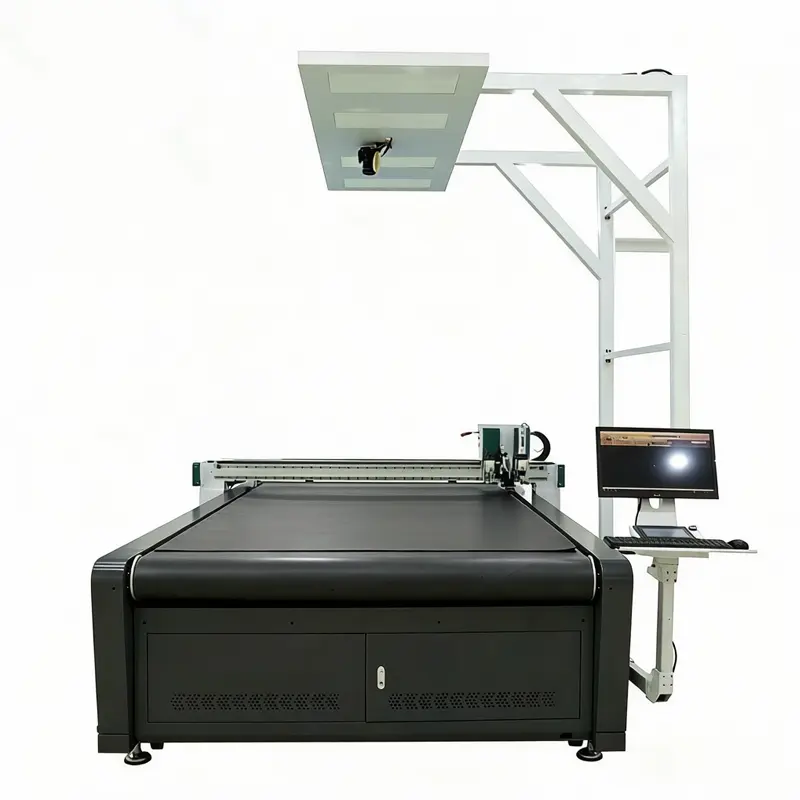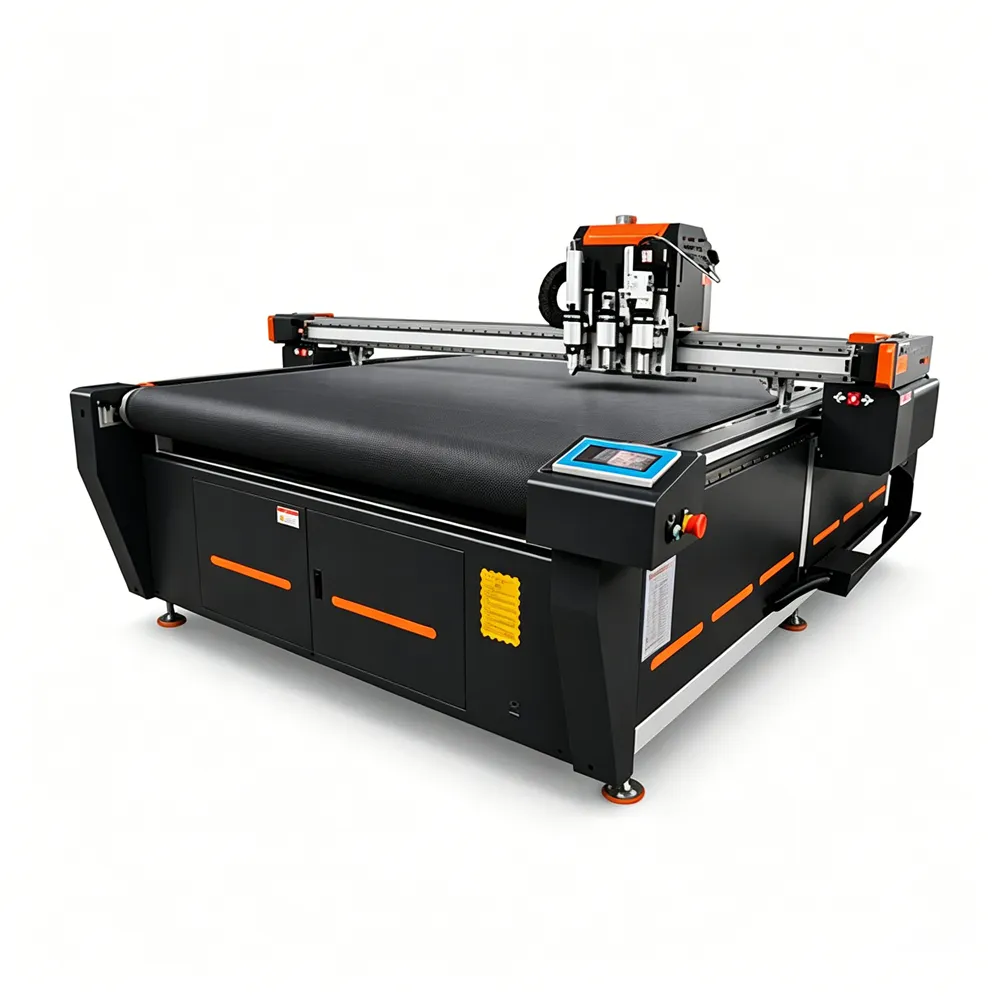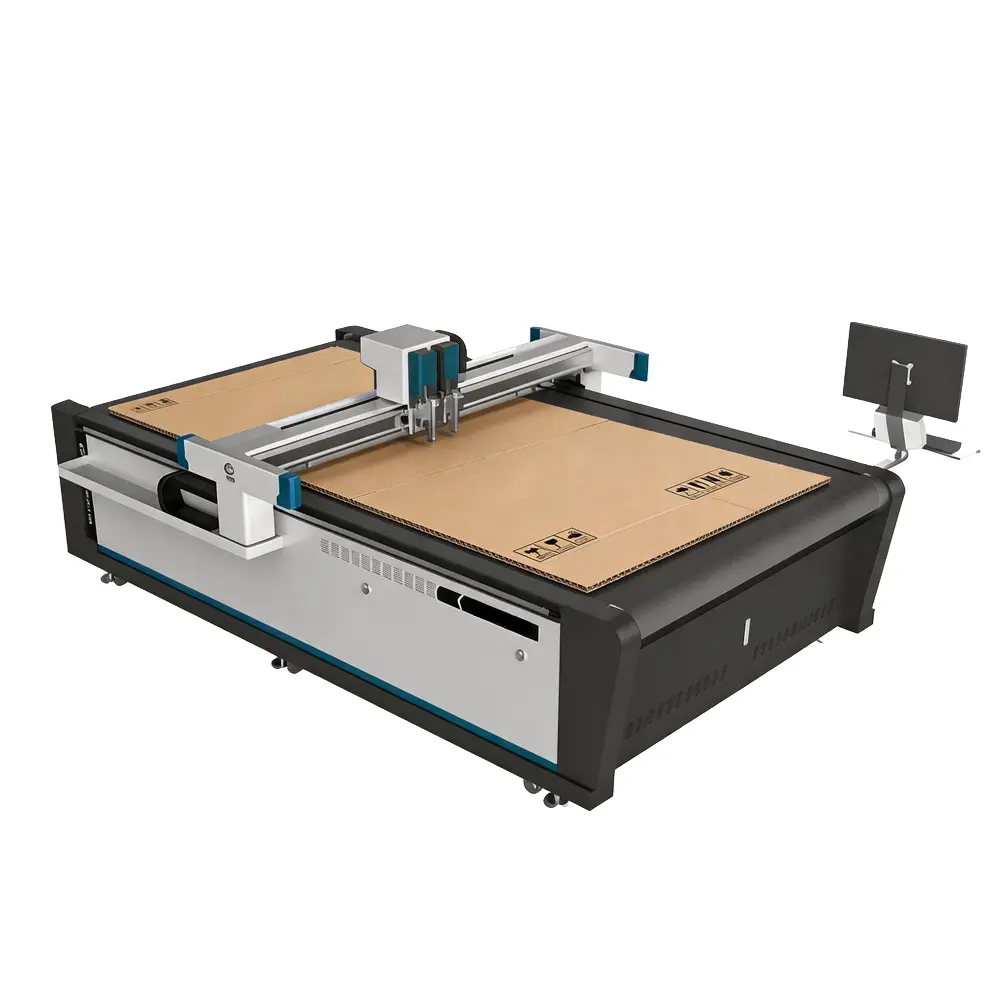
A: Yes. Some REMEYA composite cutting machines are specifically optimized for one material type, while others are designed to handle both dry fabrics (carbon, glass, aramid) and sticky prepreg materials with the right blade selection and parameter settings.
Key considerations:
Prepreg cutting requires a non-stick cutting mat (e.g., PTFE-coated or silicone mat) and sometimes chilled table options to reduce tackiness.
Dry fabric can be cut with oscillating or drag knives, often with vacuum hold-down.
REMEYA offers tool heads that can be easily cleaned and blades suitable for abrasive fibers (carbide or diamond-coated).
Tell us your main material mix (e.g., 80% dry carbon + 20% prepreg, thickness, and roll width), and we will recommend a model and configuration that balances cutting performance, cleanliness, and productivity.
A: Cutting composite materials (carbon fiber, fiberglass, aramid, insulation wool) generates fine, conductive or irritant dust and fibers. REMEYA composite cutting machines use multiple strategies to minimize airborne contamination:
Optimized cutting strategies – such as kiss-cutting (cutting through the material but not the backing) to reduce fiber fraying.
Blade types – oscillating knives with special geometries that shear rather than tear fibers.
Dust extraction systems (optional but strongly recommended) – high‑flow vacuum units positioned close to the cutting head to capture dust at the source.
Enclosed cutting area (available on some models) to contain fibers.
Anti-static brushes and grounding to prevent static buildup when cutting dry carbon.
These features help create a cleaner working environment, protect operator health, and prevent conductive dust from damaging nearby electronics or machinery.
A: Composite materials (carbon fiber, glass fiber, aramid, prepreg) are expensive – often 50–50–200+ per square meter. REMEYA’s intelligent nesting software improves yield by considering:
Roll width – fits parts across the usable width to minimize edge waste.
Fiber orientation – ensures critical parts align with the desired fiber direction (0°, 45°, etc.) for structural integrity.
Cutting direction constraints – reduces tool lifts and follows natural cutting sequences.
Part priority – nest higher‑priority parts first, then fill remaining space with smaller or lower‑priority pieces.
Typical yield improvement: 10–25% less offcut compared to manual layout or basic nesting. Over time, this translates to significant material cost savings and more stable laminate schedules across repeated production batches.
A: REMEYA provides application‑focused training tailored to composite cutting challenges:
Material‑specific cutting parameters – speed, force, blade oscillation frequency, and multiple-pass strategies for thick or tough stacks.
Nesting strategies – how to set up fiber orientation rules, create cut‑ready CAD files, and use remnant re‑nesting.
Tool maintenance – blade replacement intervals for abrasive fibers, cleaning procedures for prepreg residue, and vacuum filter care.
Dust control best practices – including extraction setup and PPE recommendations.
Training is available online (remote desktop, video call) or on‑site as needed. Ongoing technical support helps you fine‑tune your composite cutting process as new materials (different weaves, resin systems, thicknesses) and projects are introduced. We also offer material testing – send us your composite rolls, and we will determine the optimal cutting setup and provide a cutting report.
A: Yes. With appropriate tooling (oscillating knife with special blade geometry or a routing attachment), REMEYA machines can cut honeycomb core materials up to 20–50 mm thickness, depending on cell size and density. For aluminum honeycomb, a router spindle is recommended; for Nomex® and polypropylene, an oscillating knife works well.
A: REMEYA composite cutters typically achieve ±0.1 mm to ±0.2 mm accuracy on dry fabrics and prepregs. For thick or multi‑layer stacks, accuracy may be slightly lower but still within ±0.5 mm. This precision is sufficient for aerospace, marine, automotive, and wind energy composite components.
A: Not necessarily. REMEYA machines can be configured with a kiss‑cut capability – cutting through the prepreg material but leaving the backing paper intact, making it easy to peel individual plies. A low‑tack or chilled cutting mat prevents resin from sticking. For high‑volume prepreg cutting, we offer optional refrigeration units to keep the table cool.
A: REMEYA offers comparable cutting performance and nesting intelligence at a significantly lower price point. While high‑end brands may offer fully automated material handling (roll‑to‑roll with automatic layup), REMEYA machines provide an excellent balance of precision, durability, and affordability, especially for mid‑volume composite workshops, R&D labs, and tier‑2/3 suppliers. Many customers upgrade from manual cutting or entry‑level plotters to REMEYA for improved speed and accuracy.
A: REMEYA machines include:
Emergency stop buttons (multiple locations)
Enclosed cutting zone with interlock (optional)
Dust extraction ports compatible with external dust collectors
Grounded cutting bed to dissipate static from carbon fibers
Low fume generation (no laser, so no toxic off‑gassing)
Operator training includes proper handling of composite dust and fiber waste disposal.
Versatile – handles dry fabric, prepreg, honeycomb, insulation, and multi‑layer stacks.
Clean & safe – dust extraction, static grounding, and enclosed options available.
Cost‑saving – intelligent nesting reduces expensive material waste by 10–25%.
Application‑focused support – from parameter tuning to nesting strategies.
Global service – spare parts, remote support, and on‑site training as needed.
Next step: Contact REMEYA with your composite material type, roll width, and typical ply thickness. We will arrange a material test and provide a machine recommendation with sample cut photos/videos.

Before starting to use our service, please fill in the form, to tellus what CNC Knife Cutting Machine you want to import from China.