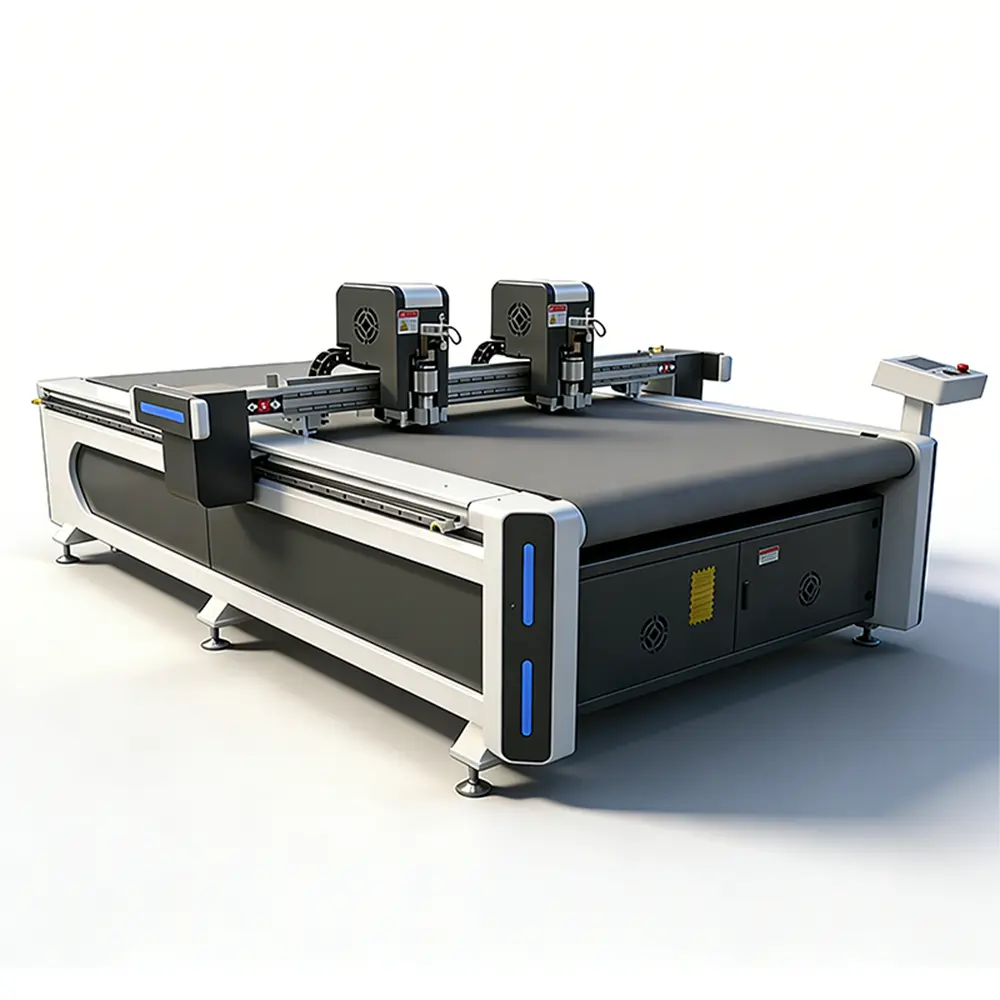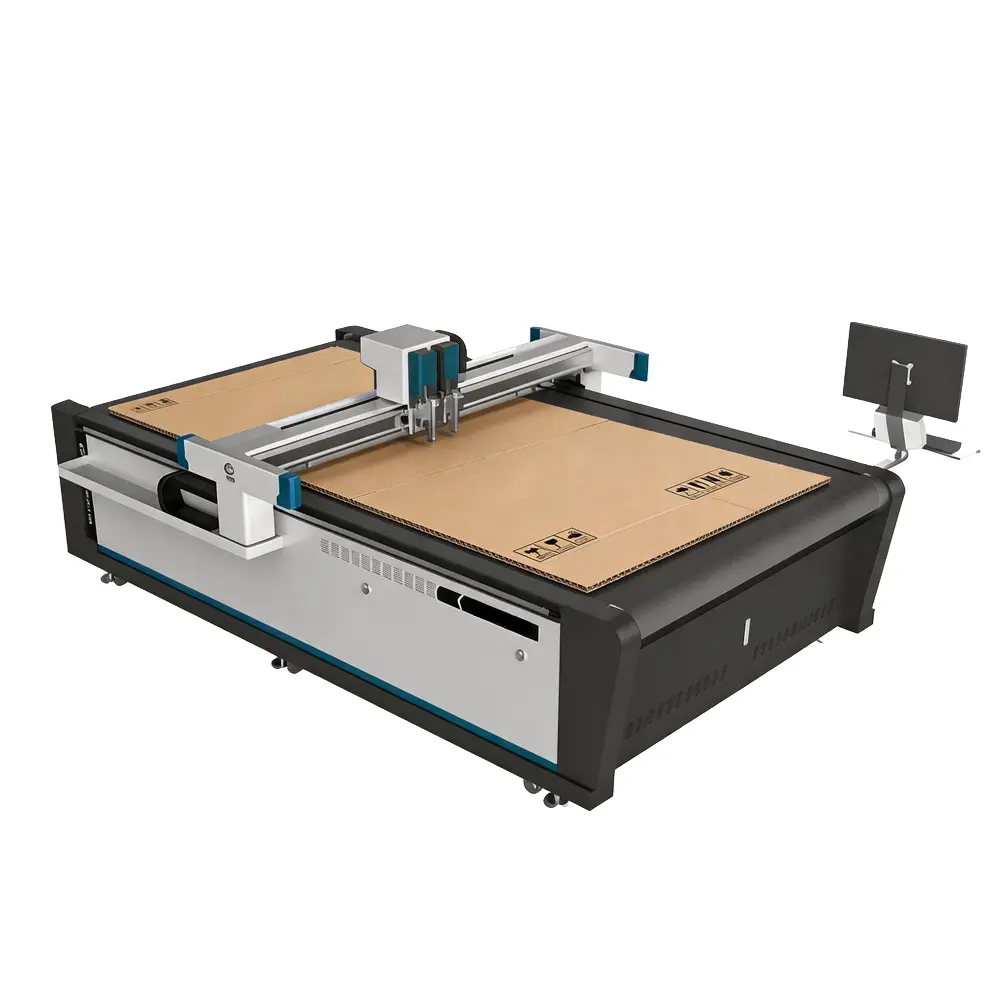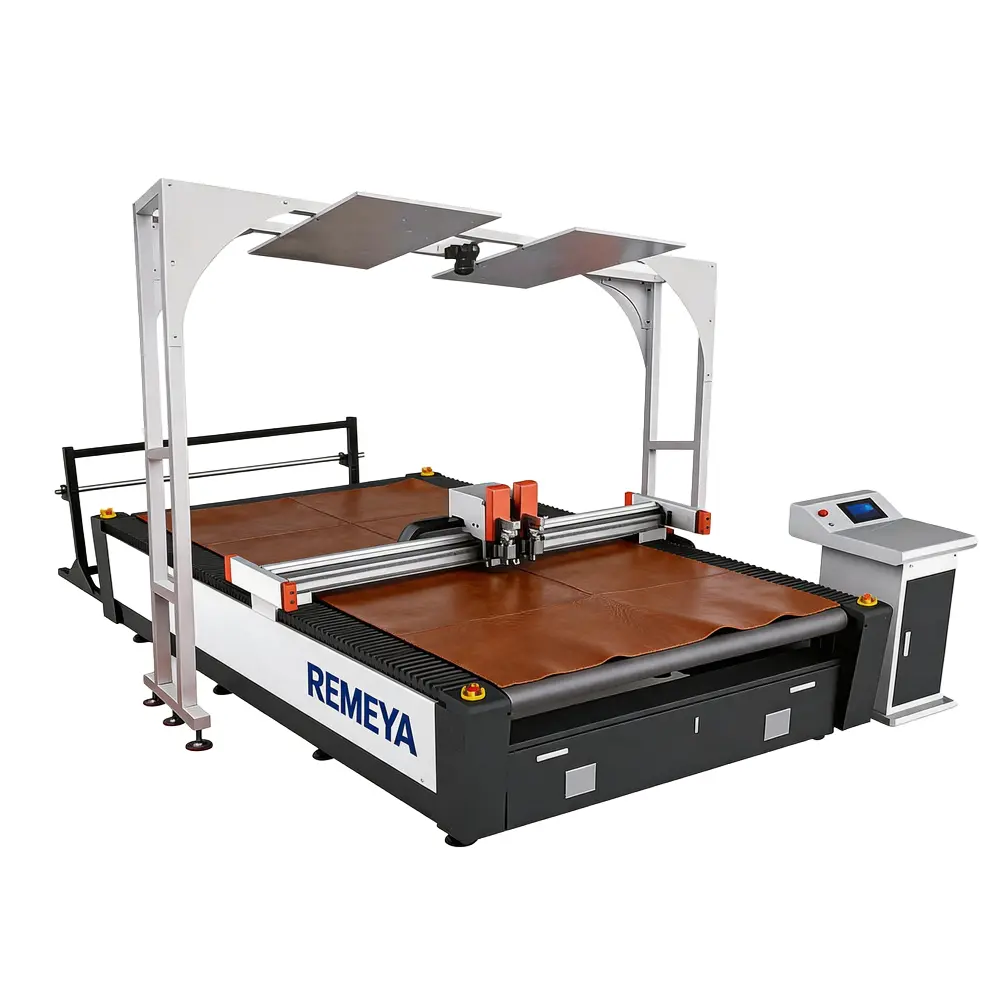
A: REMEYA fabric cutting machines are designed to handle a wide range of woven and knitted textiles, including:
Apparel fabrics – cotton, linen, wool, silk, denim, jersey, fleece
Upholstery fabrics – velvet, jacquard, microfiber, canvas, outdoor fabrics
Technical textiles – non-woven, aramid (Nomex®/Kevlar®), fiberglass, coated fabrics
PVC fabrics (tarpaulin), mesh fabrics, and soft composite materials
Leather & synthetic leather (with appropriate knife)
Different tool combinations (oscillating knife, drag knife, rotary knife) and cutting parameters (speed, force, blade depth) are used to match each fabric type and thickness. REMEYA provides pre‑set parameter libraries for common fabrics to help you get started quickly.
A: Yes, REMEYA fabric cutting machines are suitable for single-ply (spreading one layer) and low-ply cutting (up to 2–10 layers depending on fabric type and thickness).
For higher ply counts (e.g., 10–30 layers), we recommend using a straight knife or band knife cutter – but REMEYA’s oscillating knife cutters excel in single‑ply and low‑ply precision cutting.
When cutting multiple layers, cutting speed, blade oscillation frequency, and vacuum hold‑down are adjusted to maintain clean edges and prevent layer shifting. If your production requires high‑ply bulk cutting, please discuss your needs with REMEYA – we can recommend the most suitable configuration.
A: Automated fabric cutting with REMEYA machines offers significant advantages over manual scissors or straight knives:
Higher speed – cuts complex shapes in seconds instead of minutes
Improved accuracy – ±0.1 mm precision ensures consistent seam allowances and perfect part fit
Reduced fabric waste – intelligent nesting optimizes pattern layout, saving 5–15% of material
Eliminates manual errors – no misaligned cuts, no damaged edges
Lower physical workload – reduces repetitive strain on operators
Quick style and size changes – just load a new CAD file; no need to remake templates or markers
Modern cutting rooms using REMEYA digital cutters can achieve 2–5x faster throughput compared to manual cutting, with better quality and less waste.
A: REMEYA machines work with common apparel and textile CAD systems, including:
Gerber Accumark®, Lectra Modaris®, Optitex, TukaCAD, Auto CAD, CorelDRAW, Adobe Illustrator
Supported file formats: DXF, PLT, AI, EPS, PDF, HPGL
You can import marker files (pattern layouts) and single patterns directly for cutting. REMEYA’s nesting software also allows you to create and edit markers, add grain line constraints, and apply automatic or manual nesting.
Our team provides guidance on file preparation (correct layer mapping, cut/notch assignment) and workflow integration to fit seamlessly into your existing cutting room.
A: REMEYA fabric cutting machines typically achieve ±0.1 mm to ±0.2 mm accuracy on single‑ply and low‑ply cutting. For stretchy or loosely woven fabrics, the vacuum table keeps the material flat, and the accuracy remains within ±0.5 mm – sufficient for all garment and upholstery applications.
A: Yes. For printed fabrics or materials with repeating patterns, REMEYA offers an optional camera registration system (CCD) that reads registration marks or print features and adjusts the cutting path to align perfectly with the print. This ensures that pattern repeats match across seams – critical for stripes, plaids, and large prints.
A: Maintenance is minimal but important for clean, consistent cuts:
Daily – clean the cutting bed and vacuum table filter; check blade sharpness.
Weekly – lubricate oscillating knife mechanism; inspect belt tension and tool holders.
Monthly – calibrate tool height; replace sacrificial cutting mat if worn.
As needed – replace blades (signs: skipped threads, ragged edges, increased noise).
REMEYA provides training and video tutorials for all maintenance procedures. Blades and mats are available at competitive prices.
A: Yes. REMEYA offers both flatbed cutters (ideal for single‑ply, low‑ply, and rigid materials) and roll‑to‑roll cutters (with conveyor feeding) for continuous fabric rolls. Some models can switch between roll feeding and sheet loading. Tell us your material format and daily throughput, and we will recommend the best configuration.
A: REMEYA provides:
Material testing – send us your fabric and pattern files; we will cut samples and provide cutting parameters.
Installation & training – on‑site or remote training covering machine operation, software, nesting, and maintenance.
Lifetime technical support – remote diagnostics, spare parts supply, and software updates.
Application consulting – help with marker optimization, minimizing waste, and integrating the cutter into your ERP or production line.
A: For most apparel and upholstery fabrics, oscillating knife cutting is preferred over laser because:
No burnt, melted, or yellowed edges
No smoke or odor (no need for expensive fume extraction)
Suitable for synthetic fabrics (nylon, polyester, PVC) – laser can melt or release toxic fumes
Thicker fabrics and multiple plies cut cleanly
Lasers may be faster on thin, single‑ply synthetic fabrics (e.g., polyester, flags), but for quality‑conscious garment and furniture manufacturers, REMEYA knife cutters are the standard.
Versatile – handles woven, knitted, technical, upholstery, and coated fabrics.
Precise & efficient – ±0.1 mm accuracy, nesting saves fabric, 2–5x faster than manual.
Clean & safe – no burning, no smoke, safe for operators.
Easy integration – works with all major CAD systems; training included.
Global support – remote and on‑site service, spare parts, material testing.
Next step: Contact REMEYA with your typical fabric types, ply counts, and production volume. We will recommend the ideal fabric cutting machine and provide a free material test.

Before starting to use our service, please fill in the form, to tellus what CNC Knife Cutting Machine you want to import from China.