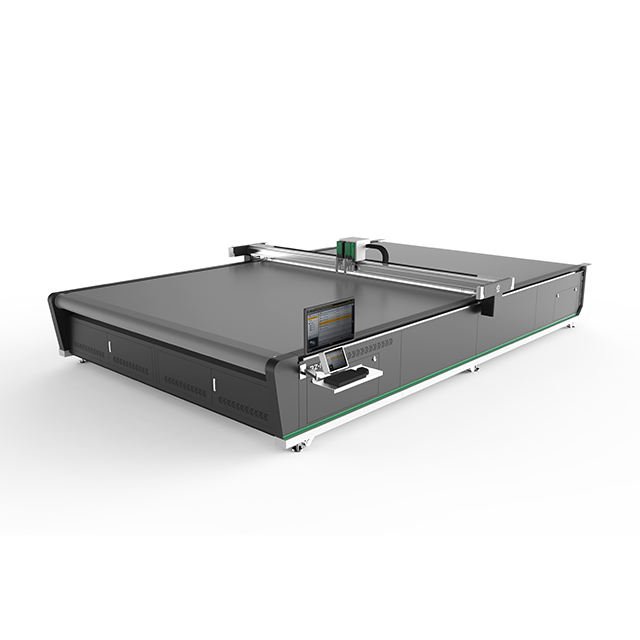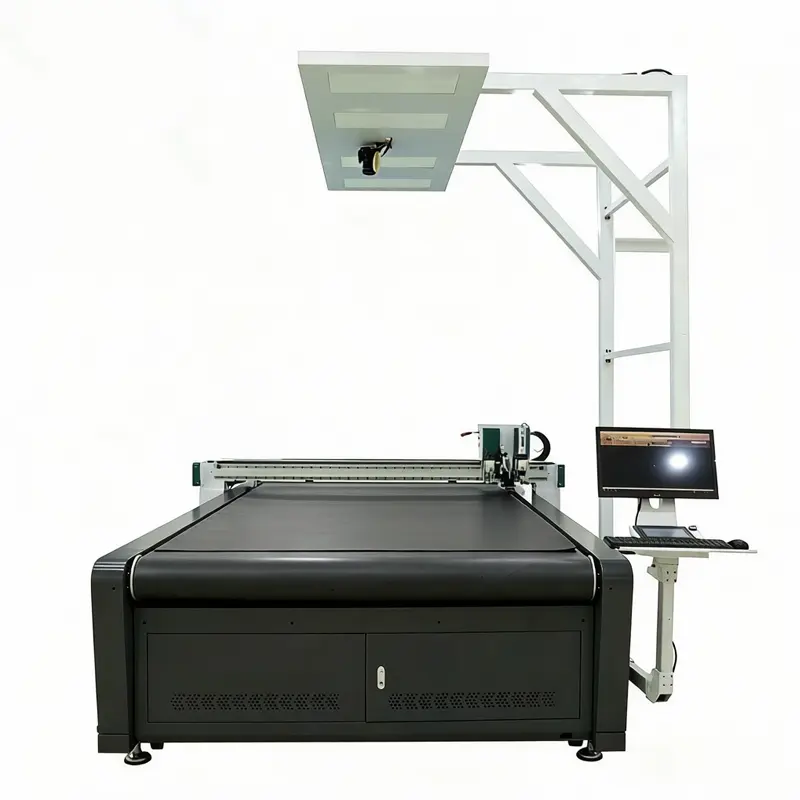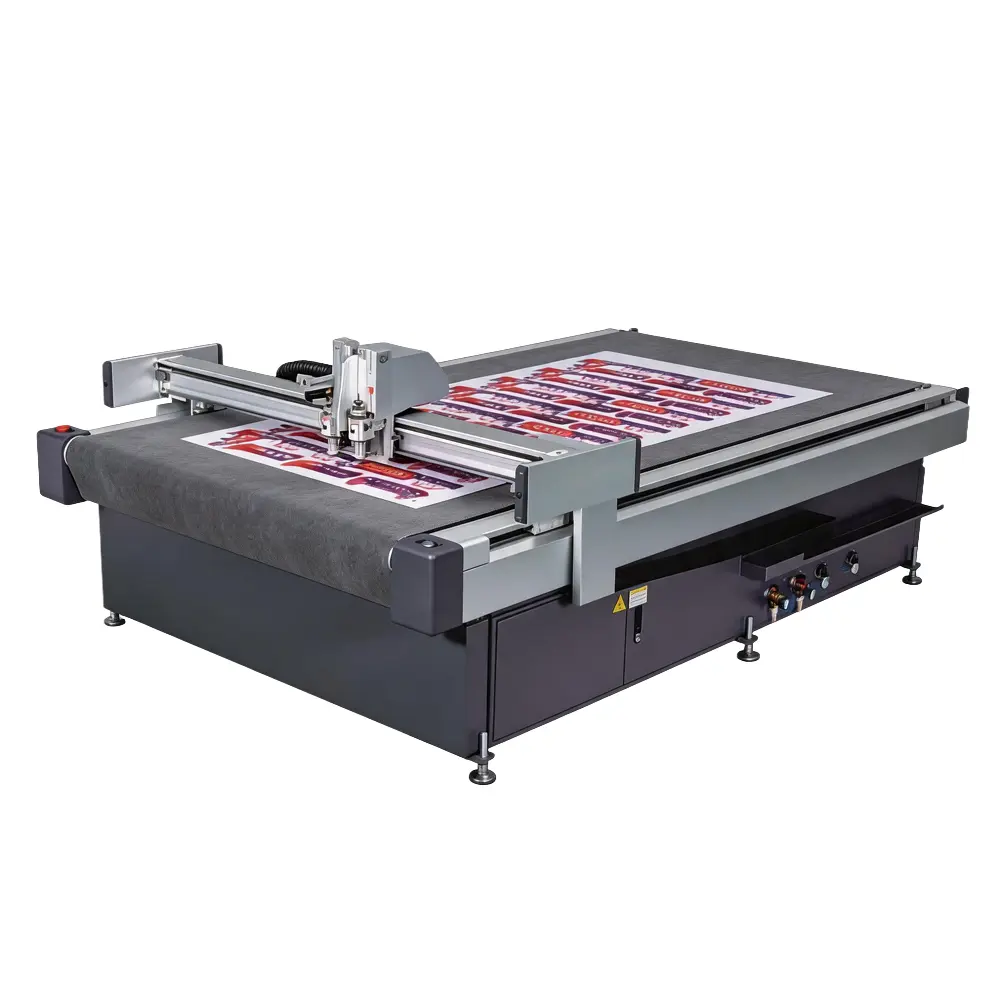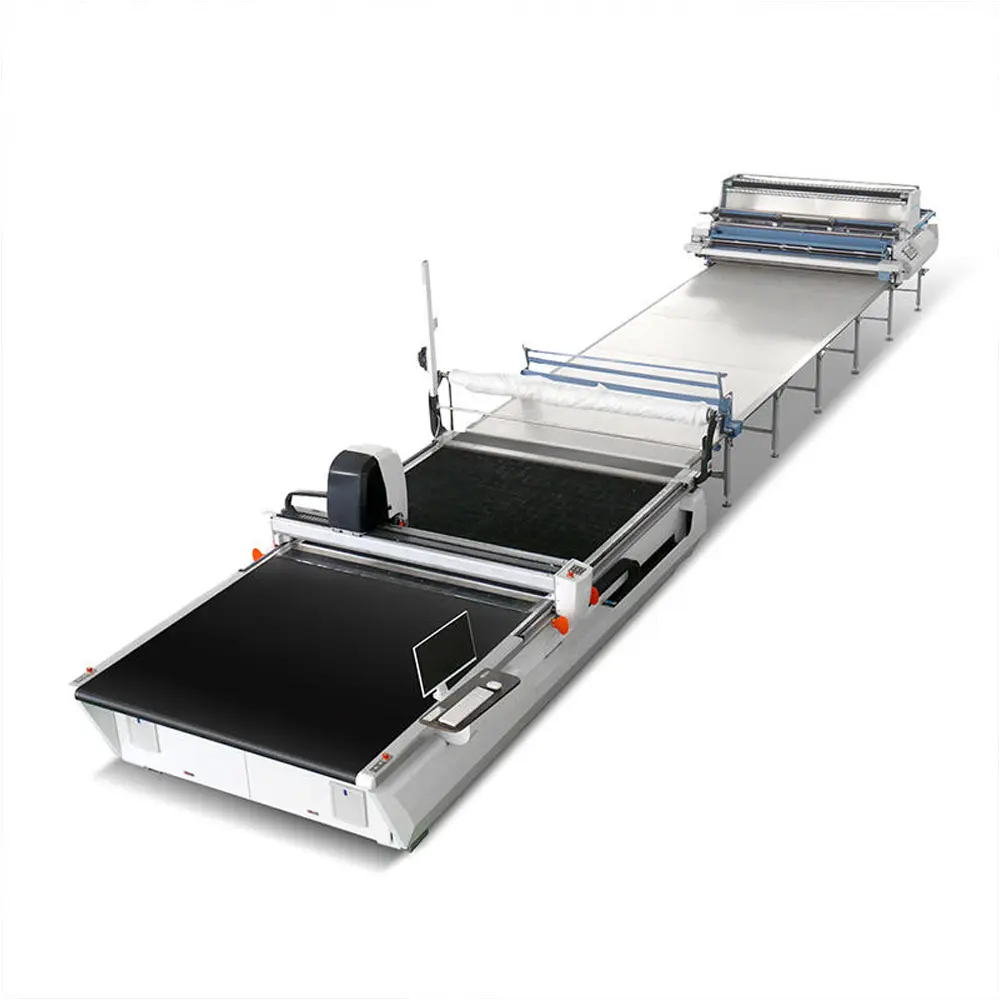
What are the major difficulties which a leather cutter should address?
At the first sight, manual leather cutting is cheaper. But losses grow really fast.
There are four major issues that should be addressed by any leather cutting machine:
- material wastage;
- non-uniformity of cuts;
- slow cutting speed;
- high costs related to worker training.
Any machine that doesn’t address those issues will hardly provide the buyer with some advantages whether it operates at a shoe factory, bag workshop or sofa upholstering line.
Why is leather cutting different from fabric cutting?
Quite often, the potential customers compare leather cutting with fabric cutting. As for me, it is a totally misleading comparison as genuine leather is significantly more expensive and, accordingly, its cutting process has its peculiarities. Any leather hide is unique; there are different thickness levels, grain pattern, natural holes, and stretch direction. Thus, leather cutting machinery should be equipped with more features compared to the machines used in fabric industries.
- For footwear factories: small parts and frequent style changes are to be considered;
- For bag workshops: clean edges and accurate positioning are critical;
- For sofa upholstering workshops: large format cutting, material fixation, and uniform moving process.
Despite the specific features of each industry, it is still vital to turn expensive leather materials into finished products with no losses.
What should you know before asking for the price?
First of all, there are several factors I have to clarify before giving the quote:
| What I analyze | Why is it important |
|---|---|
| Type of leather and thickness | Specifies cutting tool; |
| Maximum dimension of the cut-out | Specifies the table size; |
| Daily production volume | Influences the speed; |
| Marking or perforation requirement | Specifies cutting tools required; |
| Order mix (standard and custom orders) | Requires better software and nesting options. |
Without these answers, I would be unable to give an exact quote to my potential customer. The supplier can present a cheap machine but it may fail in the smallest details like inability to create a proper marking line or operate on long tables. From my perspective, even a slight difference between models influences their final performance considerably.
Which cutting setup should you choose for leather factories?
As there are too many tools, I consider their excessive number as unproductive and confusing for buyers.
For most leather cutting applications, a practical starting set can be selected which includes one electric oscillating cutting tool and one marking tool. This toolset is suitable for shoe making factories, bag workshops and furniture workshops as it provides high-quality contour cutting and marking of produced parts without overloading the machinery.
Why do I prefer electric oscillating cutting tool?
To cut genuine leather successfully, a tool that will ensure minimal material pulling and constant force level is required. A simple drag knife may work on soft materials; however, leather cutting may require additional stability especially for complex shapes. Oscillating tool provides both stable and fast cutting of contours with minimal pulling.
In shoe factories, such tools can be useful for cutting upper parts, lining shapes, and contouring of small leather parts. In bag workshops, such cutting tools can be used to cut out detailed elements. For sofa making, an oscillating cutting tool will work perfectly as it can create high-quality cutting even for large leather pieces if the table and vacuum system are appropriately equipped.
Why do you need a marking tool?
While buyers often pay attention to the final cutting result only, I always remind about the need for additional markings as they are important not only for cutting but for sewing operations as well. Marking tools help to find the appropriate stitches, aligning, folding and assembling of parts in an easy way without causing mistakes in subsequent operations.
- For shoe making factories: helps to distinguish pairs and cut parts;
- For bag workshops: facilitates reference point detection;
- For sofa making workshops: ensures fast and correct assembling of large leather pieces.
The fact that marking tool is not included into a set means extra costs for a factory.
When should you choose extra cutting tools?
It is recommended to install additional tools if your cutting operations require such. For example, if there are numerous piercing holes needed for your product, you can choose the piercing toolset. However, I recommend paying attention to other technologies if there is a need to scan defects and make optimal nesting. Additional tools should be installed when it helps to resolve a particular issue.
Why do you need a vacuum hold-down system?
Genuine leather is a rather flexible material. In case if it isn’t fixed well, any blade will hardly cope with this challenge. That is why I recommend an 8–16 zone vacuum adsorption system for any CNC leather cutting machine.
Why should I choose 8–16 vacuum zones?
A complete hide is not a rectangular material. Its form and size may vary, meaning that vacuum pressure cannot be applied effectively using a basic vacuum table with few zones. Using 8–16 vacuum zones, I can select zones for work only leaving others unused.
The issue of edge stability becomes especially acute in case of large parts. Usually, sofa panels feature large radiuses and long cut paths. When the edge starts lifting from the table due to a slight movement at cutting, the final size will be different. It is the same thing with bag panels and shoe uppers. Small movements at cutting will lead to significant mistakes at sewing.
What is the difference between 8 and 16 zones really?
To be brief, I would say that 8 zones provide a standard level of control over leather. If a client has non-standard hides, a diverse product mix, and increased daily productivity, 12 or 16 zones can work better.
Check this for a clearer picture:
- 8 zones – standard suction control
- 12 zones – improved control
- 16 zones – advanced control for complex hides
The more zones we have, the greater the suction control will be. Greater suction control will contribute to improved leather hold-down. The last one will improve cutting results significantly.
What else can influence leather hold-down?
The vacuum zoning is crucial for proper hold-down, but we cannot overlook the table flatness and matching pump either. In addition, operators require a convenient loading system for very large and soft hides. I would never consider one factor in isolation from others – always consider a complete hold-down system instead.
Why do I usually suggest using rack transmission for leather cutting?
It reveals itself on long working tables.
Leather cutting, especially when it concerns sofa upholstery or other large-format products, usually requires rack transmission, not belt transmission. When a long cut path becomes necessary, the machine will have to move smoothly for hours. Therefore, the operator will be able to estimate the system capabilities better after a full day of production.
Why shouldn’t belt transmission be my first choice?
This transmission option has its uses in light-duty machines and short travel applications. However, it shows its weaknesses quite distinctly on long working tables. First of all, there are inevitable changes in tension due to time. As a consequence, belt stretch impacts motion accuracy negatively. Moreover, a belt transmission cannot provide the necessary stability at very high speeds.
This is why rack transmission seems to be the best fit for leather production on long tables. Sofa factories require wide parts, while leather cutting lines with automatic feeding systems also impose high requirements. Therefore, rack transmission appears to be a better choice because it ensures more robust mechanics and more accurate motion.
In what situations does this distinction become visible?
The clients may recognize the difference in the following cases:
| Application | Reason |
|---|---|
| Large sofa panels | Stable motion required |
| Extended machine beds | Accuracy must stay consistent throughout |
| High daily productivity | Durable repetitive movements needed |
| Automatic feeding lines | Robust transmissions are required |
This is why buyers should not ignore this point. Most machine descriptions list only the working size, power of the electric motor, and tools. In most cases, the type of transmission is mentioned in one line. But such a short phrase can impact the entire perception of a machine significantly.
Beam strength and structure – important?
Yes, I do consider crossbeam important too. The weaker it is, the larger movements will start to appear during quick cutting. They will worsen the quality of edges and accuracy of part positioning. Of course, there is no need for unnecessary technical explanations. Still, I think buyers can ask manufacturers about crossbeams, their wall thickness, and assembly precision.
Let’s imagine motion quality in terms of several points:
- Transmission system – very high importance
- Crossbeam strength – very high importance
- Assembly precision – very high importance
- Tool holders rigidity – high importance
This is not a laboratory chart; it is a buying logic chart.
Matching a machine to shoes, bags, or sofa upholstery
Each leather industry requires a different approach.
Obviously, I do not offer the same solution to everyone. In accordance with the product type, part size, workflow, and daily volume, I select an appropriate machine. All three types of factories make genuine leather, but each of them needs something different.
What matters for shoe factories?
In shoe factories, they are concerned with repeated accuracy of part sizes, consistency of size grading, quick styles changeover, and downstream assembly. Parts in shoemaking are small, numerous, and detailed. So, I emphasize edge quality, readability of marking, and machine efficiency. In other words, if the machine saves time during cutting but brings problems afterward, it will not be the best choice.
What matters for bag factories?
Bag factories pay attention to detail and visual quality. Bag panels often require straight cuts and stable matching points. Also, there might be a necessity to create process holes or install hardware elements. Thus, my aim is to ensure that the oscillating tool makes accurate cuts, while the marking system supports downstream workers properly. Sometimes, punching is also possible in this case.
What matters for sofa upholstery factories?
Factories producing sofa leather need to consider large patterns, effective hide utilization, precise suction, and smooth long distance motion. Vacuum zoning and rack transmission become especially important here. For example, a large leather panel can easily shift in case of unstable cutting. Therefore, I concentrate mainly on vacuum zone and table features in this case.
Summary
A cheap choice often leads to losses.
I do not choose leather cutting machines considering their appearance only. On the contrary, my choice is defined by system logic. My goal is that the cutting tool should suit genuine leather. In addition, the marking tool should support downstream processes. Next, I prefer 8-16 vacuum zones to hold down irregular hides better. Lastly, rack transmission guarantees stability during long-distance motion. At the same time, I choose a machine depending on the type of products, workflows, etc.
Thus, if the purchase is long-term for me, I will always ask the supplier to test my material, show the marking results, clarify vacuum zoning, and confirm the transmission type. In this way, I avoid possible problems. In other words, I save leather yield, worker time, and order delivery schedule.
Conclusion
When selecting the appropriate system, leather cutting becomes easier.