Carpet is a common flooring material, but cutting carpet accurately is not always as simple as it looks.
Straight cuts can be relatively easy for a trained operator. The challenge becomes much greater when production involves irregular shapes, repeated patterns, custom dimensions, carpet tiles, vehicle flooring, exhibition flooring, or large numbers of different parts.
Traditional carpet knives and manual cutting tools can work well for simple jobs. However, they rely heavily on operator skill and usually require more manual work when the number of shapes and orders increases.
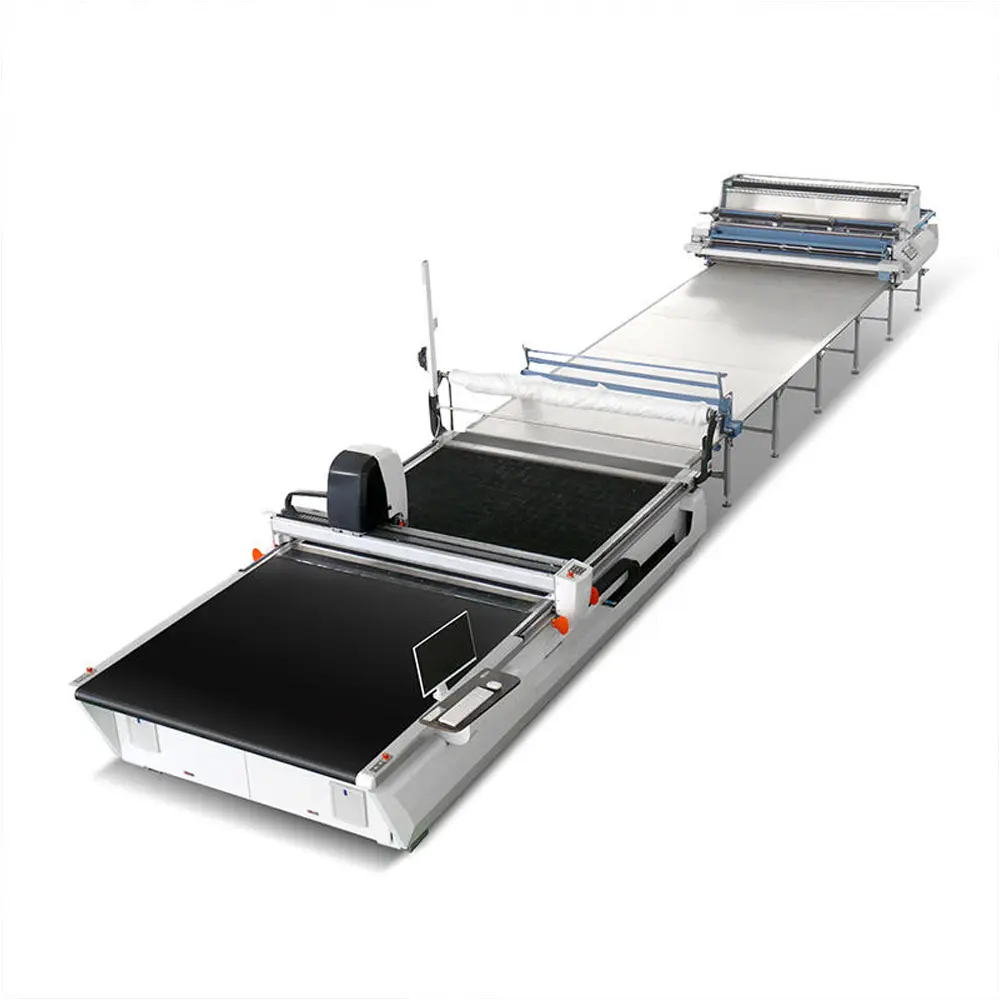
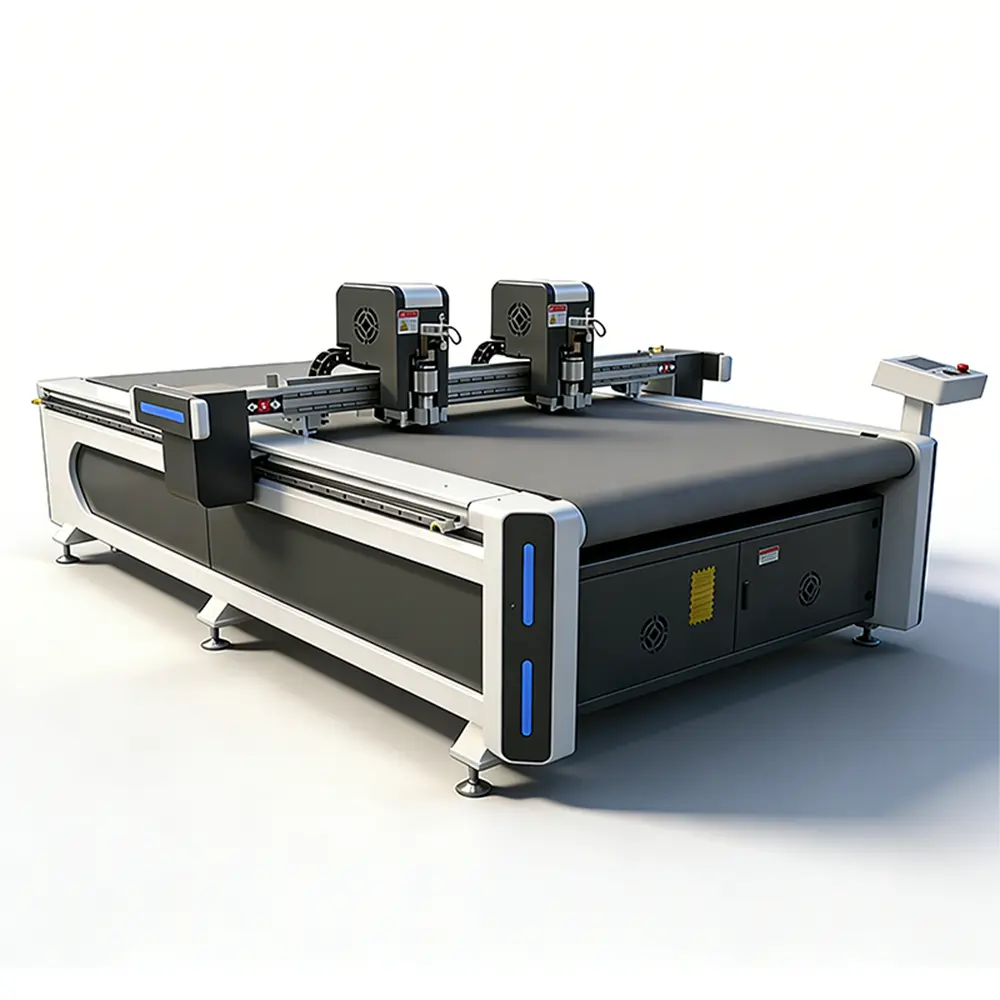
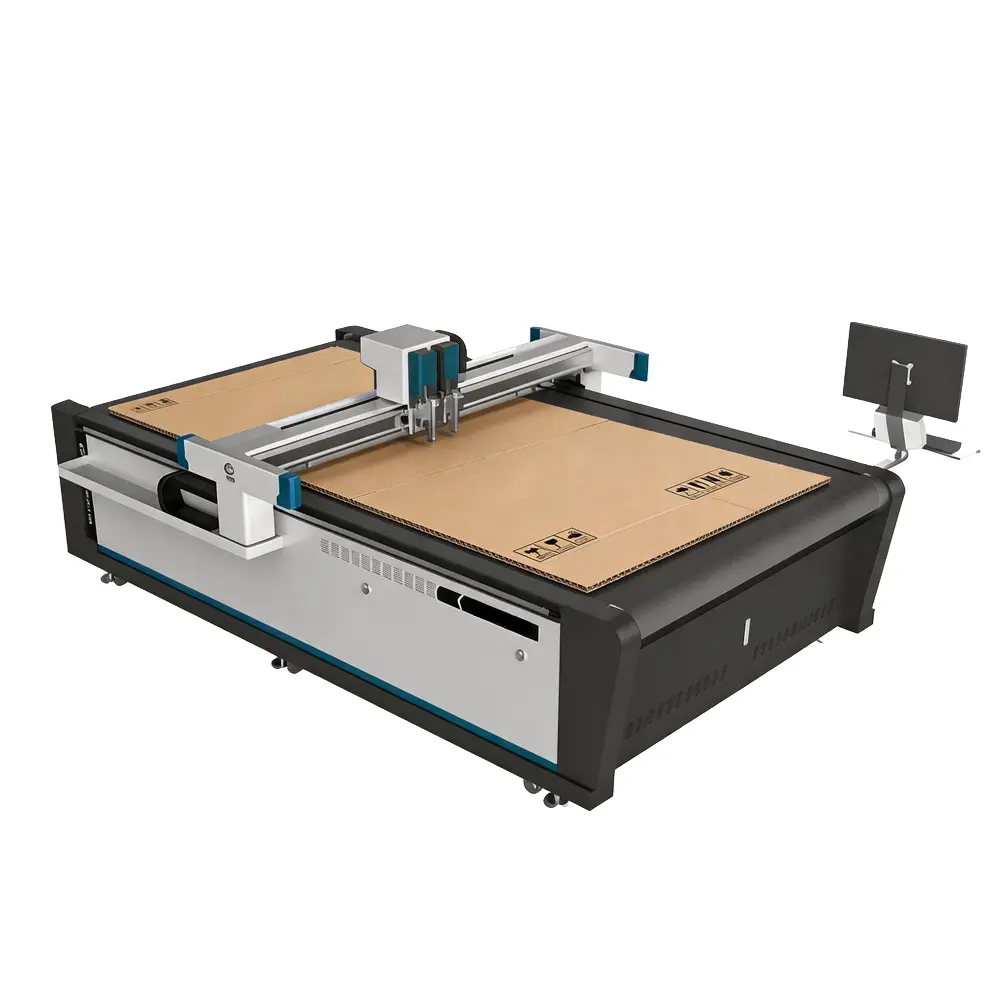
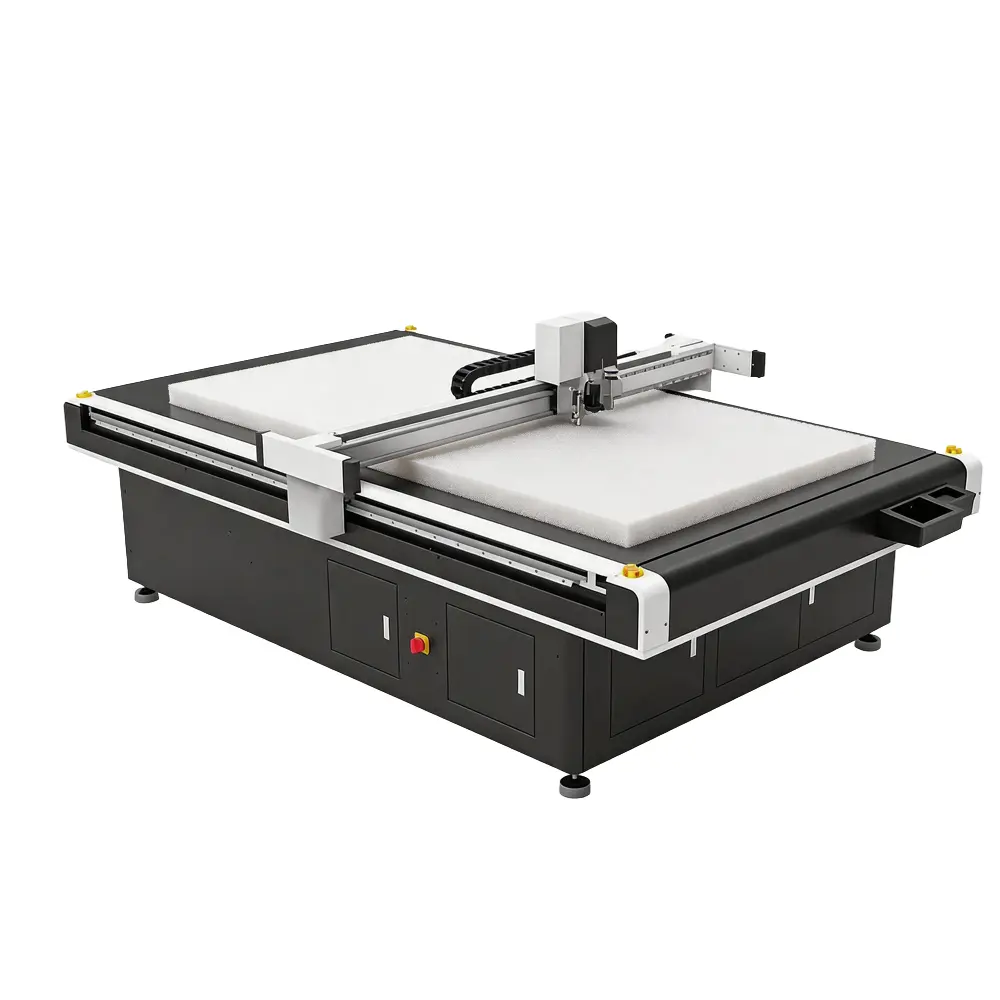
A CNC oscillating knife cutting machine provides a digital alternative.
Instead of manually tracing and cutting each shape, manufacturers can import a digital drawing, arrange multiple parts on the material, and let the CNC knife follow the programmed cutting paths.
This makes digital carpet cutting particularly useful for custom flooring, automotive interiors, modular carpet products, exhibitions, commercial spaces, and manufacturers handling multiple carpet designs.
Why Is Carpet Difficult to Cut?
Carpet is not one single type of material.
Different carpet products may contain:
- Woven structures
- Tufted fibers
- Needle-punched fibers
- Synthetic backing
- Rubber backing
- PVC backing
- Foam backing
- Multi-layer constructions
The cutting behavior can therefore vary significantly.
The operator may need to consider both the carpet surface and the backing material.
Some of the main challenges include:
- Material thickness
- Fiber density
- Backing hardness
- Carpet compression
- Fraying
- Material movement
- Large sheet dimensions
- Pattern direction
- Cut edge requirements
A suitable cutting machine needs to handle the actual construction of the carpet rather than simply its general material category.
What Can a CNC Carpet Cutting Machine Produce?
Digital knife cutting can be used for many different carpet-related applications.
Custom Carpet Shapes
One common application is cutting carpet into custom shapes.
For example:
- Irregular floor sections
- Curved carpet pieces
- Decorative shapes
- Custom mats
- Machine-area floor coverings
- Interior trim pieces
Digital cutting makes it easier to create shapes that would be difficult or time-consuming to produce manually.
Carpet Tiles
Carpet tiles are often produced in consistent geometric shapes, but custom cutting may still be necessary for:
- Edge pieces
- Corner pieces
- Openings
- Columns
- Irregular floor plans
- Decorative patterns
A CNC knife cutter can process digital layouts and create repeatable pieces for installation.
Automotive Carpet
Carpet-like materials are commonly used in vehicle interiors.
Possible applications include:
- Floor carpeting
- Trunk-area carpeting
- Interior liners
- Protective floor sections
- Custom vehicle floor mats
- Acoustic carpet components
Automotive parts often have complex contours and openings, which makes digital cutting particularly useful.
Exhibition and Event Flooring
Exhibition booths and temporary installations may require custom floor shapes that match a specific layout.
These projects can involve:
- Large carpet sections
- Logo-shaped flooring
- Curved edges
- Custom booth layouts
- Multiple connected sections
Because the design may change from one project to another, the flexibility of digital cutting can be valuable.
Commercial Flooring Components
Carpet is also used in offices, hotels, retail spaces, and other commercial environments.
Custom-cut carpet pieces may need to match:
- Room layouts
- Columns
- Fixed equipment
- Curved walls
- Irregular floor boundaries
A digital cutting workflow can turn CAD or digital layout information into physical carpet components.
How Does CNC Carpet Cutting Work?
The basic workflow consists of several steps.
Step 1: Prepare the Digital Drawing
The first step is to create the required cutting geometry.
The file may come from:
- CAD software
- Digital floor plans
- Product drawings
- Vector artwork
- Existing carpet templates
The file should contain clean cutting contours.
For production applications, digital patterns are especially useful because the same geometry can be stored and reused.
Step 2: Place the Carpet on the Cutting Table
The carpet is positioned on the CNC cutting table.
For large materials, the working area should be appropriate for the carpet dimensions.
A vacuum holding system can help stabilize the material during cutting.
This is important because a flexible carpet sheet can move if it is not held properly.
Step 3: Determine the Cutting Tool
Knife selection depends on the carpet construction.
A suitable oscillating knife can be configured for different types of flexible and layered materials.
Factors that may influence blade selection include:
- Carpet thickness
- Fiber density
- Backing material
- Number of layers
- Required edge quality
A carpet with a soft textile structure may require a different setup from a heavy carpet with a dense backing.
Step 4: Set Cutting Parameters
The CNC system needs appropriate cutting parameters.
These may include:
- Cutting speed
- Knife frequency
- Cutting depth
- Tool pressure
- Acceleration
- Vacuum holding
There is no universal parameter set for every carpet.
The correct values should be established through testing with the actual production material.
Step 5: Nest the Parts
Material utilization is an important part of carpet cutting.
Software can arrange multiple parts inside the available carpet area.
A good nesting strategy may consider:
- Material width
- Part quantity
- Shape
- Orientation
- Pattern direction
- Seam requirements
- Installation requirements
For some carpets, orientation can be important because of surface texture or visual direction.
The software therefore needs to balance material utilization with the practical requirements of the final product.
Step 6: Cut the Carpet
After the layout and parameters are confirmed, the CNC system follows the programmed toolpaths.
The oscillating knife moves along the contours and cuts the selected shapes.
Depending on the machine configuration and material, the system may process multiple components within one cutting layout.
Step 7: Inspect and Sort the Parts
After cutting, inspect the finished components.
Important checks may include:
- Overall dimensions
- Edge quality
- Internal openings
- Shape consistency
- Backing separation
- Fiber condition
- Correct orientation
For projects with many different pieces, labeling or sorting the cut parts is also important.
CNC Carpet Cutting vs. Manual Cutting
Manual carpet cutting is still common, particularly for installation work and small quantities.
However, manual cutting has limitations when production becomes more complex.
Typical problems include:
- Operator-dependent accuracy
- Difficulty repeating complex shapes
- Longer cutting time
- Greater risk of pattern errors
- More manual measurement
- Difficulty managing many different part sizes
A CNC carpet cutter changes the workflow from manually measuring and following a template to digitally controlling the cutting path.
Once the design has been tested, the same file can be reused for future production.
This makes the process more suitable for repeat orders.
CNC Knife Cutting vs. Die Cutting for Carpet
Die cutting can be highly productive for very large quantities of identical shapes.
However, dies require physical tooling.
This creates additional considerations when products change frequently.
For example, a manufacturer may need:
- Different carpet shapes
- Different sizes
- Custom orders
- Prototype designs
- Small production batches
- Frequent product updates
In these cases, CNC cutting can provide greater flexibility.
Instead of producing a new die for each shape, the manufacturer can modify the digital cutting file.
This is particularly valuable for businesses that compete on customization rather than extremely high-volume production of one identical part.
How to Reduce Carpet Cutting Waste
Material waste is an important consideration because carpet can be relatively expensive and large pieces may generate significant offcuts.
Digital nesting can help improve material utilization by placing multiple components within the available material area.
However, the most efficient layout is not always the one with the smallest geometric gaps.
The nesting process may also need to consider:
Pattern Direction
Some carpet products have a directional texture or visual grain.
Parts may need to maintain the same orientation even if rotating them would reduce waste.
Carpet Design Matching
Patterned carpet may require alignment between adjacent pieces.
The cutting layout should therefore account for the visual appearance of the final installation.
Installation Requirements
Some pieces may need additional material around their edges for joining, trimming, or installation.
The digital file needs to reflect the actual manufacturing process.
Defective Material Areas
If a roll or sheet contains damaged sections, those areas may need to be excluded from the cutting layout.
A digital workflow can make this easier to manage.
The actual savings depend on the geometry and material conditions of each project, so manufacturers should measure their own material utilization instead of relying on a fixed savings percentage.
Can a CNC Machine Cut Thick Carpet?
The answer depends on the carpet structure and the machine configuration.
Thickness alone does not determine cutting difficulty.
A thick carpet with a relatively soft structure may behave differently from a thinner carpet with a very dense backing.
Important factors include:
- Total material thickness
- Fiber density
- Backing construction
- Material compression
- Knife length
- Cutting pressure
- Cutting speed
For thicker materials, the cutting system may require a suitable blade and carefully adjusted parameters.
The safest approach is to test the actual carpet before production.
Can a CNC Cutter Process Carpet with Rubber or PVC Backing?
Many carpets are manufactured with a backing layer.
This changes the cutting characteristics significantly.
The machine must effectively process both the upper carpet structure and the backing.
Depending on the material, the backing may influence:
- Required cutting force
- Blade selection
- Cutting depth
- Cutting speed
- Edge condition
This is why material testing is particularly useful for backed carpets.
A machine that performs well on a soft textile layer may need a different setup when the same carpet includes a dense backing.
What About Carpet Rolls?
Manufacturers working with roll materials may need a different production configuration from businesses processing individual sheets.
A suitable digital cutter may be configured with a conveyor-style cutting table and material feeding system.
This type of workflow can be useful when:
- Material is supplied continuously from rolls
- Long carpet sections need to be processed
- Multiple patterns are cut in sequence
- Production volume is relatively high
The correct setup depends on the material width, roll characteristics, part size, and production method.
How to Choose a CNC Carpet Cutting Machine
When choosing a machine, do not focus only on maximum cutting speed.
The machine should match the complete production workflow.
1. Cutting Width
The usable cutting width should match your normal carpet dimensions.
For large rolls, insufficient working width can create additional handling steps.
2. Working Length
Consider the size of the parts you normally produce.
Larger components may benefit from a larger working area or conveyor-based workflow.
3. Vacuum Holding
Vacuum holding can help stabilize flexible carpet during cutting.
The system should be evaluated with your actual carpet structure.
4. Knife Options
Ask which knife and blade configurations are available.
Different carpet constructions may require different tooling.
5. Nesting Software
The software should allow operators to efficiently arrange multiple parts while respecting material direction and production requirements.
6. File Compatibility
Check whether the machine workflow is compatible with the design software and file formats used by your company.
7. Sample Cutting
This is one of the most important steps before purchasing.
Provide the machine manufacturer with:
- Actual carpet samples
- Material thickness
- Backing information
- Typical patterns
- Required part dimensions
- Expected production quantity
A sample test can reveal practical cutting requirements that may not be obvious from a machine specification sheet.
When Does CNC Carpet Cutting Make Sense?
CNC carpet cutting is particularly useful when a manufacturer has:
- Many different carpet patterns
- Custom-shaped parts
- Multiple product sizes
- Frequent design changes
- Prototype requirements
- Medium-volume production
- Custom flooring projects
- High labor requirements for manual cutting
For one simple part produced in extremely large quantities, another cutting method may still be more economical.
CNC cutting becomes especially attractive when flexibility, customization, and digital production are important.
Common Questions About CNC Carpet Cutting
Can carpet be cut with a CNC machine?
Yes. A suitable CNC knife cutting machine can process many types of carpet and carpet-like materials. The appropriate tool configuration depends on the carpet structure.
Is an oscillating knife suitable for carpet?
An oscillating knife can be suitable for many flexible carpet materials because the blade moves rapidly while following the programmed cutting path.
Can a CNC machine cut carpet with a backing layer?
Many backed carpet materials can be processed, but the correct blade and cutting parameters depend on the backing material and overall construction.
Can CNC cutting make curved carpet shapes?
Yes. Digital cutting allows the machine to follow complex contours, including curves, openings, and irregular profiles.
Is CNC carpet cutting better than manual cutting?
It depends on the application. Manual cutting can be practical for small quantities and on-site work. CNC cutting becomes more attractive when repeatability, complex shapes, multiple designs, and production efficiency are important.
Can a CNC carpet cutter reduce material waste?
Digital nesting can improve material utilization by arranging multiple parts within the usable material area. The actual improvement depends on the geometry, orientation requirements, and material dimensions.
Final Thoughts
Carpet cutting is no longer limited to straight manual cuts.
Modern manufacturers increasingly need to process custom shapes, multiple product sizes, irregular floor layouts, automotive components, and short production runs.
A CNC oscillating knife cutting machine provides a digital way to move from a drawing to a finished carpet component while reducing the dependence on physical templates and manual tracing.
For carpet tiles, custom flooring, automotive carpet, exhibition flooring, and other flexible carpet products, the combination of digital design, material holding, nesting, and CNC knife cutting can create a more flexible production workflow.
The best machine configuration depends on the actual carpet you need to process.
Before purchasing equipment, test your real material, evaluate the cutting result, and consider the complete workflow from digital pattern preparation to nesting, cutting, sorting, and final installation.
Need to Cut Carpet More Efficiently?
Send us your carpet type, thickness, backing material, width, sample drawing, and expected production volume.
We can evaluate the cutting requirements and recommend a suitable CNC oscillating knife cutting configuration based on your actual application.
Request a sample cutting test and see how your carpet performs on a CNC cutting machine.