Upholstery fabric may look simple to cut, but producing consistent parts at scale is a very different challenge from cutting a single piece by hand.
Furniture manufacturers, automotive suppliers, interior-product manufacturers, and upholstery workshops often need to cut the same pattern in different sizes while maintaining accurate dimensions and minimizing material waste.
Traditional scissors, rotary cutters, and manual templates can work for low-volume production. However, as the number of patterns, product variations, and daily orders increases, manual cutting can become slow and difficult to control.
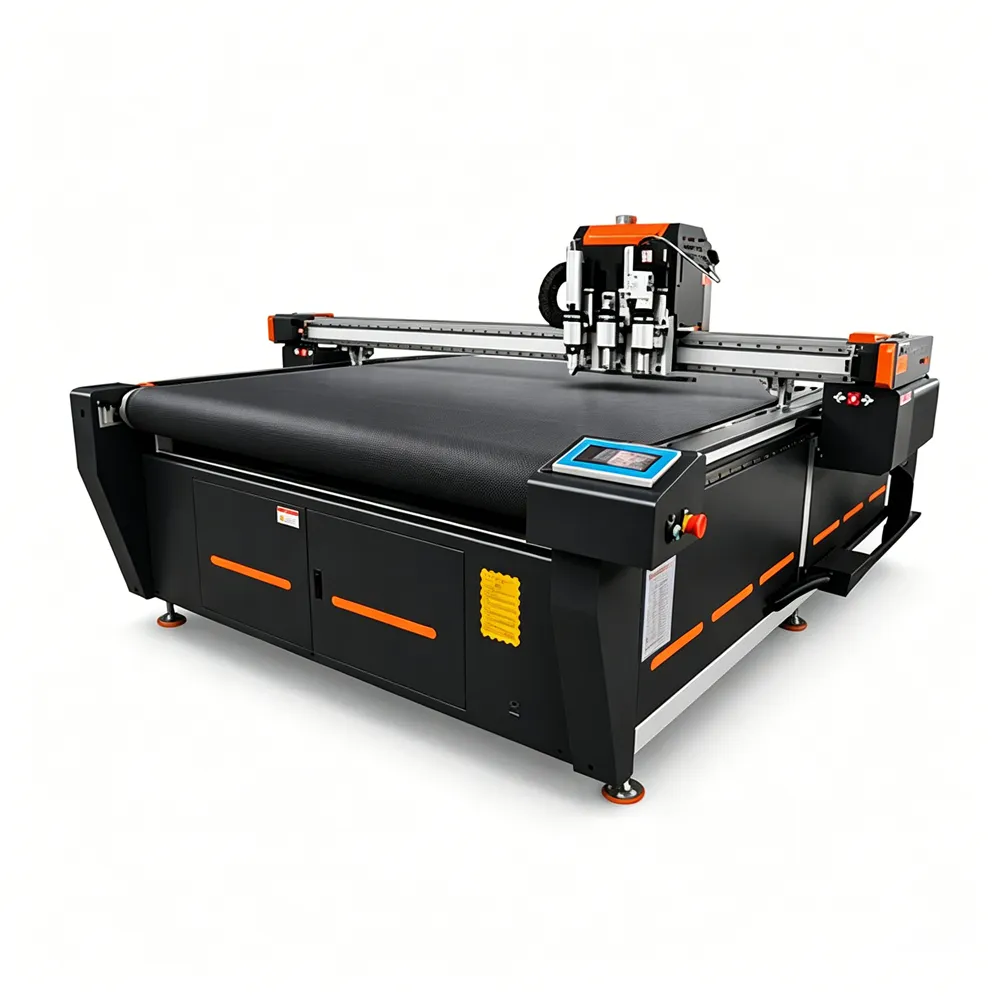
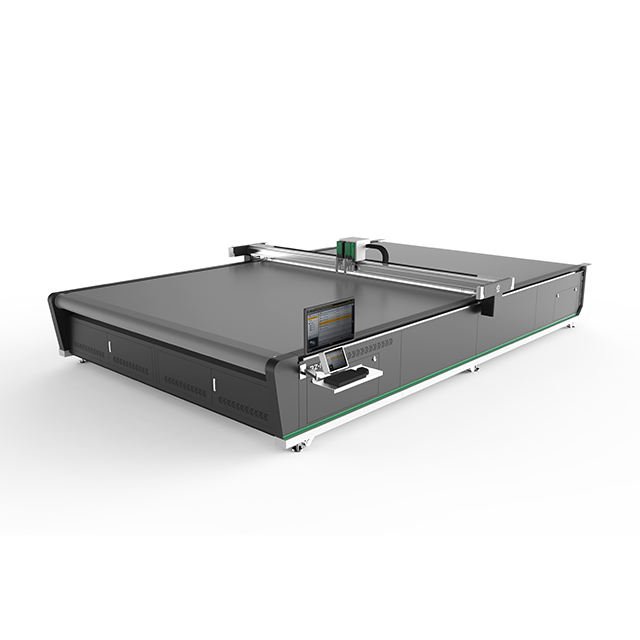
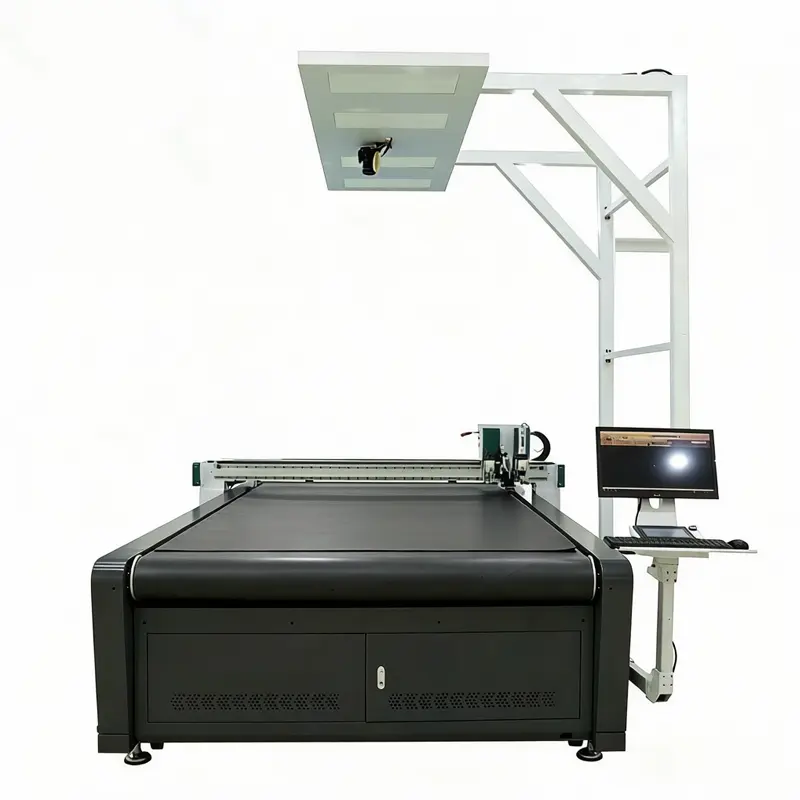
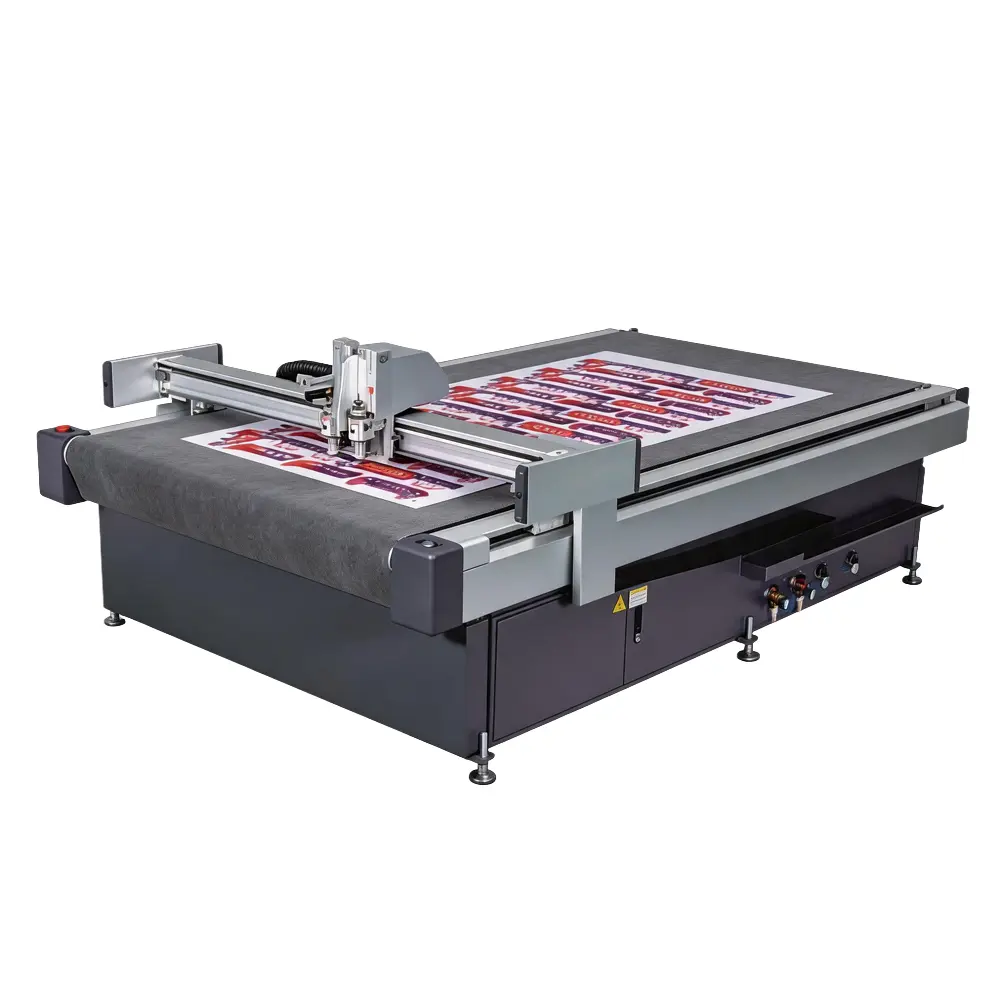
A CNC oscillating knife cutting machine provides a digital alternative.
Instead of using a physical template for every shape, the manufacturer can prepare a digital pattern, arrange multiple pieces through nesting software, and use the CNC system to guide the knife along the programmed cutting paths.
This approach can be especially useful for custom upholstery, short production runs, prototypes, multiple SKUs, and manufacturers that need a flexible fabric-cutting workflow.
Why Is Upholstery Fabric Difficult to Cut Accurately?
Fabric is flexible.
Unlike rigid sheet materials, it can move, stretch, fold, or shift during cutting.
Different upholstery fabrics can also behave very differently depending on their construction.
Common materials include:
- Woven upholstery fabric
- Polyester fabric
- Cotton fabric
- Linen-based fabrics
- Synthetic upholstery materials
- Laminated textiles
- Multi-layer textile materials
- Fabric-backed materials
The main challenge is not simply getting a knife through the material.
The challenge is maintaining the intended shape and dimensions while the material remains stable.
Several factors can affect the cutting result:
- Fabric thickness
- Stretch characteristics
- Surface friction
- Material tension
- Number of layers
- Backing material
- Pattern orientation
- Cutting direction
- Blade selection
- Vacuum holding
This is why a fabric cutting machine should be selected based on the actual material and production process rather than simply the word “fabric.”
What Products Can Be Made from CNC-Cut Upholstery Fabric?
A CNC fabric cutter can be useful in many industries where large quantities of accurately shaped textile components are required.
Furniture Upholstery
Furniture manufacturing is one of the most common applications.
Typical parts include:
- Sofa covers
- Chair covers
- Cushion covers
- Seat components
- Backrest fabric
- Armrest fabric
- Decorative textile pieces
- Upholstery patterns
Furniture manufacturers may have dozens or hundreds of individual patterns across different product models.
Digital cutting makes it easier to manage these patterns because the geometry can be stored and reused electronically.
Automotive Interiors
Textile materials are also used in automotive interiors and related products.
Depending on the application, CNC cutting can be used for:
- Seat-related textile components
- Interior trim materials
- Carpet-like materials
- Headliner-related textiles
- Acoustic textile components
- Protective textile layers
For automotive-related production, repeatability is particularly important because even small dimensional differences can affect assembly.
Cushions and Soft Furnishings
Manufacturers of cushions, mattresses, decorative pillows, and soft furnishings may process many different fabric patterns.
Digital cutting can make it easier to change:
- Shape
- Size
- Product model
- Pattern
- Material layout
This can be particularly valuable for businesses producing customized products.
How Does CNC Fabric Cutting Work?
The workflow starts with a digital pattern and ends with accurately cut fabric parts.
Step 1: Create or Import the Digital Pattern
The first step is to prepare the cutting geometry.
Patterns may be created in CAD or other compatible design software and then imported into the CNC cutting workflow.
Digital patterns can include:
- Outer contours
- Holes
- Notches
- Registration marks
- Internal cuts
- Alignment features
Keeping these details inside the digital file can help standardize the cutting process.
For repeat production, the same validated pattern can be reused without recreating a physical template.
Step 2: Prepare the Fabric
The fabric is placed on the cutting table.
For a flat-sheet workflow, the operator needs to ensure that the material is properly positioned and reasonably flat before cutting.
If the fabric is supplied from a roll, an automatic feeding or conveyor-based configuration may be appropriate depending on the production process.
Material preparation matters because fabric movement can affect the final dimensions.
Step 3: Use Vacuum Holding
CNC cutting machine for flexible materials can move during cutting.
A vacuum table can help hold the fabric against the cutting surface and reduce unwanted movement.
The appropriate vacuum setup depends on the fabric structure.
Very open or porous textiles may behave differently from dense or coated fabrics.
The objective is to create enough holding force to stabilize the material without creating unnecessary handling problems.
Step 4: Select the Correct Knife
The knife must match the material and cutting conditions.
For upholstery fabrics, an oscillating knife can move rapidly while traveling along the programmed path.
The exact blade selection depends on factors such as:
- Fabric thickness
- Material density
- Number of layers
- Backing material
- Required edge condition
There is no universal blade setting for every textile.
The best approach is to test the actual production material before finalizing the machine configuration.
Step 5: Arrange the Patterns Through Nesting
One of the biggest advantages of digital fabric cutting is the ability to optimize material placement.
Instead of manually placing each pattern, the software can arrange different shapes within the available material area.
A good nesting strategy considers:
- Material width
- Pattern quantity
- Pattern orientation
- Grain direction
- Repeat patterns
- Seam allowances
- Required spacing
For upholstery fabrics with directional textures, stripes, or prints, orientation can be more important than simply achieving the highest possible nesting density.
The goal is to balance material utilization and product requirements.
Step 6: Run the CNC Cutting Program
After the patterns are arranged, the CNC system follows the programmed toolpaths.
For a typical cutting job, the machine may process several different shapes within the same material layout.
This allows manufacturers to combine multiple components into a single cutting job rather than manually cutting them one by one.
The cutting sequence can also be optimized to reduce unnecessary tool movement.
Step 7: Sort and Inspect the Cut Parts
After cutting, the finished parts need to be identified and checked.
Useful inspection points include:
- Overall dimensions
- Pattern shape
- Cut edges
- Notches
- Internal features
- Orientation
- Matching components
For multi-part upholstery products, labeling and organization can be nearly as important as cutting accuracy.
A well-designed digital workflow should make it easier to connect each cut component with its corresponding product or order.
CNC Fabric Cutting vs. Manual Cutting
Manual fabric cutting is still practical for small workshops and simple production tasks.
However, manual processes can become challenging when order volume increases.
Typical issues include:
- Operator fatigue
- Inconsistent dimensions
- Difficulty reproducing complex patterns
- Longer preparation time
- More dependency on skilled operators
- Higher risk of cutting errors
- Difficulties managing many different patterns
A CNC fabric cutting machine changes the process from manually following a template to digitally controlling the cutting path.
Once a pattern has been tested and approved, it can be reused repeatedly.
This can improve production consistency while reducing dependence on manual pattern tracing.
CNC Cutting vs. Fabric Die Cutting
Die cutting can be highly effective when very large quantities of identical parts are required.
However, physical dies introduce tooling considerations.
Every significant change in shape can require a new die.
This is less convenient when a manufacturer has:
- Many product models
- Frequent pattern changes
- Customized orders
- Prototypes
- Short production runs
- Many sizes of the same product
With CNC knife cutting, the cutting geometry is digital.
A new pattern can be prepared without manufacturing a new physical die.
For companies with high product variety, this flexibility can be a major advantage.
How to Reduce Upholstery Fabric Waste
Fabric can represent a significant portion of manufacturing cost.
This makes material utilization an important part of the cutting process.
Digital nesting can help manufacturers use the available fabric more efficiently by arranging multiple patterns within the usable width.
However, maximum nesting efficiency does not always mean simply placing every shape as close together as possible.
For upholstery production, the software may also need to consider:
Grain Direction
Some fabrics have a preferred direction.
A pattern may need to remain aligned with the fabric grain even when another orientation would appear more efficient.
Pattern Matching
Striped, patterned, or textured materials may require specific positioning.
Two adjacent upholstery components may need to align visually after assembly.
Seam Allowance
Patterns should account for the required construction and sewing process.
The cutting geometry must match the actual manufacturing design.
Defective Material Areas
Some rolls may contain sections that cannot be used.
A digital nesting workflow can make it easier to work around unusable areas when they are identified before cutting.
The actual material savings achieved by CNC nesting will depend on the product geometry, material width, and production rules, so manufacturers should evaluate the results using their own production data.
Can a CNC Oscillating Knife Cut Multiple Fabric Layers?
This depends on the machine configuration, blade system, material characteristics, and required cutting quality.
Multiple-layer cutting can increase productivity, but stacking additional layers also changes the cutting conditions.
As the number of layers increases, manufacturers need to consider:
- Total cutting thickness
- Fabric compression
- Layer movement
- Blade length
- Edge quality
- Cutting force
- Vacuum holding
Rather than assuming that more layers always mean higher productivity, it is better to test the intended stack thickness using the actual production material.
For some applications, cutting fewer layers at a controlled speed may produce a better overall workflow.
What About Stretch Fabric?
Stretchable upholstery or textile materials require special attention.
A fabric may have different behavior depending on the direction of stretch.
When the material is stretched during loading, the dimensions of the cut part may not match the intended pattern after the tension is released.
For this reason, material preparation is critical.
The manufacturer should establish a consistent method for:
- Loading the fabric
- Controlling tension
- Holding the material
- Positioning the pattern
- Inspecting the finished part
The correct cutting strategy should be validated on the actual material rather than based only on its general category.
How to Choose a CNC Fabric Cutting Machine
When purchasing a CNC fabric cutting machine, look beyond the maximum advertised cutting speed.
The machine should fit the complete production process.
1. Working Width
Choose a cutting width that matches the fabrics and patterns you normally process.
For roll-fed production, material width compatibility is especially important.
2. Flatbed or Conveyor Configuration
A flatbed configuration may be suitable for sheet-based production, prototypes, and certain batch workflows.
A conveyor-style system can be useful when continuous material feeding is important.
The best configuration depends on your production method.
3. Vacuum Holding
Vacuum holding should provide stable material positioning during cutting.
Ask how the system performs with the actual fabrics you plan to process.
4. Knife and Tool Options
Different textiles may require different cutting tools.
Confirm that the machine can support the tool configuration appropriate for your materials.
5. Software and Nesting
The software is a critical part of the system.
Look for a workflow that makes it easy to:
- Import digital patterns
- Modify geometry
- Nest multiple parts
- Manage cutting paths
- Store production files
- Repeat previous jobs
6. Material Testing
This may be one of the most important purchasing steps.
Instead of choosing a machine solely from a specification sheet, send representative materials for testing.
Ideally, test:
- Your actual fabric
- Your normal thickness
- Your preferred number of layers
- Your actual patterns
- Your required production quality
This gives a much better understanding of whether the machine is suitable for your application.
When Should a Furniture Manufacturer Consider CNC Fabric Cutting?
CNC fabric cutting becomes particularly attractive when a company experiences one or more of these conditions:
- Increasing order volume
- Many furniture models
- Frequent pattern changes
- Custom upholstery
- Short production runs
- High labor requirements
- Material waste concerns
- Need for repeatable digital patterns
- Difficulty maintaining consistent manual cutting quality
It may be less necessary when production consists of a very small number of simple shapes with low daily volume.
The business case depends on the balance between material cost, labor, production volume, pattern variety, and the value of manufacturing flexibility.
Common Questions About CNC Upholstery Fabric Cutting
Can a CNC machine cut upholstery fabric?
Yes. A suitable CNC knife cutting system can process many types of upholstery fabrics. The appropriate knife and cutting parameters depend on the actual material.
Is an oscillating knife suitable for fabric?
An oscillating knife can be used for many flexible textile materials. Its suitability depends on fabric construction, thickness, number of layers, and the required cutting result.
Can CNC cutting replace manual fabric cutting?
For many production workflows, CNC cutting can reduce the amount of manual cutting required. However, the overall workflow still includes material loading, inspection, sorting, sewing, and assembly.
Can a CNC fabric cutter process custom furniture patterns?
Yes. Digital patterns can be changed without creating a new physical cutting die, which makes CNC cutting well suited to customized and frequently changing products.
How do I know which fabric cutting machine I need?
Start with your actual production requirements.
Consider:
- Fabric type
- Fabric width
- Thickness
- Stretch characteristics
- Number of layers
- Typical pattern size
- Daily production
- Required automation level
A sample cutting test can then help determine the appropriate machine and tool configuration.
Final Thoughts
For upholstery manufacturers, the cutting stage has a direct impact on production efficiency, material utilization, and downstream assembly.
Manual cutting can remain effective for small-scale work, but companies handling many patterns and repeated production orders may benefit from a digital workflow.
A CNC oscillating knife cutting machine allows upholstery patterns to move from digital files to physical fabric parts without requiring a separate physical die for every design.
With suitable material holding, knife selection, nesting, and cutting parameters, CNC fabric cutting can provide a flexible production solution for furniture upholstery, automotive interiors, cushions, soft furnishings, and other textile applications.
The most reliable way to select a machine is to evaluate the complete process with your actual materials and patterns.
Need to Cut Upholstery Fabric More Efficiently?
Send us your fabric type, material width, number of layers, sample pattern, and expected production volume.
We can evaluate the cutting workflow and recommend a suitable CNC knife cutting configuration based on your actual requirements.
Request a sample cutting test and see how your fabric performs on a CNC oscillating knife cutting machine.