Felt is a surprisingly versatile material.
It is used for acoustic panels, furniture components, industrial pads, protective liners, automotive interiors, displays, packaging, insulation products, and many custom-made parts.
The challenge is that felt does not behave exactly like ordinary fabric.
Depending on the material structure, thickness, density, and fiber composition, felt can compress during cutting, move under the knife, leave rough edges, or produce dimensional variations when it is processed manually.
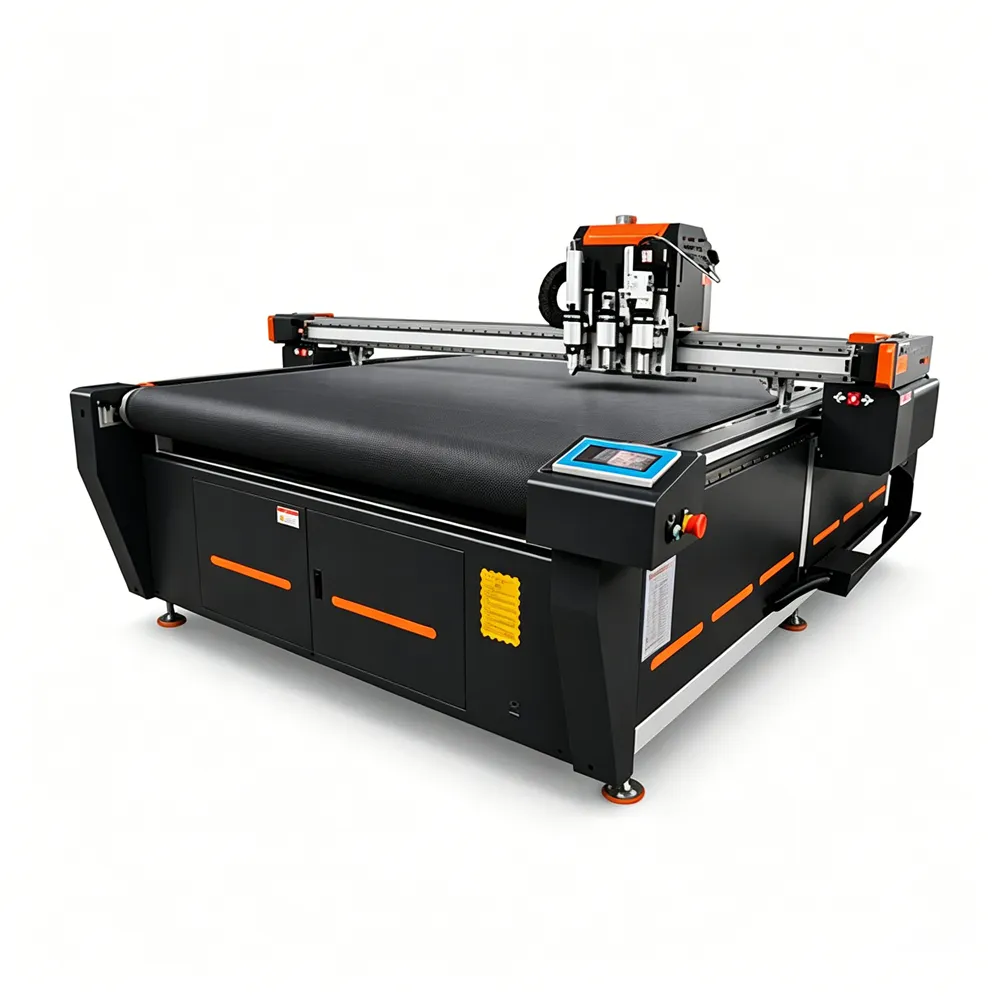
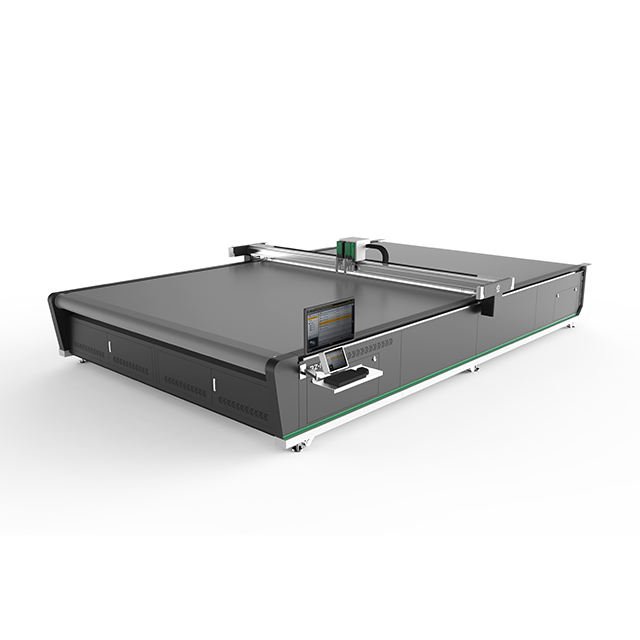
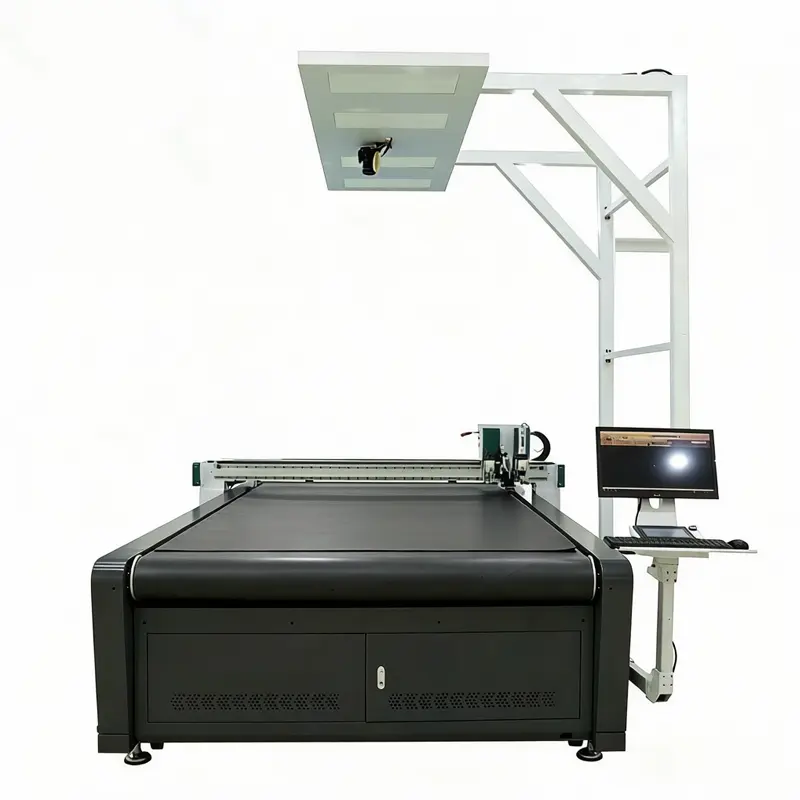
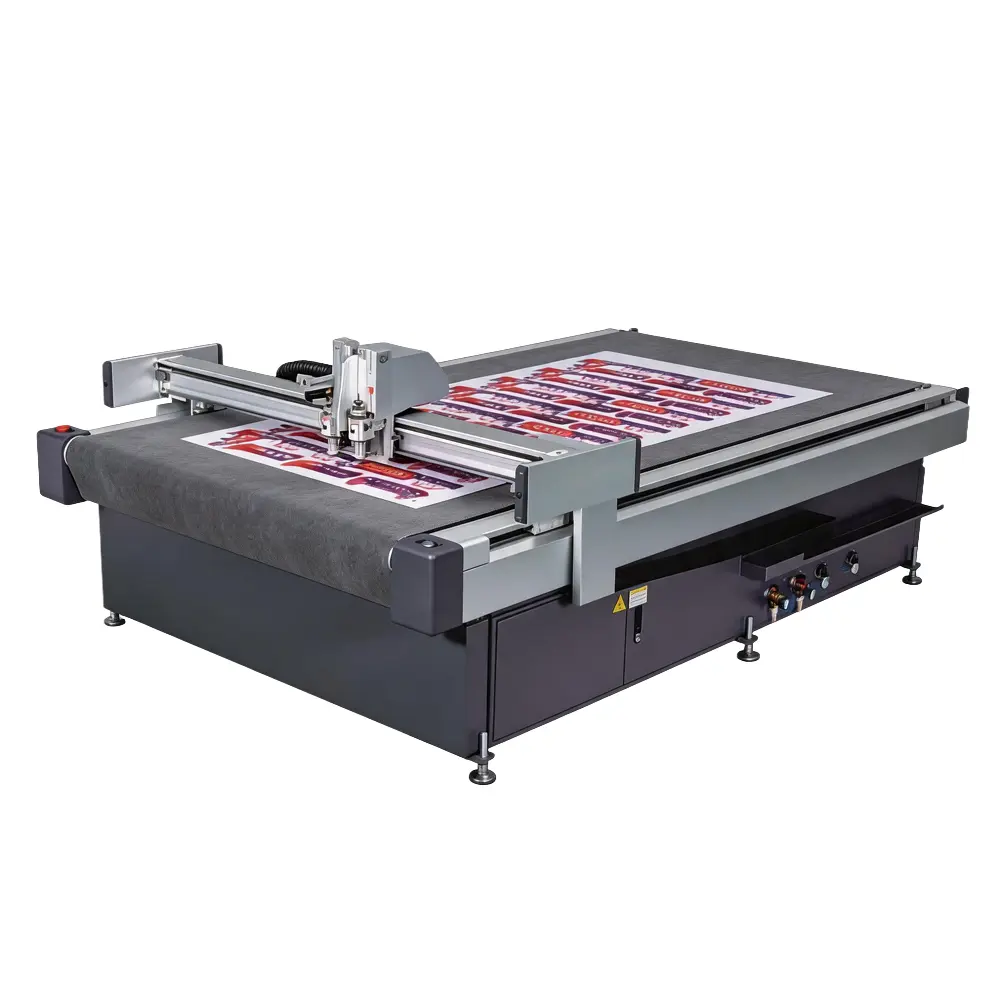
For manufacturers producing different shapes, sizes, and designs, a CNC oscillating knife cutting machine can provide a much more repeatable way to process felt sheets and rolls.
Instead of using a fixed metal die for every shape, the operator can load a digital drawing, position the material on the cutting table, and let the CNC knife follow the programmed toolpath.
This makes CNC felt cutting particularly useful for custom orders, short production runs, prototypes, and products with many different designs.
Why Is Felt Difficult to Cut?
Felt looks simple, but its internal structure can make cutting more complicated than expected.
Unlike woven fabric, many felt products are formed from compressed or bonded fibers. This means the material may behave differently depending on its density and construction.
Several factors can affect cutting quality:
- Felt thickness
- Material density
- Fiber composition
- Compression characteristics
- Surface structure
- Sheet size
- Adhesive or backing layers
- Whether the material is supplied as a sheet or roll
When a traditional blade or manual knife is used, the material can be compressed before the cutting edge completely separates it.
This may lead to uneven dimensions or inconsistent edge quality.
A CNC cutting system addresses this challenge by controlling the cutting path and tool movement digitally.
The goal is not simply to cut the felt.
The goal is to produce repeatable parts from a digital design.
What Can a CNC Oscillating Knife Cut from Felt?
A digital knife cutting machine can be used for many felt products and components.
Common applications include:
Acoustic Felt Panels
Felt is widely used in acoustic products because it can be formed into decorative and functional panel designs.
A CNC cutter can process:
- Wall panel shapes
- Ceiling elements
- Decorative patterns
- Acoustic baffles
- Geometric panels
- Custom branding shapes
- Modular acoustic components
Complex contours can be programmed directly from CAD or vector artwork without manufacturing a new die for every design.
Furniture Components
Felt is often used in furniture and interior products.
Typical applications include:
- Chair components
- Sofa elements
- Desk dividers
- Furniture pads
- Protective layers
- Decorative inserts
- Custom covers and panels
This is especially useful when a furniture manufacturer produces many product models.
Industrial Felt Parts
Industrial felt can be used for:
- Pads
- Gaskets
- Sealing components
- Protective layers
- Spacers
- Anti-vibration components
- Machinery liners
When customers require different shapes and dimensions, digital cutting provides more flexibility than fixed tooling.
Automotive and Interior Components
Felt-like materials can also be found in vehicle interiors and other transportation applications.
Possible parts include:
- Interior liners
- Sound-absorbing components
- Protective pads
- Trunk-area components
- Decorative elements
- Insulation-related parts
For this type of manufacturing, dimensional consistency and repeatability are often important.
Packaging and Protective Inserts
Felt can also be used as a protective material for products that require separation or cushioning.
The same CNC cutting principle can be used to create custom insert shapes based on digital drawings.
How Does CNC Felt Cutting Work?
The general process is straightforward.
Step 1: Prepare the Digital Design
The first step is to prepare the cutting geometry.
This can come from:
- CAD files
- Vector drawings
- Product templates
- Digital patterns
- Customer drawings
The exact supported file formats depend on the CNC control system, so manufacturers should confirm compatibility before purchasing a machine.
For production work, clean vector geometry is especially useful because the cutter needs to follow precise paths.
Step 2: Place the Felt on the Cutting Table
The felt sheet or roll material is positioned on the cutting surface.
For larger sheets, the machine can use a vacuum holding system to help keep the material stable during cutting.
Material movement is one of the biggest things to control when cutting flexible or compressible materials.
Even if the cutting path is accurate, movement of the material can affect the final part.
Step 3: Select the Correct Knife Tool
The cutting tool should match the material.
For felt, an oscillating knife is often used because the blade moves rapidly while traveling along the programmed path.
The exact blade configuration depends on the felt’s:
- Thickness
- Density
- Fiber structure
- Backing
- Required edge quality
There is no single knife setup that is ideal for every type of felt.
For commercial production, it is better to perform a sample cutting test before finalizing the machine and tool configuration.
Step 4: Set Cutting Parameters
Important cutting parameters may include:
- Cutting speed
- Knife frequency
- Cutting depth
- Tool pressure
- Acceleration and deceleration
- Vacuum level
The correct settings depend heavily on the material.
A dense industrial felt may require a different setup from a soft decorative acoustic felt.
The objective is to find a balance between cutting speed, edge quality, and material stability.
Step 5: Run the Cutting Program
Once the material and tool settings are prepared, the CNC system follows the programmed paths.
The cutting sequence can usually be optimized to reduce unnecessary movements.
For parts containing both internal and external contours, cutting order can also matter.
Internal details may be completed before the final outside contour so that the surrounding material continues to provide support during earlier cutting operations.
Step 6: Inspect the Finished Parts
After cutting, inspect the parts for:
- Dimensional accuracy
- Edge condition
- Incomplete cuts
- Fiber pull-out
- Compression marks
- Material movement
- Shape consistency
For production orders, checking the first few parts before continuing with the complete job can help prevent large quantities of defective pieces.
CNC Felt Cutting vs. Manual Cutting
Manual cutting may be acceptable for prototypes or very small quantities.
However, it becomes more difficult when the same part must be produced repeatedly.
Typical problems with manual cutting include:
- Inconsistent dimensions
- Operator-dependent quality
- Longer production time for complex shapes
- Difficulty reproducing the same design
- More difficult handling of digital drawings
- Limited ability to optimize material layout
A CNC cutter removes much of the variation associated with manually following templates.
Once the digital file and cutting parameters have been validated, the same geometry can be reproduced much more consistently.
This is one of the biggest reasons manufacturers move from manual cutting to digital cutting as their order volume increases.
CNC Knife Cutting vs. Die Cutting for Felt
Die cutting is another established method for processing felt.
For very high-volume production of a stable design, a die can be highly efficient.
However, dies also introduce tooling requirements.
Every major shape change may require a new die.
That creates additional cost and lead time when a manufacturer has:
- Many SKUs
- Frequent design changes
- Custom orders
- Low-volume products
- Prototypes
- Short production runs
CNC knife cutting changes the economics of this type of work.
The cutting geometry can be changed digitally without manufacturing a new physical die.
For companies producing many different shapes, this flexibility can be a major advantage.
How to Reduce Felt Cutting Waste
Material utilization is another important consideration.
The value of reducing waste becomes much more significant when expensive felt materials are processed in large quantities.
A CNC cutting workflow can help manufacturers improve material utilization through digital nesting.
Instead of placing parts manually, the software can arrange multiple shapes within the available material area.
The nesting strategy can consider:
- Part dimensions
- Part orientation
- Required spacing
- Material width
- Production quantity
- Different part shapes
The actual material savings will depend on the specific parts and nesting conditions, so it is better to measure results from real production data rather than rely on a fixed percentage.
What About Thick Felt?
Thicker felt requires additional consideration.
As thickness increases, the cutter may need:
- A suitable blade length
- Appropriate oscillation settings
- Suitable cutting pressure
- More careful material holding
- Multiple-pass cutting in some applications
The correct setup should be determined through testing rather than simply using the same settings for every thickness.
This is particularly important for dense industrial felt, laminated felt, and composite materials.
Can One CNC Machine Cut Different Materials?
One of the main benefits of an oscillating knife cutting platform is material flexibility.
Depending on the machine configuration and tool system, the same CNC cutting platform may be used for multiple non-metallic materials.
For example, a manufacturer may process felt as well as:
- Foam
- Rubber
- Cardboard
- Corrugated board
- Textiles
- Synthetic leather
- Composite materials
- Gasket materials
This flexibility can be valuable for job shops and manufacturers with a broad product portfolio.
Instead of purchasing a dedicated machine for every individual material, companies can select a suitable digital cutting platform and configure the appropriate tooling.
How to Choose a Felt Cutting Machine
Not every CNC cutter is configured in the same way.
When evaluating a machine for felt production, look at more than the advertised cutting speed.
1. Cutting Area
The table size should match the material format you normally purchase.
A larger working area can reduce the need to cut large sheets into smaller sections.
2. Material Holding
Vacuum holding can be particularly useful for flexible felt sheets.
Stable material positioning is essential for accurate cutting.
3. Knife System
Ask which knife options are available and whether the tool system is suitable for your felt thickness and density.
4. Software
The software should make it practical to import designs, arrange parts, create cutting paths, and manage production files.
5. Production Workflow
Think about the entire process, not just the knife.
Consider:
- Material loading
- Cutting
- Unloading
- Part identification
- File management
- Repeat orders
- Operator workflow
6. Sample Cutting Support
One of the most useful steps before purchasing a machine is testing your actual felt material.
Different felt products can behave very differently during cutting.
A machine recommendation based only on material names may not be enough.
When Does CNC Felt Cutting Make Sense?
CNC cutting becomes especially attractive when your business has one or more of these requirements:
- Custom-shaped felt parts
- Frequent design changes
- Multiple product sizes
- Small or medium production batches
- Prototype development
- Many SKUs
- Digital production files
- Short lead times
- Reduced dependence on manual cutting
For a manufacturer producing one simple part in extremely large quantities, die cutting may still be the better solution.
But when flexibility and digital manufacturing are important, CNC knife cutting offers a strong alternative.
Common Questions About Felt Cutting
Can felt be cut with a CNC machine?
Yes. Felt can be processed on a suitable CNC cutting machine using an appropriate knife configuration. The exact tool and parameters depend on the material’s thickness, density, and construction.
Is an oscillating knife suitable for felt?
An oscillating knife is commonly used for flexible and fibrous non-metallic materials because the blade motion helps separate the material along the programmed cutting path.
Can a CNC cutter make complex felt shapes?
Yes. Complex contours, holes, slots, and custom profiles can be programmed digitally, provided the machine and tooling are suitable for the material.
Can thick felt be cut?
Thick felt can often be processed, but the machine configuration and cutting strategy need to match the actual material. Testing the customer’s material is the safest way to determine the required setup.
Is CNC felt cutting better than die cutting?
It depends on production requirements. CNC cutting is particularly attractive for custom work, short runs, prototypes, and applications involving frequent design changes. Die cutting can remain highly efficient for large-volume production of stable designs.
Final Thoughts
Felt is a versatile material, but its compressible and fibrous structure means that consistent cutting requires the right combination of tooling, material holding, and cutting parameters.
A CNC oscillating knife cutting machine provides a digital approach that allows manufacturers to move from a drawing to a finished felt part without creating a dedicated die for every design.
For acoustic panels, furniture components, industrial felt parts, automotive interiors, protective pads, and custom felt products, this flexibility can make digital knife cutting an attractive production method.
The best machine configuration depends on the actual felt you need to process.
Before choosing a machine, test your material and evaluate the complete workflow—from digital file preparation to nesting, cutting, unloading, and final inspection.
Need to Cut Felt for Your Business?
If you are evaluating a CNC felt cutting machine, send us your felt type, thickness, sheet or roll size, and sample drawing.
We can help evaluate the appropriate knife configuration and cutting workflow based on your actual material.
Request a sample cutting test and see how your felt performs before making a machine decision.