
Why fabric manufacturers switch from laser / manual / die cutting to oscillating knife? (real shop floor problems solved)
If you’ve ever cut stretch denim, polyester lining, spandex, or laminated automotive fabric, you know the headaches: laser leaves a melted crust that cracks later, drag knife pulls threads out of knitted goods, and manual cutting on multi‑layers drifts by centimeters. The oscillating knife solves four specific fabric‑related nightmares:
- ❌ No more melted edges – Laser cutting on nylon or polyester creates a hard, yellowed edge that irritates skin and unravels after washing. Our 18,000‑stroke/min vibration slices cleanly, leaving fibers sealed but not fused (perfect for high‑end sportswear).
- ❌ No more fabric distortion during cutting – For light‑weight silk or rayon, ordinary blades pull and stretch. The oscillating motion reduces horizontal drag force by ~70%: the blade taps through vertically instead of dragging sideways. That means your cut pieces keep the original grainline – critical for tailored jackets.
- ❌ No more layer shifting on 10‑ply cotton fleece – When you stack 8-15 layers of sweat fabric, the top layer shifts against the bottom layer under a traditional beam press. Our vacuum table zones (4 independent zones) + vibration cutting hold each ply flat. We routinely see ±0.5mm alignment across all layers for denim and canvas.
- ❌ No more fraying on non‑wovens & technical textiles – Geotextiles, felt, and carbon fiber prepreg are notorious for fuzzy edges. The high‑frequency vibration pre‑seals the cut line (~0.2mm sealed border) without heat – something laser can’t do because it would melt the resin in prepreg.
The “fabric‑first” engineering inside the RMY‑BL2030
Most CNC cutters are designed for cardboard or foam, then adapted to textiles. We took the opposite approach. Every parameter on the RMY‑F2030 is tuned for fabric behavior:
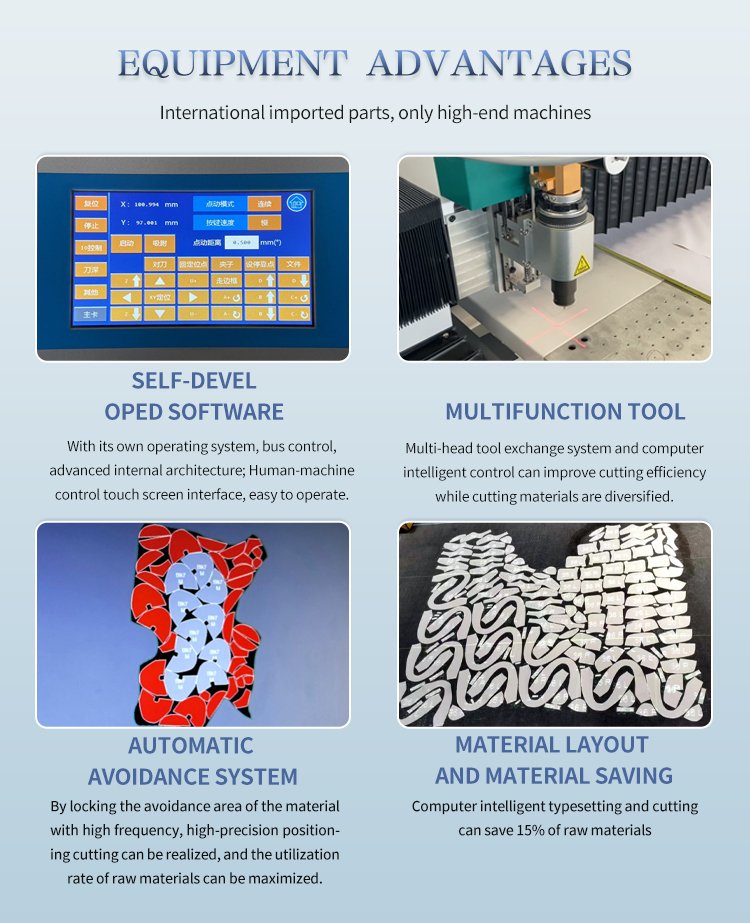
- Variable oscillation frequency (5,000 – 18,000 rpm) – Low frequency for heavy canvas (less heat), high frequency for thin nylon (cleaner cut). You can adjust on‑the‑fly from the touchscreen.
- Blade lift height only 2mm – After each cut segment, the blade raises just 2mm to move to the next island. That shaves 0.3 seconds per move; on a 500‑piece T‑shirt marker, it saves 8 minutes.
- Anti‑static nozzle optional – Cutting synthetic fabrics creates static, which makes small cut pieces stick to the blade and jump. Our optional ionizer blows gentle ionized air onto the cut line – you’ll see the difference on polyester linings.
- Double‑action cloth fixation: vacuum + static brush brush roller (for lightweight fabrics like chiffon, the brush roller pre‑flattens wrinkles before vacuum engages).
Technical specs sheet (tailored to textile cutting)
| Model | RMY-BL1725 | RMY-BL2030 | RMY-BL2330 | RMY-BL2630 | Customizable Model |
|---|---|---|---|---|---|
| Cutting Area (Width × Length) | 1700mm × 2500mm | 2000m × 3000mm | 2300mm × 3000mm | 2600mm × 3000mm | Custom sizes available |
| Production Capacity | 650 pants/hour, 500 garments/hour, 6,000 medical gowns/hour | ||||
| Applicable Materials | Fabrics, Textiles, Lace, Automotive Interiors, Fur, Leather, Denim, Calico, PVC, Foam, Cardboard, Acrylic, Curtains, Carpets, Women’s Shoes, etc. | ||||
| Cutting Length | Unlimited with automatic feeding system | ||||
| Max. Speed | 0–70 m/min | ||||
| Cutting Accuracy | ±0.1 mm | ||||
| Total Power | 18 KW | ||||
| Power Supply | 220V / 380V, 50/60 Hz | ||||
| Cutting Style | Straight knife continuous up-down cutting | ||||
| Blade Cooling | Automatic temperature‑controlled air cooling system & water cooling system | ||||
| Vacuum Mode | Variable frequency vacuum constant pressure control mode | ||||
| Control System | Self-developed system, well compatible with any version of CAD software | ||||
| Other Functions | Mobile cutting unit, automatic feeding unit, pattern scanning, vacuum bed | ||||
| Main Components | 1. Automatic multi‑layer cutting bed 2. Automatic fabric spreading machine 3. Air flotation table | ||||
| Main Accessories | Motor | Guide Rail | Switch | Knife Drive | Conveyor Belt |
| Brand / Supplier | Panasonic | HIWIN | Delixi | Maxon | German |
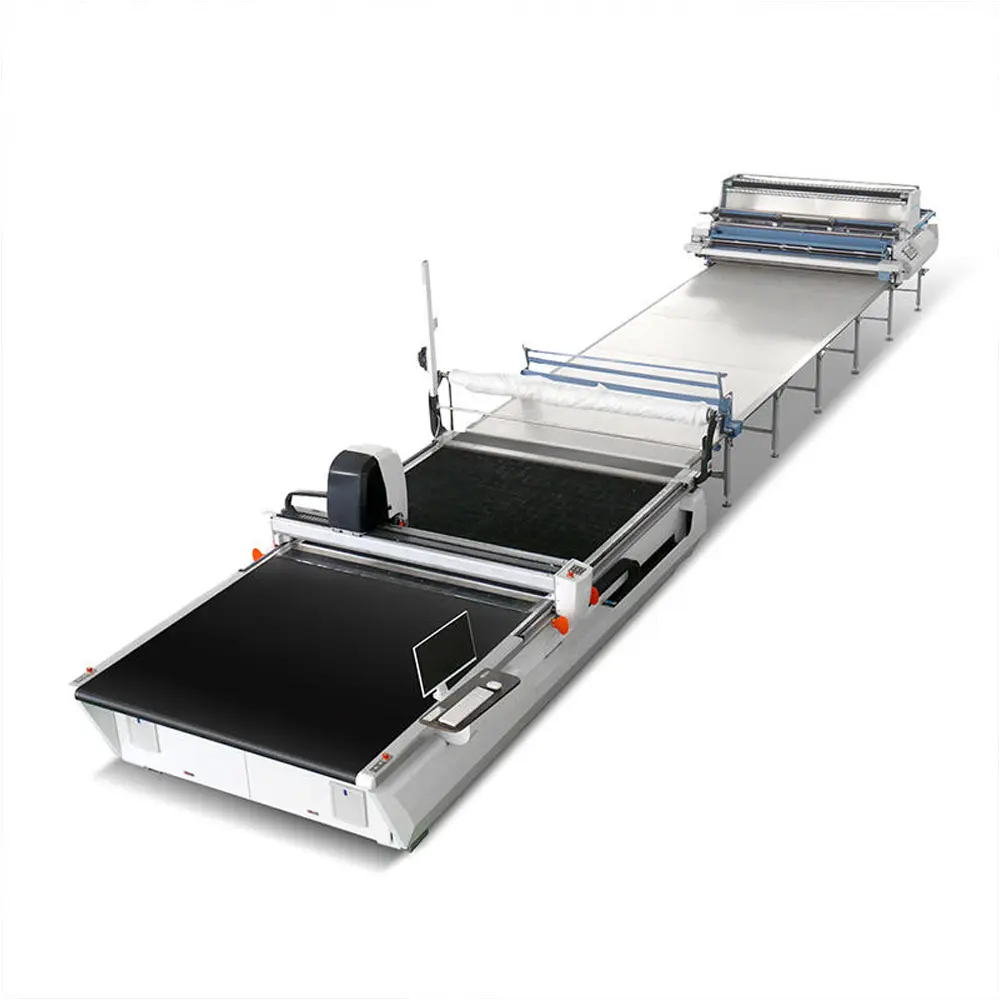
Best Partner: Automatic Spreading and Cutting Machine
To fully leverage the multi-layer cutting efficiency of the vibration knife cutting machine, the pre-spreading process is essential. The automatic spreading and cutting machine is specifically designed to work in synergy with the vibration knife cutter, automatically completing the preparation from fabric rolls to neatly stacked plies.
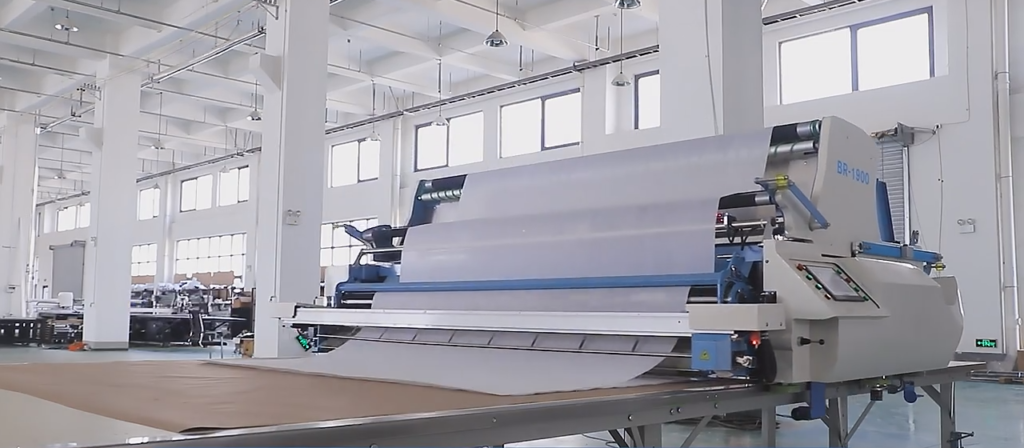
Main functions of the automatic spreading and cutting machine:
- Automatically unwinds, aligns, and spreads fabric rolls into multiple layers with a preset number of plies; spreading speed up to 100 m/min.
- Photoelectric automatic edge correction, layer‑to‑layer alignment accuracy ≤5mm, ensuring consistent fabric edges across multiple plies.
- Tension‑free spreading technology, especially suitable for elastic and lightweight fabrics, avoiding stretching distortion.
- Automatic cutting after spreading; maximum stacking height up to 200mm or more, matching the cutting machine table width.
Workflow with the cutting machine:
The automatic spreading machine neatly stacks fabric on an extension area of the cutting table or on an independent spreading table → the stacked multi‑ply fabric is transferred into the cutting zone via a conveyor belt or vacuum suction platform → the cutting machine automatically recognizes the layout and completes multi‑layer cutting in one pass → the finished cut pieces are automatically collected by the unloading system.
Why is it necessary to pair with the cutting machine?
- Manual spreading makes it difficult to ensure alignment between layers, which can cause the cutting machine to cut inaccurately. Automatic spreading solves this problem.
- Automatic spreading enables continuous material preparation – while the cutting machine is cutting, the next batch of fabric is being spread, creating a continuous flow and increasing overall efficiency by more than 50%.
- The complete setup reduces labor requirements: a traditional process (4 people spreading + 2 people cutting) can be streamlined to (1 person operating the spreading machine + 1 person operating the cutting machine), who can also oversee material collection.
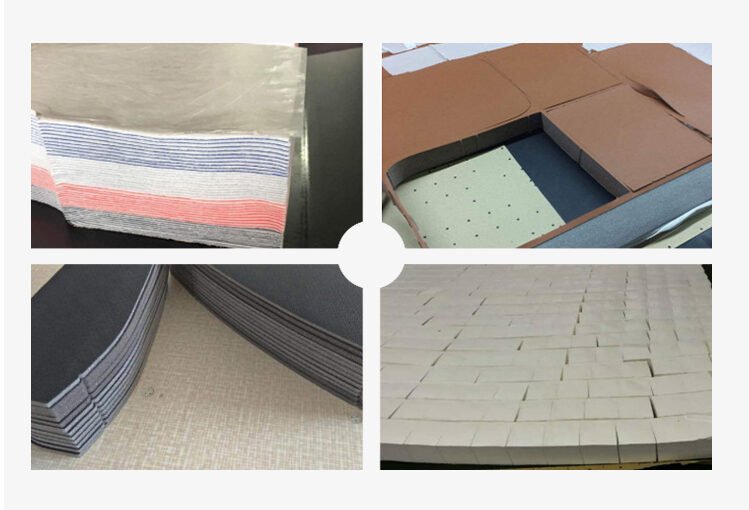
Typical application scenarios (paired with automatic spreading)
| Industry | Typical materials | Advantages of the combination |
|---|---|---|
| Garment manufacturing | Knits, woven fabrics, denim, silk | Tension‑free spreading, burr‑free cutting, ideal for high‑volume cutting |
| Home textiles & bedding | Cotton fabrics, chemical fibers, plush fabrics | Accurate spreading length, cutting speed matching production capacity |
| Automotive interiors | Headliner fabrics, carpets, sound‑absorbing felt | High efficiency of multi‑layer cutting, spreading prevents misalignment |
| Upholstered furniture | Leather, composite foam, non‑woven fabrics | Smooth leather spreading, no scorching or smoke during cutting |
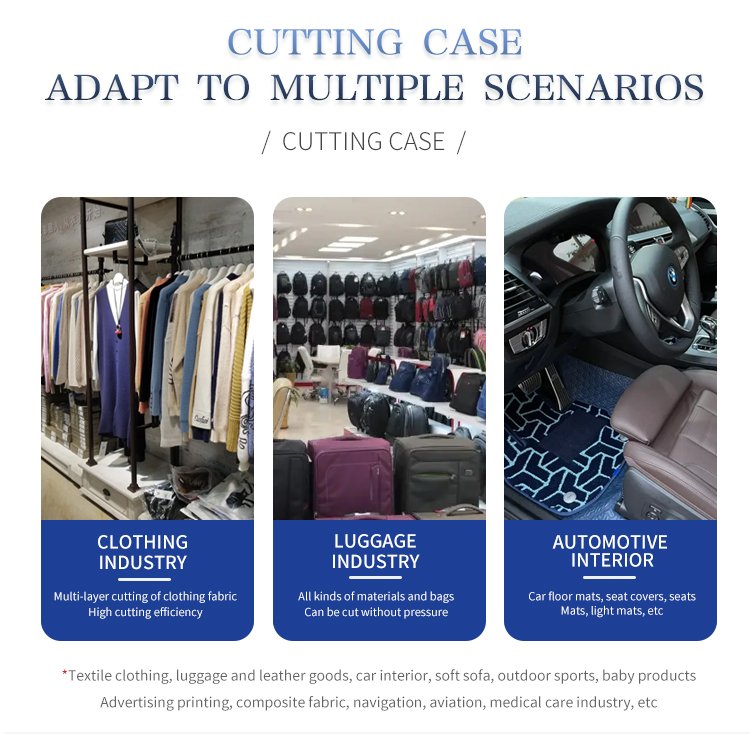
Cutting performance – real numbers for apparel materials
We don’t just give you unloaded speed. Here’s what the RMY‑BL2030 delivers on production floor conditions (single‑ply, unless noted):
| Fabric type | Typical thickness | Cutting speed (mm/s) | Edge quality |
|---|---|---|---|
| Cotton twill / denim (10oz) | 1.2mm | 1200 – 1500 | Clean, minimal fuzz |
| Nylon / Polyester lining (70D) | 0.15mm | 1600 – 1800 | No melt, no pull |
| Spandex / Lycra (20% elastane) | 0.5mm | 1000 – 1200 | No curling, edges non‑curl |
| Felt / non‑woven (4mm thick) | 4mm | 600 – 800 | Sharp, no scuff |
| Multi‑layer fleece (10 plies, 8mm total) | 8mm | 400 – 550 | ±0.7mm layer alignment |
*Speeds vary with complexity of pattern (tight curves reduce speed automatically via Servo control).
Model breakdown: RMY‑BL2030 (standard) vs. RMY‑BL2030 Pro (knit & stretch fabric optimized)
We offer two variants because cutting woven canvas vs. cutting 4‑way stretch jersey require different blade control logic.
REMEYA RMY‑BL2030 (Standard)
- Working area: 2000×3000mm (can handle a full bolt of 1.6m wide fabric)
- Max speed: 1400mm/s
- Oscillation knife: electric, 0-12000 rpm adjustable
- Vacuum power: 7.5kW zoned (4 zones)
- Best for: denim, canvas, oxford, leather, felt, non‑wovens, coated fabrics
REMEYA RMY‑BL2030 Pro (Stretch & Knit Edition)
- Same 2000×3000mm area, but upgraded servo drives
- Max speed: 1800mm/s | acceleration: 0.4G
- Pneumatic + electric dual‑mode oscillating knife – softer downforce when cutting elastane
- Smart blade drag compensation: automatically adjusts toolpath for fabric stretch (patent pending)
- Extra fine vacuum zone (6 zones) + teflon‑coated table to reduce friction
- Best for: spandex, jersey, rib knit, silk charmeuse, lace (zero pull)
Real‑world fabric waste reduction – how nesting software pays for itself
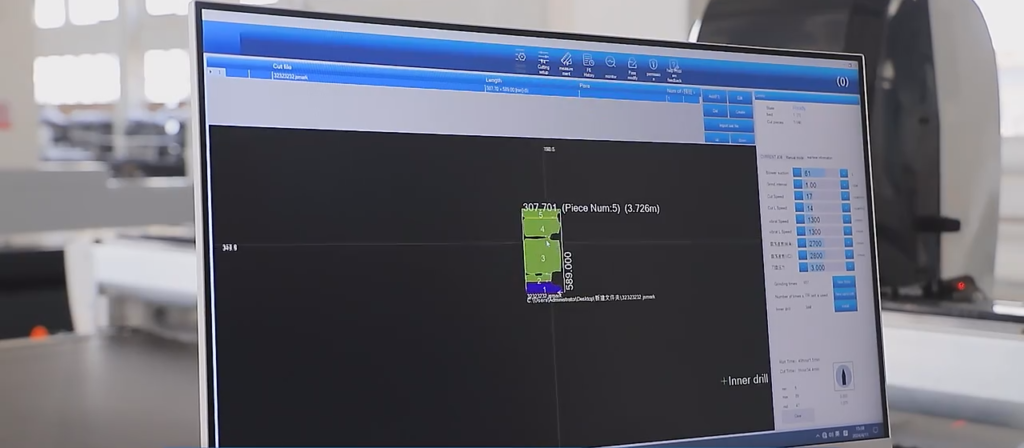
We include AI Nesting Optimizer (standalone or plug‑in for Gerber, Lectra, Optitex). Three features that directly lower your material cost:
- True‑shape nesting: Instead of bounding boxes, the algorithm recognizes pattern shape and rotates pieces in real‑time. For a typical shirt marker, you’ll see 3‑5% less fabric usage vs manual layout.
- Defect skipping with camera (optional): A 16MP CCD camera scans fabric before cutting. If it finds a hole, oil stain, or weave defect, the software automatically moves affected pattern pieces to a clean area. Saves expensive fabric (especially on wool and silk).
- Multi‑order batch nesting: Combine 5 different purchase orders onto one fabric roll – the cutter cuts different sizes/styles in one pass. Zero extra labor.
We’ve tracked 14 customers over 6 months: average material savings = 23% (from previously 18% waste down to 13.8%). For a factory using 20,000 meters of cotton monthly, that’s ~1,800 meters saved – about $4,500/month at $2.5/meter.
What’s in the tool kit for fabric shops?
- Standard: 1 electric oscillating knife, 2 extra blades (round and sharp tip), drag knife, creasing wheel.
- Optional: Pneumatic knife (for thick multi‑layer, carpet), 45° bevel knife (for leather chamfer), punching tool (for holes on webbing).
- Consumables: Each oscillating blade lasts about 20,000 linear meters on cotton.
What fabric types can (+ can’t) be cut? A candid guide
✅ Good to excellent (clean cut, high speed):
Cotton, linen, denim, canvas, polyester, nylon, poly-cotton blends, felt, non‑wovens (spunlace, meltblown), fleece, polar fleece (low fluff), interfacing, carbon fiber fabric (dry), fiberglass cloth, PU leather, leatherette, closed‑cell foam (laminated to fabric), rubber sheet.
⚠️ Cut with care (speed reduction or special setup):
Silk charmeuse (use spray adhesive on backing paper to prevent slip), very open knits (mesh) – need vacuum pressure not too high or it will distort; 4‑way stretch spandex (choose Pro version).
Step‑by‑step workflow – from roll to cut parts
① Load fabric roll – optional cradle feeder with tension control (avoids stretching knits).
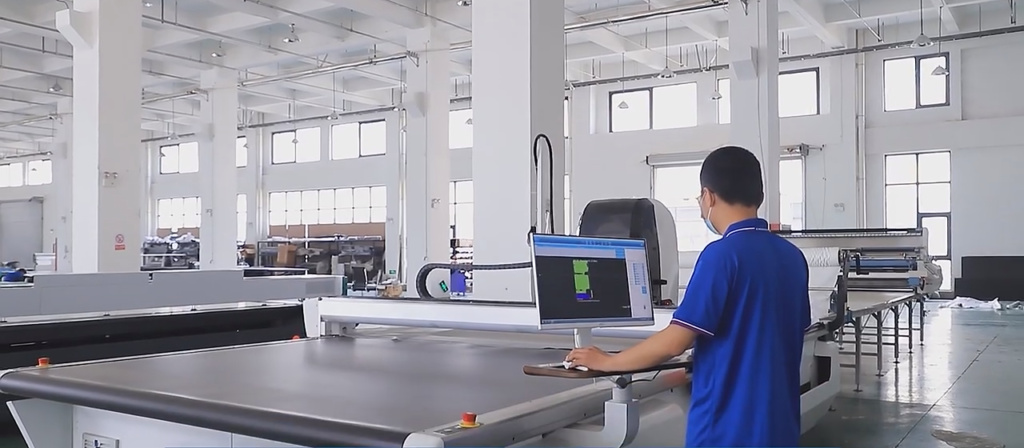
② Spread & vacuum – manual or auto layup. Press vacuum button; zones light up green where fabric sits.
③ Import marker – upload .dxf via USB or LAN. Software shows estimated cutting time and material usage.
④ Select tool & set blade depth – blade should extend 0.5mm below bottom layer. Test cut on scrap.
⑤ Hit START – machine cuts interior notches first, then outlines. For multi‑layer, it uses slow‑start acceleration to prevent layer shift.
⑥ Unload & sort – vacuum turns off automatically. Cut pieces are stacked or sent to conveyor (optional).
Maintenance that actually matters for a fabric cutter
- Daily: wipe dust from linear guides (dust from cotton can build up). Use compressed air on the blade holder.
- Weekly: check blade tip for chips; replace if you see white streaks on cut edge.
- Monthly: lubricate rack gears via automatic oiler (we preset intervals). Clean vacuum filter box – heavy lint will clog it.
- Every 6 months: check brush strips on vacuum table – worn strips cause air leakage and poor holding.
We provide a one‑year warranty on mechanical parts and lifetime remote support (WhatsApp / TeamViewer).
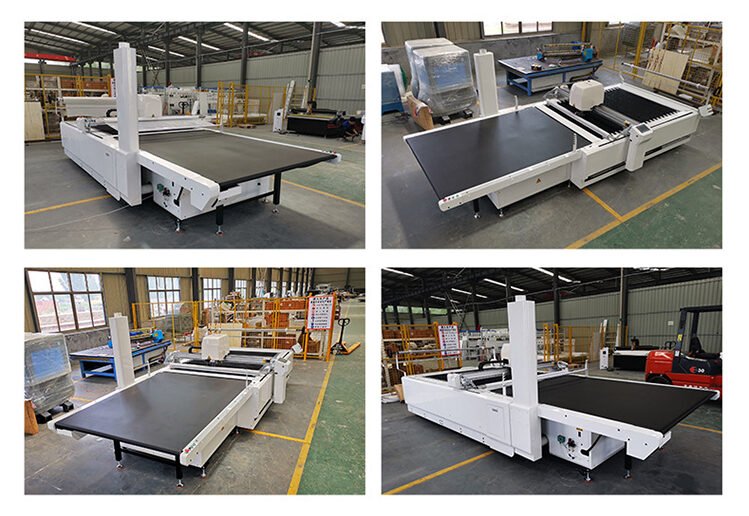
Factory where fabric test is done before shipment
We have a demo lab with 40+ different fabric types. Before shipping your machine, you can send us your fabric (A4 sample) – we’ll run a cutting test and send you video + suggested parameter sheet. No extra charge.
Ready to cut fabric smarter, not harder?
Request a quote or a remote live demo. Tell us your main fabric type and daily yardage – we will recommend the exact configuration.